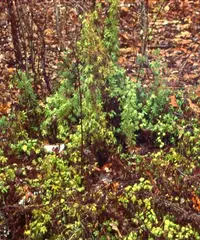
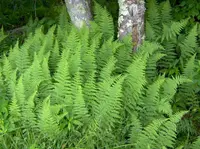
sensitive fern Care (Onoclea sensibilis)

Also known as: bead fern
sensitive fern

About sensitive fern

Sensitive fern, Onoclea sensibilis, is a hardy deciduous fern native to moist woodlands, wetlands, and stream edges across North America and parts of East Asia. It forms loose colonies from creeping rhizomes, with broad, pale green fronds that give a soft, coarse-textured look in garden plantings.

This species prefers consistently moist soil and partial shade, making it well suited to rain gardens and naturalized areas. It is generally tough once established but resents drying out, so care for sensitive fern focuses on steady moisture and protection from strong sun and wind.

Main Plant Requirements

Care Difficulty

Moderate Care

Light Preference

Partial Shade

Water Requirements

Keep Soil Moist

Temperature Preference

Cold Hardy

Hardiness Zone

3–8

Soil Texture

Loamy, Silty, Organic-rich

Soil pH

Acidic (5.5–6.5), Slightly acidic (6.5–7.0)

Soil Drainage

Moist but well-drained

Fertilization

Minimal (feed rarely)

Get Personalized Care Plan

Scan your plant to receive care tips personalized for your specific plant

Available on iOS and Android

How to Care for the sensitive fern

This moisture-loving woodland fern prefers bright, indirect light and protection from strong midday sun.

  • Provide dappled or filtered light under trees or shrubs, with 2–4 hours of gentle morning sun and shade by early afternoon.
  • Sensitive fern tolerates partial to full shade, but fronds become more open and lush with bright shade rather than deep, dense shade.
  • Avoid harsh afternoon sun, which scorches fronds and dries soil quickly; in open sites, use mulch and nearby plants to create light shade, especially in summer.

This species needs consistently moist soil and does not tolerate drying out for long periods.

  • Maintain soil that feels evenly moist down to 3–5 cm; water when the surface just begins to lose its sheen but before it turns pale and crumbly.
  • In cool spring and fall, natural rainfall often suffices; in hot, dry spells, water deeply 1–2 times per week, especially on sandy or sloped sites.
  • Watch for wilting, crisping frond tips, or curling edges as signs of underwatering, and yellowing, limp fronds or sour-smelling soil as signs of excess moisture for Onoclea sensibilis.

This hardy fern is adapted to temperate climates with cold winters and mild to warm summers.

  • Active growth is strongest around 60–75°F (16–24°C); fronds expand well in cool to mild conditions with steady soil moisture.
  • Underground rhizomes tolerate winter lows near 0°F (−18°C) or lower with snow cover, but fronds die back after the first hard frost.
  • In summer, plants handle short periods near 85–90°F (29–32°C) if soil stays moist; prolonged heat and drying winds cause browning and early dormancy.

This fern prefers consistently moist air and reacts quickly to dry indoor conditions.

  • Aim for 50–70% humidity, especially in heated or air-conditioned rooms where air dries out.
  • Leaves curling, browning at tips, or crisping along edges indicate humidity stress rather than underwatering.
  • Increase humidity with a pebble tray under the pot, grouped plants, or a room humidifier rather than frequent misting.

Onoclea sensibilis grows best in consistently moist, rich, and slightly acidic soil that still allows air around the roots.

  • Use a loamy mix with 40–60% compost or leaf mold plus garden soil and a small amount of coarse sand for structure.
  • Soil should stay evenly damp yet not waterlogged; add fine bark or perlite to improve aeration in heavy mixes.
  • Target pH 5.5–6.5; in alkaline soils, incorporate peat-free acidic organic matter to adjust gradually.
  • Avoid compacted clay, pure sand, or spots that alternate between standing water and complete dryness, which weaken rhizomes.

This species can be grown in containers if moisture and stability are carefully managed.

  • Choose a wide, relatively deep pot to allow spreading rhizomes while preventing the plant from becoming shallow and unstable.
  • Use a heavier material such as ceramic to reduce tipping when fronds reach full height and catch wind outdoors.
  • Set the container inside a decorative cachepot or tray that allows overflow to drain away promptly, preventing chronic soggy roots.

This woodland fern grows well in moderately fertile, moist soil and needs only light feeding.

  • Use a balanced, diluted liquid fertilizer (for example 10-10-10 at 1/4–1/2 strength) or thin compost around the root zone.
  • Feed sensitive fern once a month during the growing season if soil is poor or plants look pale.
  • Avoid fertilizing in winter dormancy, as new soft growth is not needed and roots are less active.
  • Rinse foliage if fertilizer splashes on fronds to reduce the risk of leaf scorch.

Pruning Onoclea sensibilis is mainly about tidiness and removing weak growth rather than shaping.

  • In early spring, cut back all fully dead fronds at the base before new fiddleheads emerge.
  • During the growing season, remove damaged, diseased, or badly browned fronds to improve air flow and reduce fungal issues.
  • Thin out very crowded fronds by cutting a few at soil level to keep a more open, attractive clump.
  • Use clean, sharp pruners or scissors and disinfect blades if working on diseased tissue.

This fern is usually grown in the ground, and transplanting focuses on managing its spreading rhizomes.

  • Transplant clumps in early spring or early fall when temperatures are mild and soil is evenly moist.
  • Move plants when growth slows, fronds become smaller, or rhizomes crowd and surface around the planting area.
  • Lift clumps carefully with a spade, keep roots shaded and moist, and replant at the same depth in prepared soil.
  • Water thoroughly after transplanting and maintain consistent moisture for several weeks to limit transplant shock.

Onoclea sensibilis is most often propagated by division of its creeping rhizomes rather than by spores or seed.

  • Divide established clumps in early spring just as new fiddleheads start to emerge.
  • Lift the plant and cut the rhizome into sections, each with several buds and healthy roots.
  • Replant divisions immediately into moist, humus-rich soil, keeping crowns at the original soil line.
  • Keep soil consistently damp and shaded for the first 2–4 weeks to support new root growth.

This hardy fern tolerates freezing winters in much of North America and needs minimal special winter care outdoors.

  • After hard frost, allow fronds to die back naturally, then cut them to ground level if desired.
  • Apply a 5–8 cm layer of leaf mulch over the root zone in colder regions to buffer freeze–thaw cycles.
  • For container plants, move pots into a sheltered, unheated but frost-free or slightly protected area to prevent root damage.

Care Tips

Manage Spreading Rhizomes

Install a shallow rhizome barrier 10–15 cm deep or sink bottomless nursery pots in the ground to keep colonies contained without stressing the plant.


Spring Frond Thinning

In early spring, selectively remove the weakest new fronds at ground level to improve airflow, reduce fungal issues, and direct energy into stronger growth.

Use Leaf Mulch

Apply a 5–8 cm layer of shredded leaf mulch each fall to mimic woodland litter, conserve soil moisture, and provide slow nutrient release without synthetic fertilizers.

Moisture Zoning In Beds

In mixed borders, position sensitive fern in the lowest, dampest micro-spot and build a slight soil berm around thirstier neighbors so irrigation can be targeted rather than uniform.

Winter Spore Frond Retention

Leave the stiff, fertile fronds standing over winter to protect the crown from freeze–thaw cycles and only remove them in very early spring when new growth starts, which supports long-term Onoclea sensibilis care.

Common Pests and Diseases

Fern aphids

These insects cluster on young fronds and undersides of leaflets, sucking sap and causing distortion, pale patches, and sticky honeydew that can lead to sooty mold.

Solution

Rinse colonies off fronds with a firm stream of water and repeat as needed, then remove heavily infested fronds to reduce populations. In persistent cases, use an insecticidal soap or neem oil spray, applied thoroughly to both sides of fronds on a cool, overcast day, and improve plant vigor with consistent moisture and light shade.

Fern scale

This pest appears as small, flat, tan or brown bumps on stems and frond midribs, leading to yellowing, poor growth, and gradual decline as sap is removed.

Solution

Prune out badly infested fronds and gently scrape or wipe individual scales from stems using a cotton pad dipped in alcohol. For larger populations, apply horticultural oil during the growing season, coating stems and frond bases thoroughly, and repeat according to label directions while maintaining good plant health to reduce reinfestation.

Fern rust

This disease causes yellow to orange spots or pustules mainly on the undersides of fronds, which may later brown and dry, reducing the plant’s vigor and ornamental value.

Solution

Remove and discard affected fronds promptly to limit spore spread, and avoid overhead watering to keep foliage drier. Improve airflow by spacing plants, and in severe or recurring cases consider a labeled fungicide for ferns, applied early when new spots first appear as part of broader sensitive fern care instructions.

Leaf spot

Symptoms include round to irregular brown or black lesions on fronds, often with a darker margin, which can merge and cause partial dieback of the affected leaflets.

Solution

Cut off and dispose of spotted fronds to reduce the source of infection and water at soil level to keep foliage as dry as possible. Provide good air circulation, avoid crowding, and if the problem is persistent, use a suitable fungicide labeled for ornamental ferns, applied according to directions when new spots first develop.

Interesting Facts

Dimorphic frond types

Sensitive fern produces two very different frond forms: broad, sterile fronds in summer for photosynthesis and narrow, bead-like fertile fronds that persist through winter to protect and disperse spores.

Cold-tolerant wetland native

This species is native to cool and temperate wetlands across eastern North America, where it colonizes moist ditches, swales, and stream margins, tolerating seasonal flooding and cold winters down to northern Canada.

Unusual bead-like spore clusters

Instead of exposed sori on the underside of fronds like many ferns, its fertile pinnae curl around the sporangia, creating hard bead-like segments that help shield spores from desiccation and freezing.

Botan icon

Did you know?

The common name sensitive fern refers not to touch sensitivity but to the fronds’ strong sensitivity to the first autumn frosts, which often cause them to wither and collapse earlier in the season than many neighboring plants.

FAQs about sensitive fern

This species spreads by creeping rhizomes and self-sown spores, forming broad colonies in moist, open soil. In suitable conditions it can slowly take over smaller beds, so give it space and use edging if needed.

Grow Healthy Plants with Botan Care

Keep your plants happy and healthy with plant identification, disease detection, and easy care guidance.

Botan plant care app — identify plants on mobile

Explore More Plants