Divide crowded clumps
Every 2–3 years, lift and divide congested crowns in early spring, replanting vigorous segments with several fronds and healthy rhizome to maintain strong growth and prevent decline from overcrowding.

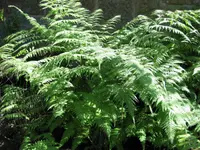
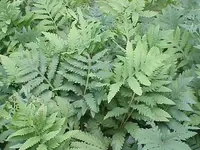
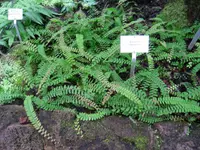
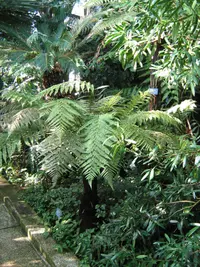
Macrothelypteris torresiana, commonly called swordfern, is a tropical fern known for its tall, arching fronds and dense, fountain-like clumps. It is typically evergreen in warm climates and forms a bold, leafy mass rather than a compact rosette.
This species often grows in moist, shaded habitats such as forest margins, stream banks, and disturbed sites in tropical and subtropical regions. It can be vigorous and may spread where conditions are favorable.
For home gardeners, it is considered moderately easy, as long as it receives consistent moisture, protection from harsh sun, and rich, well-drained soil. Understanding how to care for swordfern starts with providing a stable, humid environment and avoiding long dry spells.

Care Difficulty
Moderate Care

Light Preference
Partial Shade

Water Requirements
Keep Soil Moist

Temperature Preference
Tropical / Frost Sensitive

Hardiness Zone
9–12

Soil Texture
Loamy, Silty, Organic-rich

Soil pH
Acidic (5.5–6.5), Slightly acidic (6.5–7.0)

Soil Drainage
Moist but well-drained

Fertilization
Minimal (feed rarely)
Scan your plant to receive care tips personalized for your specific plant
Available on iOS and Android
Macrothelypteris torresiana prefers bright, filtered light that mimics an understory forest habitat.
Macrothelypteris torresiana thrives in consistently moist, but not waterlogged, soil.
This fern prefers warm, frost-free conditions with stable, moderate temperatures.
This fern prefers consistently humid air to maintain lush fronds.
Macrothelypteris torresiana grows best in moist, airy, organic-rich soil that drains freely.
This species is suitable for container growing when moisture and stability are carefully managed.
Macrothelypteris torresiana benefits from light, consistent nutrition but is sensitive to overfeeding.
Macrothelypteris torresiana responds well to light, hygienic pruning that maintains tidy foliage and healthy growth.
This fern appreciates occasional repotting or transplanting to refresh soil and give its spreading roots space.
Macrothelypteris torresiana is most reliably propagated by division, with spores used mainly by experienced growers.
Macrothelypteris torresiana prefers mild, frost-free conditions and needs protection in regions with cold winters.

Plant Health Check
Not sure what's wrong with your plant? Check your plant's health inside the app.
This species is native to tropical Asia but has spread widely across tropical and subtropical regions, including parts of the southeastern US, where it naturalizes readily along roadsides, canals, and disturbed forest edges.
It often establishes in recently disturbed or human-influenced habitats, such as cleared forest patches and plantation margins, which helps explain its success as a naturalized and sometimes invasive fern.
Plants spread primarily via abundant wind-dispersed spores from the undersides of fertile fronds, which allows populations to expand quickly over long distances when conditions are suitable.
Growth is moderate. In suitable warmth and moisture, this plant often adds 10–30 cm of frond length per year, forming a larger clump over 2–3 years. Shifting conditions or root disturbance slow growth noticeably.
Keep your plants happy and healthy with plant identification, disease detection, and easy care guidance.