Cloak Fern Care (Didymochlaena truncatula)

Also known as: Tree Maidenhair Fern
Cloak Fern

About Cloak Fern

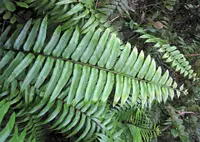
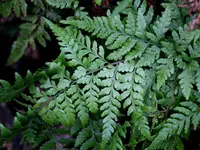
Didymochlaena truncatula, often called the mahogany fern, is an evergreen terrestrial fern grown mainly for its strong architectural form and glossy foliage. It forms upright, arching fronds with a leathery texture and a warm brown tint on new growth that ages to deep green.

This species occurs naturally in humid, shaded forests of tropical and subtropical regions, where it grows in consistently moist, well-drained soil rich in organic matter. It is considered moderately challenging, as it reacts poorly to dry air, irregular watering, and strong sun.

Understanding how to care for Didymochlaena truncatula starts with providing stable humidity, gentle indirect light, and a loose, humus-rich substrate that never fully dries out or stays waterlogged.

Main Plant Requirements

Care Difficulty

Moderate Care

Light Preference

Bright Indirect Light

Water Requirements

Keep Soil Moist

Temperature Preference

Tropical / Frost Sensitive

Hardiness Zone

10–11

Soil Texture

Loamy, Peaty, Organic-rich

Soil pH

Acidic (5.5–6.5)

Soil Drainage

Moist but well-drained

Fertilization

Light (every 4–6 weeks)

Get Personalized Care Plan

Scan your plant to receive care tips personalized for your specific plant

Available on iOS and Android

How to Care for the Cloak Fern

This fern prefers bright, indirect light that mimics dappled forest shade.

  • Provide 6–8 hours of bright, filtered light each day, such as near an east window or under light tree canopy outdoors for Didymochlaena truncatula.
  • Avoid harsh midday and afternoon sun; strong rays scorch fronds, causing pale, crispy patches and brown edges.
  • In lower light (north window, deep shade), fronds grow sparse and elongated, so move it slightly closer to light in winter when days are shorter.

This species needs evenly moist, never soggy soil to stay healthy.

  • Water when the top 2–3 cm of soil feel slightly dry, letting water run through freely and discarding any excess from saucers or cachepots.
  • Reduce frequency in winter, allowing the top 3–4 cm to dry, but in warm, active growth periods, expect to water more often as fronds expand.
  • Signs of overwatering include black, mushy rhizomes and sour smell; dry, crisp frond tips and curling leaflets usually indicate underwatering.

This fern thrives in stable, mild temperatures without strong extremes.

  • Ideal growth occurs at 65–80°F (18–27°C), which supports steady frond production and healthy green color.
  • Protect from cold; growth slows below 55°F (13°C), and sustained exposure below 40°F (4°C) can cause frond collapse or plant loss.
  • It tolerates short heat spells up to about 86°F (30°C) if humidity stays high and soil remains evenly moist, but avoid hot, dry drafts from heaters or sun-baked walls.

This fern needs fairly high humidity to keep fronds lush and prevent crisping.

  • Aim for 60–80% humidity; it tolerates brief dips to 40–50% but growth will slow.
  • Watch for browning tips, rolled new fronds, and dull leaflet texture as signs of humidity stress.
  • Increase humidity with a nearby humidifier, grouped plants, or a wide pebble tray that allows airflow around Didymochlaena truncatula.

This species prefers a loose, humus-rich mix that drains freely yet holds consistent moisture.

  • Use a peat- or coco-based mix with lots of fine bark and compost for organic-rich, slightly springy structure.
  • Ensure rapid drainage by adding 20–30% perlite or pumice so water does not pool around the roots.
  • Target slightly acidic pH, roughly 5.5–6.5, which suits typical fern mixes and supports nutrient uptake.
  • Avoid heavy garden soil, pure compost, or mixes that stay saturated, which reduce aeration and promote root rot.

This fern grows well in containers when the pot supports its fibrous, spreading root system.

  • Choose a pot wider than it is deep to match the shallow, slowly spreading root pattern and keep the plant stable.
  • Select a slightly heavier material, such as ceramic, to prevent tipping as fronds arch outward and collect moisture.
  • Use a pot with large, unobstructed drainage holes so excess water escapes quickly and the lower root zone never stays waterlogged.

This fern benefits from light, consistent feeding during active growth but is sensitive to excess salts.

  • Use a balanced liquid fertilizer (around 10-10-10 or 20-20-20) diluted to 1/4–1/2 strength for Didymochlaena truncatula.
  • Apply every 4–6 weeks in spring and summer, always on moist soil to avoid root burn.
  • Skip or reduce feeding to 1 light dose in autumn, and do not fertilize in midwinter.
  • Slow-release pellets at low rate or a thin layer of fine compost can replace frequent liquid feeds.

Pruning for this species is mainly hygienic, aimed at keeping the fern tidy and preventing disease.

  • In any season, remove fully brown, dead, or diseased fronds at the base using clean, sharp scissors or pruners.
  • Trim damaged tips only if needed for appearance, cutting back to healthy tissue without nicking the central crown.
  • Thin out severely crowded, old fronds to improve airflow and reduce fungal problems on Didymochlaena truncatula.
  • Disinfect tools before and after use, especially if disease or pests are present.

Container-grown plants appreciate occasional repotting to refresh soil and give the roots more space.

  • Check for roots circling the pot, pushing through drainage holes, or for declining vigor despite good care.
  • Plan to repot every 2–3 years in early spring, just before strong new frond growth resumes.
  • Choose a pot 2–3 cm wider with a moisture-retentive, well-drained mix, and keep the crown at the same depth.
  • Handle roots gently, avoid heavy teasing, water thoroughly, then keep in stable, shaded conditions for 1–2 weeks.

Division is the most practical method for increasing this fern in home conditions, though it resents rough handling.

  • Divide established clumps in early spring when new croziers (unfurling fronds) just start to emerge.
  • Lift the plant carefully and separate into 2–4 sections, each with healthy roots and several growing points.
  • Replant divisions into small pots with fresh, moist mix, firming gently to avoid air pockets.
  • Maintain high humidity, bright shade, and even moisture until strong new growth confirms establishment of Didymochlaena truncatula.

This fern is frost-tender and needs mild, frost-free conditions or indoor shelter in winter.

  • Keep indoor plants at 60–75°F with bright, indirect light and stable humidity above 40–50%.
  • In cool climates, move containers indoors or to a heated greenhouse before temperatures drop near 40°F.
  • Outdoors in mild areas, apply a light mulch around the root zone, without covering the crown, to buffer temperature swings.

Care Tips

Staggered Repotting

Instead of moving the whole fern to a much larger pot, shift it only 2–3 cm up in diameter every 1–2 years to keep the dense, fibrous root system stable and reduce stress shock to the fronds.

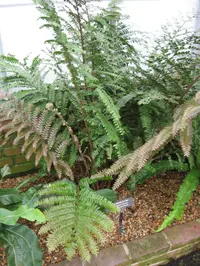
Frond Support Ring

Use a low, open plant support ring or a semicircular stake around the crown to gently hold arching fronds off the soil surface, which improves air flow and reduces risk of fungal spotting where fronds touch damp mix.

Targeted Rinse Routine

Every 4–6 weeks, take the pot to a sink or shower and rinse the fronds and soil surface with lukewarm water for 15–30 seconds to wash off dust, spores, and early pests without disturbing the roots.

Cool-Season Adjustment

In cooler months with lower light and slower growth, allow the top of the mix to stay just slightly drier and stop any repotting or heavy division to avoid stressing the rhizomes when metabolic activity is low.

Gentle Division Practice

If division is needed to control size, split the plant into only 2–3 large sections, keeping several healthy fronds and a strong root mass on each piece, then cover the soil surface with fresh fine bark to stabilize humidity around the new crowns while caring for Didymochlaena truncatula.

Common Pests and Diseases

Scale insects

These insects feed on fronds and rachises, causing yellowing, patchy chlorosis, and a sticky honeydew residue that can attract sooty mold. Infestations are common on thicker midribs and sheltered undersides of older fronds.

Solution

Remove heavily infested fronds and gently scrape or wipe visible scales with a cotton pad dipped in 70% isopropyl alcohol, taking care not to damage the delicate leaflet tissue. For ongoing Didymochlaena truncatula care, repeat alcohol spot-treatments weekly and maintain good air movement and stable humidity to reduce stress and susceptibility.

Mealybugs

This pest appears as white, cottony clusters in leaflet joints and along the midrib, leading to stunted fronds and distorted new growth. Honeydew from feeding can support secondary sooty mold on the fronds.

Solution

Isolate the plant, then dab visible mealybugs with 70% isopropyl alcohol on a cotton swab and rinse the foliage with lukewarm water to dislodge hidden insects. Repeat inspections every 5–7 days and, if needed, apply a neem oil or insecticidal soap spray formulated for ferns, keeping the spray off the soil surface to avoid over-wetting the root zone.

Fern aphids

These insects cluster on soft new fronds and undersides of pinnae, causing curling, deformation, and pale, weakened growth. Symptoms include sticky honeydew and, in heavier infestations, distorted emerging croziers.

Solution

Move the plant to a sink or shower and wash the fronds with a gentle, lukewarm water spray to knock aphids off. Follow with a light application of insecticidal soap to the undersides of fronds, repeating every 5–7 days until no new aphids are seen and ensuring good ventilation so fronds dry quickly.

Leaf spot fungus

This disease produces small brown or black circular spots that may merge into irregular patches, usually starting on older or crowded fronds. Symptoms include localized yellow halos and premature browning or drop of affected fronds in overly shaded, humid conditions with poor air flow.

Solution

Trim and discard the most affected fronds, disinfecting scissors between cuts, and avoid overhead watering that leaves the fronds wet for long periods. Increase air circulation, space the plant away from walls or other plants, and allow the surface of the potting mix to dry slightly between waterings; if spots continue to spread, use a labeled broad-spectrum fungicide that is safe for ferns, applied according to directions.

Bacterial blight

This disease causes water-soaked, translucent patches that quickly turn dark brown or black, often along the frond margins or tips, spreading rapidly under warm, stagnant, high-humidity conditions. Symptoms include a foul odor in severe cases and collapse of affected fronds from the base.

Solution

Immediately remove and discard all affected fronds and any fallen leaf debris, and avoid splashing water onto the foliage. Improve ventilation, reduce crowding around the plant, water at the soil level in the morning only, and keep humidity moderate rather than extreme; if progression continues, cull severely affected plants to protect nearby ferns.

Interesting Facts

Ancient fern lineage

This species belongs to a very old fern family, Didymochlaenaceae, which is currently recognized as containing only this single genus, highlighting its distinct evolutionary history among ferns.

Shield-like leaf scales

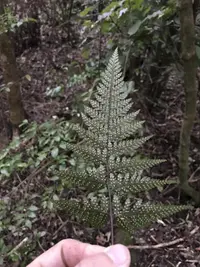
The fronds and stalks carry characteristic peltate scales, which are tiny shield-shaped structures that help distinguish this species from many other ornamental ferns.

Forest understory specialist

In the wild it grows on shaded, humid forest floors and rocky slopes in tropical and subtropical regions, often forming loose colonies under tree canopies where light levels are low and air moisture stays high.

FAQs about Cloak Fern

This fern has a moderate growth rate. New fronds usually appear in flushes during the warmer months, adding 5–15 cm per year. Growth slows noticeably in low light, cool rooms, or if nutrients are limited.

Grow Healthy Plants with Botan Care

Keep your plants happy and healthy with plant identification, disease detection, and easy care guidance.

Botan plant care app — identify plants on mobile

Explore More Plants