Rock Crevice Planting
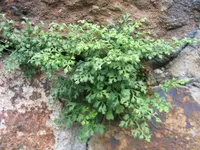
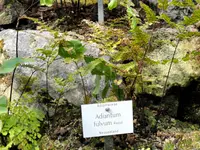
Plant in narrow gaps between rocks, stone slabs, or in a crevice-style container to mimic its natural habitat and keep roots cool, shaded, and evenly moist around the rhizome.

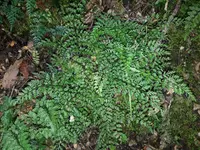
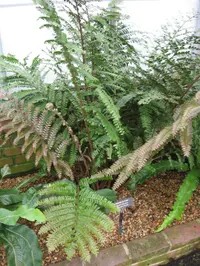
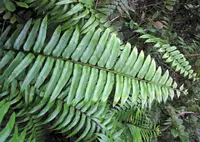
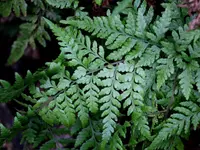
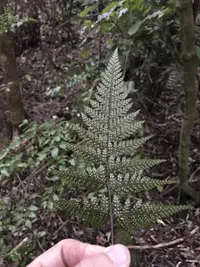
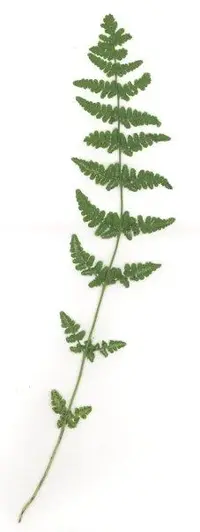
Hooker's spleenwort (Asplenium hookerianum) is a small, evergreen fern forming delicate rosettes of finely divided fronds. It typically grows in tight clumps, giving a soft, moss-like look on rocks or banks.
This species is native to New Zealand and parts of Australia, where it inhabits cool, shaded, often moist rock crevices and forested slopes. Its preference for stable moisture, high humidity, and protection from harsh sun makes it more suited to attentive growers than to very casual care.
Those who learn how to care for Hooker's Spleenwort usually provide consistently damp, free-draining substrate, gentle airflow, and low to medium light similar to a shaded woodland floor.

Care Difficulty
Moderate Care

Light Preference
Partial Shade

Water Requirements
Keep Soil Moist

Temperature Preference
Cool Climate

Hardiness Zone
7–10

Soil Texture
Loamy, Silty, Organic-rich

Soil pH
Acidic (5.5–6.5)

Soil Drainage
Moist but well-drained

Fertilization
Minimal (feed rarely)
Scan your plant to receive care tips personalized for your specific plant
Available on iOS and Android
This fern prefers soft, filtered light that mimics shaded forest habitats.
This species prefers consistently moist but not waterlogged conditions around its roots.
This fern thrives in mild, frost-free conditions with stable, cool to moderate temperatures.
This fern needs consistently moist air to thrive in cultivation.
This fern prefers a loose, moisture-retentive yet free-draining mix that mimics leaf litter on rocky forest slopes.
This species is suitable for container growing when moisture and aeration are carefully managed.
This small fern benefits from light feeding but is sensitive to excess nutrients, so any fertilization must be gentle and infrequent.
Asplenium hookerianum needs only light, hygienic pruning to keep fronds healthy and the clump tidy.
This fern dislikes frequent disturbance, so repotting or transplanting should be infrequent and done with care to protect fine roots.
Multiplying Asplenium hookerianum is possible but slower than many garden plants, and division is the most practical method for home growers.
This fern prefers mild, frost-free to light-frost conditions and may need some winter protection in colder regions.

Plant Health Check
Not sure what's wrong with your plant? Check your plant's health inside the app.
This small spleenwort is naturally restricted to New Zealand and Tasmania, where it typically grows in cool, moist, montane and subalpine habitats on shaded rock faces and banks.
Its fronds have a noticeably dark brown to almost black stipe (the leaf stalk), which contrasts with the delicate green leaf segments and helps distinguish it from several similar Asplenium species in the same regions.
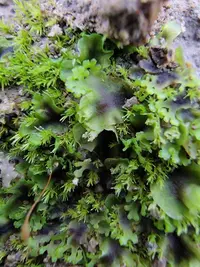
It often anchors itself in narrow rock crevices, mossy ledges, and thin soil pockets, where reduced competition and stable moisture allow it to persist despite exposure to wind, cold, and seasonal drying.

Genetic and morphological studies have shown that this species belongs to a distinct Australasian lineage within Asplenium, reflecting a long evolutionary history tied to the ancient Gondwanan landmasses rather than recent long‑distance dispersal.
This fern performs best outdoors in cool, humid, shaded rock crevices or woodland settings. Indoors it can survive in stable, humid conditions, but is generally harder to maintain long term than in a sheltered outdoor microhabitat.
Keep your plants happy and healthy with plant identification, disease detection, and easy care guidance.