bluntlobe cliff fern Care (Woodsia obtusa)

Also known as: blunt woodsia
bluntlobe cliff fern

About bluntlobe cliff fern

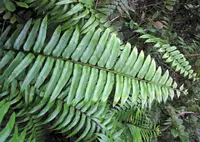
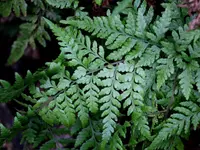
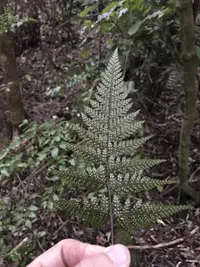
Bluntlobe cliff fern, Woodsia obtusa, is a small deciduous fern native to rocky slopes and cliffs in eastern North America. It often tucks into crevices where soil is thin but drainage is excellent. The plant forms compact clumps of upright to arching fronds with rounded, blunt-lobed leaf segments that give it a textured, delicate look. It stays relatively low and neat, which suits rock gardens and shaded edges. This fern generally prefers partial shade, consistent moisture, and gritty, well-drained, slightly acidic soil. These traits make it moderately easy to grow as long as roots do not sit in water, and understanding how to care for bluntlobe cliff fern starts with matching its native rocky habitat.

Main Plant Requirements

Care Difficulty

Moderate Care

Light Preference

Partial Shade

Water Requirements

Moderate Water

Temperature Preference

Cold Hardy

Hardiness Zone

3–8

Soil Texture

Loamy, Rocky, Organic-rich

Soil pH

Acidic (5.5–6.5), Slightly acidic (6.5–7.0)

Soil Drainage

Well-drained

Fertilization

Minimal (feed rarely)

Get Personalized Care Plan

Scan your plant to receive care tips personalized for your specific plant

Available on iOS and Android

How to Care for the bluntlobe cliff fern

This small deciduous fern prefers bright, indirect woodland-style light rather than open, exposed sun.

  • Provide 2–4 hours of gentle morning sun with dappled or filtered light the rest of the day; avoid harsh midday or afternoon sun that can scorch fronds.
  • Site bluntlobe cliff fern in partial shade, such as a north or east-facing slope, rock crevice, or understory position receiving broken light through branches.
  • In summer, increase shade during heat waves, while in early spring and late fall slightly more direct light is acceptable as the sun is weaker.

This fern prefers consistently moist but not saturated soil that drains freely around its shallow roots.

  • Water when the top 2–3 cm of soil feel just barely dry, then moisten the root zone thoroughly so water passes through rather than pooling.
  • Choose gritty, well-drained soil over heavy clay to prevent standing water; yellowing, limp fronds often indicate overwatering and poor aeration.
  • In spring and summer, check moisture more often during warm, windy periods; in fall and winter, reduce frequency but prevent the soil from fully drying out or fronds may crisp.

This hardy fern tolerates a wide temperature range but grows best in cool to mild conditions.

  • Active growth is strongest at 60–75°F (16–24°C), typical of shaded woodland conditions with moderate humidity and cool nights.
  • Established plants tolerate winter lows near 0°F (−18°C) when in the ground with natural insulation, dying back aboveground and re-sprouting in spring.
  • In hot spells above 85°F (29°C), growth may slow; provide deeper shade and extra moisture to prevent heat stress and frond scorch.

This fern prefers moderately moist air but tolerates typical indoor humidity if soil moisture is consistent.

  • Aim for 40–60% humidity to reduce frond crisping and browning tips.
  • It copes with slightly dry air if the root zone never fully dries out.
  • Increase humidity by grouping pots, placing the container on a pebble tray with water, or running a nearby humidifier; avoid misting that wets fronds heavily.

This species grows best in loose, rocky, organic-rich soil that drains quickly yet holds some moisture.

  • Use a mix of roughly 40% compost, 40% fine bark, and 20% coarse sand or perlite for porous structure.
  • Ensure fast drainage that prevents water from pooling around the rhizomes while keeping the mix slightly moist.
  • Target a slightly acidic to neutral pH around 6.0–7.0, similar to many woodland soils supporting Woodsia obtusa.
  • Avoid heavy clay, compacted ground, or pure sand, which either suffocate roots or dry out too fast.

This fern adapts well to container culture when moisture and drainage are carefully balanced.

  • Choose a shallow, wide pot so the spreading rhizomes have horizontal space without a deep, water-holding column of soil.
  • Use a rigid, heavier container material like ceramic to steady the plant where fronds may act as a sail in wind.
  • Elevate the pot on feet so drainage holes stay clear and excess water escapes quickly after rain or watering.

Woodsia obtusa, or bluntlobe cliff fern, is a low‑nutrient woodland fern that needs only modest feeding in cultivation.

  • Use a balanced, dilute liquid fertilizer (such as 10‑10‑10 at 1⁄4–1⁄2 strength) during active growth in spring–summer.
  • Apply every 4–6 weeks if growth seems weak or soil is very lean; skip feeding in fertile garden soil.
  • Stop fertilizing in fall and winter when fronds are dormant or slowing, to avoid soft, weak growth.
  • Organic compost incorporated into the planting site provides gentle, long‑lasting nutrition without salt buildup.

Pruning needs for Woodsia obtusa are minimal and focus on tidiness and plant health rather than shaping.

  • Best time is late winter or early spring before new croziers unfurl, when old fronds are easy to see.
  • Snip off dead, diseased, or badly damaged fronds at the base with clean, sharp scissors or hand pruners.
  • Remove crowded, yellowing fronds to slightly thin the clump and improve air movement around new growth.
  • Avoid cutting healthy green fronds midseason, since this reduces photosynthesis and can weaken the plant.

This fern is most often grown in the ground, but container plants or garden clumps may need transplanting as they thicken.

  • Look for roots circling the pot drainage holes, dry‑out very fast, or noticeably slowed growth as signs of crowding.
  • Aim to transplant or up‑pot in early spring or early fall, when temperatures are mild and soil stays evenly moist.
  • Expect to move container plants every 2–3 years into a slightly larger pot with fresh, gritty, humus‑rich mix.
  • Minimize root stress by watering well before moving, gently loosening roots, then shading and keeping soil evenly moist afterward.

New plants are most reliably produced by division rather than from spores when planning Woodsia obtusa plant care.

  • Divide established clumps in early spring as new fronds just begin to emerge and soil is moist and cool.
  • Lift the plant carefully, then separate small sections with several healthy rhizomes and buds using a clean knife.
  • Replant divisions at the same depth in well‑drained, humus‑rich soil, spacing to allow mature frond spread.
  • Keep newly divided plants shaded and evenly moist until strong new fronds show that roots have re‑established.

This fern is cold hardy through typical winters in many temperate regions and usually needs little special attention.

  • Tolerates freezing temperatures once established, dying back to the crown and resprouting in spring.
  • In colder zones, add a 3–5 cm layer of leaf mulch over the root zone after soil cools to buffer freeze–thaw cycles.
  • Container plants benefit from moving to a sheltered, unheated but frost‑free space or sinking pots into the ground.

Care Tips

Rocky planting pockets

Tuck plants into crevices between stones or in a rock garden edge to mimic their natural cliff habitat, which stabilizes the root crown, improves drainage, and helps fronds stay upright and tidy.

Leaf-litter mulch

Use a thin layer of shredded deciduous leaves as mulch instead of bark, which keeps roots cool, retains moisture, and recreates the light forest duff these ferns naturally grow in without smothering new fronds.

Careful division timing

Divide clumps only in early spring as new croziers (unfurling fronds) just emerge, splitting the root mass into small sections with at least 3–4 healthy buds to reduce transplant shock and improve establishment.

Winter crown protection

In colder zones, leave autumn leaf litter around the crowns or add a very light mulch after the ground freezes to protect the shallow rhizomes from repeated freeze–thaw cycles while still allowing good air flow.

Sporeling management

Allow some spores to mature if you want a natural colony, but thin out dense patches of young plants every couple of years so air can circulate around fronds and to maintain defined edges when growing bluntlobe cliff fern in a rock garden or woodland bed.

Common Pests and Diseases

Scale insects

This pest sometimes appears on sheltered fronds and stipes, feeding on plant sap and weakening growth over time. Symptoms include small, dome-shaped brown or gray bumps that feel hard and do not rub off easily like soil.

Solution

Remove infested fronds or scrape individual scales off with a cotton swab dipped in 70% isopropyl alcohol, then rinse the plant thoroughly with water. Improve air movement around the fern and, for repeated issues in a garden bed, encourage natural predators such as lady beetles by avoiding broad-spectrum insecticides nearby.

Fern aphids

These insects occasionally colonize the undersides of young fronds, especially in moist, shaded sites and rock crevices. Symptoms include distorted new growth, sticky honeydew, and sometimes sooty mold developing on the residue.

Solution

Wash colonies off with a firm stream of water, repeating every few days until numbers drop. For persistent infestations, use an insecticidal soap labeled for ferns, applied thoroughly to both sides of the fronds during cool parts of the day to avoid leaf spotting.

Leaf spot

This disease can develop in cool, damp, shaded conditions where foliage stays wet, producing brown to black spots that may merge and cause sections of fronds to die back. Symptoms include irregular lesions often starting along the leaflet edges or between veins.

Solution

Prune and discard affected fronds to reduce inoculum, then water at the soil level rather than overhead so fronds dry quickly. Increase spacing or gently thin nearby vegetation for better air flow, and in severe, recurring cases use a fern-safe fungicide labeled for leaf spot, following all label directions.

Rust

This disease is sometimes seen on wild and cultivated plants in humid, shaded habitats, forming orange-brown pustules on the undersides of fronds. Symptoms include yellowing patches opposite the pustules and premature frond decline.

Solution

Remove and dispose of infected fronds as soon as they are noticed, and avoid handling healthy plants after touching diseased tissue without washing hands or tools. Improve air circulation, avoid overhead irrigation, and if the problem recurs yearly in the same location, consider rotating plantings or moving specimens to a site with faster drying foliage as part of broader Woodsia obtusa care.

Interesting Facts

Rock crevice specialist

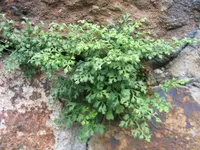
This fern naturally anchors itself in narrow rock crevices and on cliff ledges, especially in calcareous or mildly acidic rocky habitats of eastern North America, where many other ferns cannot establish.

Distinctive leaf dimorphism

Its fertile fronds are shorter, stiffer, and more densely scaled than its sterile fronds, a clear example of leaf dimorphism where leaves with reproductive spores look and function differently from the main photosynthetic foliage.

Cold-hardy native fern

The species is native to a wide range of climates from the Appalachian region into parts of the Midwest and Canada, showing strong cold tolerance compared with many other small cliff-dwelling ferns, which supports interest in grow Woodsia obtusa in temperate gardens.

Botan icon

Did you know?

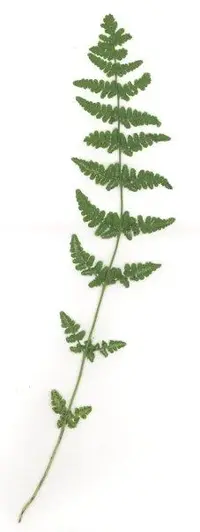
The species name obtusa, meaning blunt, refers to the often rounded or bluntly tipped segment lobes on its fronds, a morphological detail that helps distinguish it from related cliff ferns with more sharply pointed leaf segments.

FAQs about bluntlobe cliff fern

Growth is moderate. Young plants usually take 3–5 years to reach mature size, forming clumps about 20–40 cm tall. Rate depends on moisture, soil depth over rock, and protection from physical disturbance.

Grow Healthy Plants with Botan Care

Keep your plants happy and healthy with plant identification, disease detection, and easy care guidance.

Botan plant care app — identify plants on mobile

Explore More Plants