Mulch Woodland Bed
Apply a 5–8 cm layer of shredded leaves or fine bark around the clumps each spring to keep roots cool, suppress weeds, and mimic the plant’s natural forest-floor habitat.

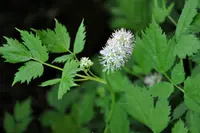
Baneberry, Actaea spicata, is a woodland perennial grown mainly for its finely divided foliage and showy, bead-like berries. It forms small clumps with upright stems and a soft, ferny texture.
In late spring to early summer it produces small white flowers, followed by glossy black berries that stand out strongly against the leaves. The plant is naturally found in cool, shaded forests across parts of Europe and Asia.
It can be slow to establish and prefers consistent moisture, humus-rich soil, and shade, which makes it more suited to patient gardeners. Those who want to care for Baneberry should understand its need for a stable, undisturbed, woodland-style setting.

Care Difficulty
Moderate Care

Light Preference
Partial Shade

Water Requirements
Keep Soil Moist

Temperature Preference
Cold Hardy

Hardiness Zone
3–7

Soil Texture
Loamy, Silty, Organic-rich

Soil pH
Acidic (5.5–6.5), Slightly acidic (6.5–7.0)

Soil Drainage
Moist but well-drained

Fertilization
Minimal (feed rarely)
Scan your plant to receive care tips personalized for your specific plant
Available on iOS and Android
Actaea spicata is a woodland perennial that prefers cool, shaded light conditions rather than open sun.
Actaea spicata needs consistently moist, cool soil without becoming waterlogged.
This species thrives in cool to mild woodland climates and dislikes extreme heat or severe winter exposure.
Actaea spicata prefers consistently moist air but usually adapts to typical outdoor humidity levels.
Actaea spicata grows best in deep, humus-rich, consistently moist soil that drains freely.
This species can be grown in containers, but it stays healthier in large, deep, cool pots that mimic a shaded woodland floor.
Actaea spicata needs only light feeding in rich, humus-heavy woodland soil.
Actaea spicata needs minimal pruning, aimed mainly at cleanliness and maintaining a natural shape.
This woodland perennial is usually grown in the ground and dislikes frequent disturbance.
Actaea spicata is propagated mainly by seed or cautious division, both requiring patience and stable conditions.
This species is cold hardy in most temperate climates and typically needs only modest winter care.

Plant Health Check
Not sure what's wrong with your plant? Check your plant's health inside the app.
The glossy black berries contain potent cardiotoxic and neurotoxic compounds that can cause severe poisoning in humans, which is why many European countries explicitly list this species as a dangerous wild plant.
This species is naturally adapted to cool, moist, shady deciduous and mixed forests in Europe and western Asia, where it often grows on calcareous, humus-rich soils with stable moisture.
Its small white flowers form loose racemes dominated by numerous conspicuous stamens, giving the inflorescences a delicate, fuzzy appearance that differs from the showier clustered flowers of many garden ornamentals.

Actaea spicata plays a role as an indicator species for relatively undisturbed, ancient woodland in parts of Europe, so its presence can help botanists and conservationists identify long-continuous forest habitats with high ecological value.
All parts of this species are toxic if eaten, especially the berries and roots. Ingestion can cause severe gastrointestinal and cardiac symptoms. Keep children and pets away, and avoid planting near play areas or edible beds.
Keep your plants happy and healthy with plant identification, disease detection, and easy care guidance.