Leaf litter mulch
Maintain a thin layer of clean, unsprayed leaf litter around the rhizomes to mimic forest floor conditions, keeping roots cool and moist while preventing direct sun on the soil surface.

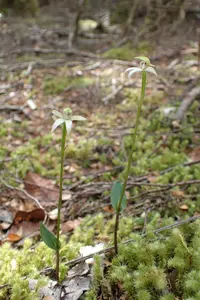
The slender forest orchid, Adenochilus gracilis, is a small terrestrial orchid native to moist forests of New Zealand and parts of southeastern Australia. It grows close to the ground, with delicate upright flowering stems emerging from a single basal leaf.
Its flowers are usually white with fine red markings, giving a refined, understated appearance that blends into leaf litter and mossy understories. This species depends on specific soil fungi and cool, shaded, consistently damp conditions.
Because of these specialized needs, it is considered challenging outside its natural habitat. Gardeners who care for Slender forest orchid usually focus on replicating a cool, humid forest floor with loose, humus-rich, well-drained soil.

Care Difficulty
Hard Care

Light Preference
Partial Shade

Water Requirements
Keep Soil Moist

Temperature Preference
Cool Climate

Hardiness Zone
8–10

Soil Texture
Peaty, Organic-rich, Loamy

Soil pH
Strongly acidic (4.5–5.5), Acidic (5.5–6.5)

Soil Drainage
Moist but well-drained

Fertilization
Minimal (feed rarely)
Scan your plant to receive care tips personalized for your specific plant
Available on iOS and Android
This terrestrial orchid prefers cool, dappled forest light that mimics its native woodland floor habitat.
Moist, cool, free-draining soil is essential to support the fine roots and underground tubers.
This species thrives in cool to mild conditions similar to shaded, moist forest understories.
This terrestrial orchid prefers consistently moist air similar to a cool, sheltered forest floor.
Soil for Adenochilus gracilis must mimic a cool, loose, humus-rich forest floor.
This species can be grown in containers if the setup closely replicates a cool, moist, forest-floor environment.
This terrestrial orchid is adapted to low-nutrient forest soils and benefits from very light, infrequent feeding in cultivation.
Adenochilus gracilis needs minimal pruning, focused on hygiene rather than shaping.
This species is usually grown in the ground or in stable pots and prefers infrequent disturbance.
Propagation of this orchid is specialized and generally left to conservation nurseries or experts.
This cool-climate terrestrial orchid is moderately cold tolerant but benefits from some winter protection in cultivation.

Plant Health Check
Not sure what's wrong with your plant? Check your plant's health inside the app.
This orchid grows in cool, damp forest habitats in New Zealand, often at higher elevations, where it roots in mossy soil or leaf litter on the forest floor, sometimes near beech trees (Nothofagus species).
Each plant typically produces just one thin, grass-like leaf close to the ground, with the flowering stem emerging separately, which helps it blend into surrounding mosses and low vegetation when not in bloom.
The plant bears a single small, white flower with fine red markings on the labellum (the modified petal typical of orchids), which acts as a visual guide for visiting pollinators.
Lack of flowering often comes from insufficient winter cool, too little light during the growing season, or stress from recent disturbance. Allow a cool, moist rest, avoid repotting, and mimic woodland conditions to support bud formation.
Keep your plants happy and healthy with plant identification, disease detection, and easy care guidance.