New York ironweed Care (Vernonia noveboracensis)

New York ironweed

About New York ironweed

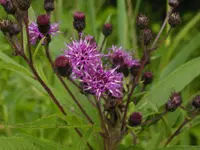
New York ironweed (Vernonia noveboracensis) is a tall, upright perennial native to eastern North America, often found in moist meadows, stream edges, and open wetlands. It forms sturdy clumps with strong stems and narrow, lance-shaped leaves. In late summer to early fall it produces dense clusters of vivid purple flower heads that attract bees and butterflies and add strong vertical accents to borders or naturalistic plantings. Once established, it is generally robust but needs enough moisture and space due to its height and spreading habit. Understanding how to care for New York ironweed is mainly about providing sun, consistently damp soil, and avoiding very dry, compacted sites.

Main Plant Requirements

Care Difficulty

Easy Care

Light Preference

Full Sun

Water Requirements

Keep Soil Moist

Temperature Preference

Cold Hardy

Hardiness Zone

5–9

Soil Texture

Loamy, Clay, Organic-rich

Soil pH

Acidic (5.5–6.5), Slightly acidic (6.5–7.0)

Soil Drainage

Moist but well-drained

Fertilization

Minimal (feed rarely)

Get Personalized Care Plan

Scan your plant to receive care tips personalized for your specific plant

Available on iOS and Android

How to Care for the New York ironweed

This tall perennial thrives in open, bright conditions that mimic sunny wet meadows.

  • Provide 6–8 hours of direct sun daily; New York ironweed flowers most heavily in full sun sites.
  • It tolerates light partial shade, especially with 3–4 hours of morning sun, but stems may lean and flowering can decrease.
  • In hot summers, avoid intense reflected heat from pavement; ensure at least half-day sun from spring to late summer for sturdy growth.

This species prefers consistently moist soil and is naturally adapted to wet meadows and stream edges.

  • Aim for soil that stays evenly moist to a depth of 5–8 cm; do not allow the root zone to dry out completely.
  • Increase watering in hot, dry periods if rainfall is low; leaves drooping at midday and not recovering by evening suggest Vernonia noveboracensis needs more moisture.
  • Use soil that drains but holds moisture, such as loam with organic matter; yellowing, soft stems may indicate chronic overwatering or poor drainage.

This hardy native perennial is adapted to temperate climates with cold winters and warm summers.

  • Optimal growing temperatures are 65–85°F (18–29°C), typical of late spring through early fall in many temperate regions.
  • The root system survives outdoors to about -20°F (-29°C) when established, dying back to the ground each winter and resprouting in spring.
  • Above 90°F (32°C), plants tolerate heat if soil stays moist; repeated hard frosts in fall trigger dormancy rather than lasting damage to crowns.

This species handles a wide humidity range but performs best with moderate ambient moisture.

  • Aim for 40–60% humidity; caring for New York ironweed in this range supports sturdy stems and consistent flowering.
  • Plants tolerate brief dry indoor air but may show crispy leaf edges and slower growth if kept under 30% for long periods.
  • Increase humidity by grouping plants outdoors near other perennials, using mulch to retain soil moisture, or placing containers near a water feature.

This species prefers moist, deep, nutrient-rich ground that stays aerated rather than compacted.

  • Use a loamy soil with high organic matter; a mix of garden loam, compost, and leaf mold suits Vernonia noveboracensis well.
  • Ensure steady moisture with slow drainage, such as on the edge of a rain garden, but avoid standing water that covers roots for days.
  • Maintain slightly acidic to neutral pH, roughly 6.0–7.0, which keeps nutrients available without causing toxicity.
  • Improve structure in heavy clay by incorporating coarse compost and fine pine bark, which increase pore space and oxygen around roots.

This tall, moisture-loving perennial can be grown in containers if the pot is large, deep, and stable.

  • Choose a heavy, wide container so the tall stems do not tip the pot in wind or after rain.
  • Use a moisture-retentive mix such as compost-rich potting soil with some fine bark to keep water available between irrigations.
  • Elevate the container slightly on feet or bricks to let drainage holes clear quickly after heavy watering or storms.

This native perennial generally needs minimal feeding in average garden soil, but light fertilization can support strong growth and flowering for New York ironweed.

  • Apply a light dressing of compost around the root zone once in early spring to improve soil structure and nutrients.
  • Use a balanced slow-release fertilizer (around 10-10-10) at half strength in spring if growth appears weak or soil is poor.
  • Avoid additional feeding after midsummer so stems harden properly and do not produce overly lush, floppy growth.
  • Do not fertilize during winter dormancy; excess nutrients at this time can stress roots and encourage weak shoots.

Thoughtful pruning helps maintain sturdy, upright Vernonia noveboracensis clumps and supports abundant blooms.

  • Cut back dead or broken stems in late winter or very early spring before new growth emerges.
  • Remove crowded or crossing stems at the base to improve air flow and reduce disease risk.
  • Shear plants by about one-third in late spring to encourage bushier growth and slightly shorter, sturdier flowering stems.
  • Use clean, sharp pruners and make cuts just above healthy buds or close to the crown without damaging emerging shoots.

This tall native is most often grown in the ground, so care focuses on dividing and transplanting established clumps rather than frequent repotting.

  • Transplant or divide in early spring or early fall when temperatures are mild and rainfall is more reliable.
  • Look for signs such as congested clumps, reduced flowering, or crowded neighboring plants as indicators that division is beneficial.
  • Lift the clump carefully, slice it into sections with several healthy shoots and roots each, and replant at the original soil depth.
  • Water thoroughly after planting and keep soil evenly moist for several weeks to limit transplant shock and support new root growth.

New plants of this species are most often produced by division or seeds rather than stem cuttings.

  • Divide mature clumps in early spring just as new shoots emerge, keeping several buds and roots on each division.
  • Sow fresh seeds outdoors in fall or early winter so natural cold stratification improves germination in spring.
  • For indoor seed starting, chill moist stratified seeds in the refrigerator for 6–8 weeks, then provide light and 65–70°F temperatures.
  • Plant divisions and seedlings in full sun with consistently moist soil to establish strong root systems and upright growth.

This species is cold hardy across much of the US and usually needs little active winter care once established in the ground.

  • Tolerates freezing temperatures and snow; top growth dies back naturally while roots remain viable.
  • After hard frost, cut stems down to 5–10 cm to tidy beds and reduce overwintering pests and diseases.
  • Apply a 5–8 cm layer of organic mulch around the crown in colder regions to buffer freeze–thaw cycles.
  • If grown in containers, move pots to a sheltered, unheated area and prevent the root ball from drying out completely.

Care Tips

Sturdy plant support

Install tall, rigid stakes or a discreet wire cage in early spring so the developing stems grow through the support and remain upright under the weight of late-summer flower heads and wind exposure.

Strategic clump division

Divide overcrowded clumps every 3–4 years in early spring, replanting only the most vigorous outer sections to maintain strong flowering and to prevent the stand from becoming weak and patchy.

Edge containment strip

For sites where spread must be controlled, sink a solid root barrier or edging strip 20–25 cm deep around the planting area to keep rhizomes from creeping into adjacent beds or turf.

Wildlife-friendly deadheading

If self-seeding is a problem, cut back most spent flower heads before seeds ripen but leave a few for birds, balancing reseeding control with wildlife value when growing New York ironweed.

Floodplain-style mulching

In naturally moist or periodically wet sites, use a coarse, open-textured mulch layer 5–7 cm thick to suppress weeds while still allowing good air and water movement around the crown.

Common Pests and Diseases

Leaf spot

This disease causes small brown to purplish spots on foliage that may coalesce into larger blotches, especially in warm, wet weather.

Solution

Remove and discard heavily spotted leaves, avoid overhead watering, and space plants to improve airflow; if the problem is persistent, apply a copper-based or chlorothalonil fungicide labeled for ornamental perennials, following label directions.

Powdery mildew

This disease produces a white, powdery coating on leaves and stems, often late in the season or in crowded, shaded plantings.

Solution

Increase sun exposure and air circulation by thinning surrounding vegetation, water at soil level, and remove badly affected foliage; in recurrent cases, use a sulfur or potassium bicarbonate fungicide at the first sign of mildew as part of Vernonia noveboracensis care instructions.

Rust

This disease shows as orange to brown pustules on the undersides of leaves, which can lead to yellowing and premature leaf drop in humid conditions.

Solution

Collect and dispose of infected leaves, avoid overhead irrigation, and reduce humidity around plants; for severe outbreaks, use a labeled systemic or contact fungicide and rotate products to reduce resistance risk.

Aphids

These insects cluster on new growth and stems, sucking sap and causing curling or distortion of leaves and sticky honeydew deposits that can attract sooty mold.

Solution

Dislodge colonies with a firm stream of water, encourage natural predators such as lady beetles, and, if needed, apply insecticidal soap or a light horticultural oil, making sure to cover the undersides of leaves.

Leaf-chewing caterpillars

This pest group creates irregular holes or ragged edges on leaves and can defoliate sections of the plant when populations are high.

Solution

Hand-pick caterpillars where practical, protect nearby desirable plants with light row cover if defoliation is severe, and, when needed, use a Bacillus thuringiensis (Bt) product targeted to caterpillars, applying in the evening to minimize impact on pollinators.

Interesting Facts

Late-season pollinator magnet

New York ironweed flowers in late summer to early fall, providing abundant nectar and pollen for native bees, butterflies, and other insects when many other wildflowers have finished blooming.

Floodplain and wet meadow specialist

This species naturally occurs along streambanks, ditches, and moist meadows in eastern North America, showing a strong preference for moist to wet, periodically flooded soils.

Sturdy, unpalatable foliage

The leaves and stems are tough and somewhat bitter, so deer and many herbivores usually avoid browsing it, which helps dense stands persist in natural areas.

Botan icon

Did you know?

The common name ironweed refers to this plant’s remarkably tough, fibrous stems, which can remain rigid and standing through winter weather long after the foliage and flower heads have died back.

FAQs about New York ironweed

This species is highly attractive to native bees, butterflies, and many other pollinating insects. The late-summer flower clusters provide abundant nectar and pollen when many other plants are fading, making it valuable for wildlife-friendly gardens and restoration plantings.

Grow Healthy Plants with Botan Care

Keep your plants happy and healthy with plant identification, disease detection, and easy care guidance.

Botan plant care app — identify plants on mobile

Explore More Plants

How to Care for New York ironweed (Vernonia noveboracensis)