


Sturdy staking
Install discreet ring stakes or low grow-through supports in early spring before stems elongate, so the tall flower spikes stay upright and do not snap in wind or heavy rain.

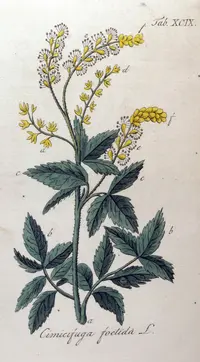
Actaea cimicifuga, often called bugbane or black cohosh, is a hardy, shade-loving perennial grown mainly for its tall, elegant flower spikes and divided foliage. It forms clumps that send up slender stems topped with narrow, creamy white flower clusters that give a soft, airy look in late summer to fall.
This species is native to woodland and forest edges in North America, where it thrives in cool, moist, humus-rich soils. It grows best in partial shade with consistent moisture, which also makes it a good choice for shaded borders. Once planted in suitable conditions, it is slow to establish but long-lived, so learning how to care for Actaea cimicifuga helps it perform reliably over many years.

Care Difficulty
Moderate Care

Light Preference
Partial Shade

Water Requirements
Keep Soil Moist

Temperature Preference
Cold Hardy

Hardiness Zone
3–8

Soil Texture
Loamy, Silty, Organic-rich

Soil pH
Acidic (5.5–6.5), Slightly acidic (6.5–7.0)

Soil Drainage
Moist but well-drained

Fertilization
Minimal (feed rarely)
Scan your plant to receive care tips personalized for your specific plant
Available on iOS and Android
This shade-loving perennial thrives in cool, sheltered positions with soft, indirect light.
This plant prefers consistently moist, cool soil and does not tolerate drying out completely.
This hardy perennial is adapted to cool to moderate climates with distinct winters.
This woodland perennial prefers moderately moist air but usually copes with typical outdoor humidity.
Actaea cimicifuga performs best in cool, consistently moist, humus-rich soil that stays aerated.
This species can be grown in large outdoor containers if given enough depth and stable moisture.
This woodland perennial needs modest feeding, especially on poor soils, to support steady foliage and flower production in Actaea cimicifuga.
Pruning Actaea cimicifuga is minimal and mainly supports plant health and tidy appearance.
This perennial is usually grown in the ground, so focus on careful transplanting rather than frequent repotting.
Actaea cimicifuga is most commonly propagated by division, with seed raising reserved for patient growers.
This perennial is generally cold hardy in temperate climates and needs limited winter care once established.

Plant Health Check
Not sure what's wrong with your plant? Check your plant's health inside the app.
The crushed foliage has a strong odor that historically led to its use as a bug deterrent, reflected in the old name cimicifuga, meaning bedbug-chasing in Latin.
Its tall, candle-like flower spikes bloom in late summer to early fall, providing nectar and pollen for bees, flies, and nocturnal moths when many other woodland plants have finished flowering.
This species is native to rich, moist deciduous forests in eastern North America, where it naturally grows in partial to full shade under taller trees.

Mature plants can develop striking, architectural flower spikes that rise well above the foliage and can exceed 150 cm tall, making them one of the most visually dominant herbaceous species in many shaded woodland plantings.
Lack of blooms usually comes from too much sun, soil that is too dry, or plants that were recently divided or transplanted. Deep shade, poor soil fertility, or planting the crown too deep can also reduce flowering.
Keep your plants happy and healthy with plant identification, disease detection, and easy care guidance.

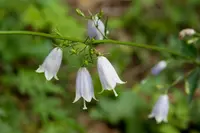
Japanese lady bell
Adenophora triphylla
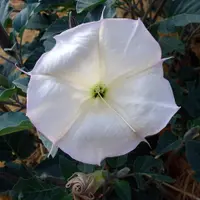
sacred datura
Datura wrightii
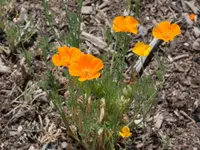
California poppy
Eschscholzia californica
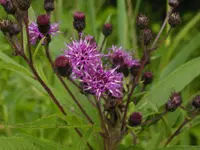
New York ironweed
Vernonia noveboracensis
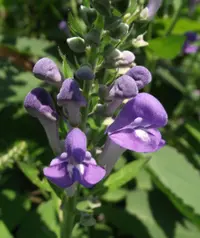
hoary skullcap
Scutellaria incana
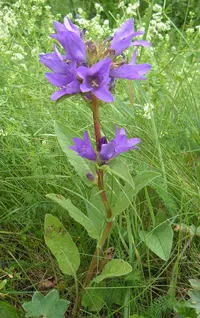
clustered bellflower
Campanula glomerata
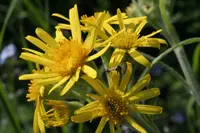
Tephroseris longifolia
Tephroseris longifolia
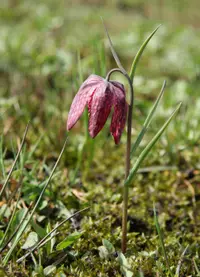
Snake's head fritillary
Fritillaria meleagris