


Early growth training
Install trellis wires or strings as soon as new shoots appear and gently wind young stems around the support weekly to direct growth and prevent a tangled, ground-hugging mat that is difficult to manage later.


New Zealand bindweed (Calystegia tuguriorum) is a perennial climbing vine known for its twining stems and showy, funnel-shaped white to pale pink flowers. It often scrambles over shrubs, fences, or rocky banks, forming dense, leafy cover.
This species is native to New Zealand and nearby coastal regions, where it grows in open, sunny sites and light woodland edges. It spreads by both seed and creeping roots, which can make it vigorous and sometimes hard to control in gardens.
For those who want to care for New Zealand Bindweed, it generally prefers full sun to light shade, moderately moist but well-drained soil, and space to climb or trail.

Care Difficulty
Easy Care

Light Preference
Full Sun

Water Requirements
Moderate Water

Temperature Preference
Cool Climate

Hardiness Zone
7–10

Soil Texture
Sandy, Loamy, Organic-rich

Soil pH
Acidic (5.5–6.5), Slightly acidic (6.5–7.0)

Soil Drainage
Well-drained

Fertilization
Minimal (feed rarely)
Scan your plant to receive care tips personalized for your specific plant
Available on iOS and Android
This vigorous climber prefers bright conditions and can handle a range of sun exposures in temperate climates.
This twining perennial prefers consistently moist but not saturated soil, especially during active growth.
This species grows best in mild, maritime-type climates with cool to warm summers.
Humidity is rarely a limiting factor for New Zealand Bindweed in typical home or garden conditions.
Calystegia tuguriorum prefers moderately fertile, free-draining soil with enough structure to retain some moisture without becoming heavy.
This species can be grown in containers if the pot supports its vigorous, twining growth habit.
This vigorous perennial usually needs only light feeding, as it often thrives in average garden soil.
Pruning Calystegia tuguriorum is mainly about containment and tidiness rather than plant health.
This species is more often transplanted in the ground than kept long term in containers, due to its spreading habit.
Calystegia tuguriorum is commonly propagated by division, root pieces, and sometimes seeds, and can spread quickly.
This hardy perennial usually survives typical temperate winters with minimal intervention once established.

Plant Health Check
Not sure what's wrong with your plant? Check your plant's health inside the app.
This bindweed is naturally restricted to New Zealand and a few nearby islands, where it occurs in coastal and lowland habitats rather than being a widespread global weed like many other bindweeds.
The species commonly grows on sand dunes, coastal slopes, and beach margins, helping to stabilize loose sand with its creeping stems and fibrous root system.
Its funnel-shaped flowers are typically white but can show pale pink or faintly striped forms, a variation that is noted in wild coastal populations.

In parts of New Zealand, this species can hybridize with the related Calystegia soldanella (shore bindweed), producing naturally occurring intermediate plants that show mixed leaf and flower traits.
This species spreads quickly by twining stems and underground rhizomes, especially in mild, moist climates. It can become invasive in gardens, so use root barriers, containers, and regular cutting back to keep it confined.
Keep your plants happy and healthy with plant identification, disease detection, and easy care guidance.

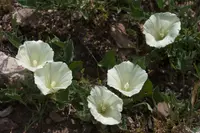
hillside false bindweed
Calystegia subacaulis
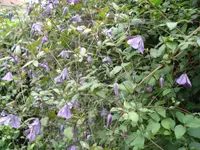
Purple clematis
Clematis viticella
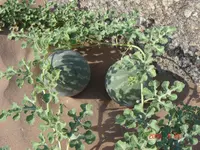
citron-melon
Citrullus lanatus var. citroides
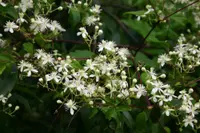
wild clematis
Clematis virginiana
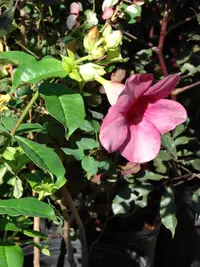
purple allamanda
Allamanda blanchetii
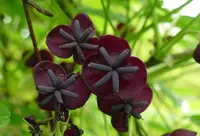
three-leaf akebia
Akebia trifoliata
 POPULAR
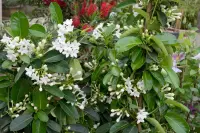
Madagascar jasmine
Stephanotis floribunda
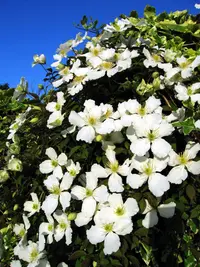
Anemone clematis
Clematis montana