nightblooming false bindweed Care (Calystegia atriplicifolia)

nightblooming false bindweed

About nightblooming false bindweed

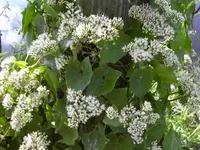
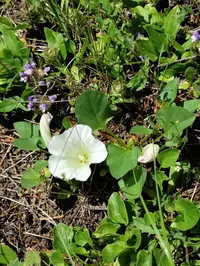
Nightblooming false bindweed (Calystegia atriplicifolia) is a twining, perennial vine related to morning glories. It produces slender stems that climb nearby plants or supports. The plant carries narrow, grey-green leaves and delicate, funnel-shaped white flowers that open mainly at night, attracting moth pollinators.

This species is native to parts of western North America, where it usually grows in dry, open habitats and sandy or gravelly soils. It spreads by underground rhizomes, which can make it persistent once established and requires some control in small gardens.

Gardeners who care for nightblooming false bindweed should know it prefers full sun, well-drained soil, and moderate moisture, and it generally tolerates poor soil and drought once established.

Main Plant Requirements

Care Difficulty

Easy Care

Light Preference

Full Sun

Water Requirements

Moderate Water

Temperature Preference

Cold Hardy

Hardiness Zone

5–9

Soil Texture

Sandy, Loamy, Rocky

Soil pH

Slightly acidic (6.5–7.0), Neutral (7.0)

Soil Drainage

Well-drained

Fertilization

Minimal (feed rarely)

Get Personalized Care Plan

Scan your plant to receive care tips personalized for your specific plant

Available on iOS and Android

How to Care for the nightblooming false bindweed

This twining perennial prefers bright conditions with moderate direct exposure to support strong flowering and growth.

  • Provide 4–6 hours of direct sun daily, ideally morning sun with light afternoon shade to protect delicate foliage.
  • Tolerates bright partial shade, but nightblooming false bindweed may produce fewer flowers and longer, weaker stems in less than 3–4 hours of sun.
  • In hot summers, use dappled or filtered light during intense midday sun to prevent leaf scorch, especially on dry or exposed sites.

This species prefers evenly moist but not saturated soil, with watering guided by soil feel rather than a fixed schedule.

  • Water when the top 3–5 cm of soil feels dry, allowing moisture to reach the deeper root zone without leaving the ground soggy.
  • Use well-drained soil or a sloped site so excess water can escape, reducing the risk of root rot and yellowing leaves from overwatering.
  • During hot, dry periods, check soil more often; in cool or rainy seasons, reduce watering and watch for wilting or crisp edges as signs of drought stress in Calystegia atriplicifolia.

This hardy vine handles a wide outdoor temperature range but grows most actively in mild to warm conditions.

  • Optimal growth occurs around 65–80°F (18–27°C), with vigorous vining and reliable flowering in this range during the main growing season.
  • Established plants typically tolerate winter lows near 10–20°F (-12 to -6°C) when dormant, provided roots are in well-drained soil and mulched lightly.
  • In heat above 90°F (32°C), growth may slow and leaves can scorch, so provide soil moisture and some afternoon shade to reduce stress.

This species is adapted to dry, open habitats and has no special humidity requirements in typical home or outdoor conditions.

This twining perennial prefers moderately fertile, well-drained mineral soils that do not stay waterlogged.

  • Aim for a light to medium loam or sandy loam with some organic matter but not a heavy, peat-dominant mix.
  • Ensure sharp drainage using a blend such as 2 parts garden loam, 1 part coarse sand, and 1 part compost.
  • Target slightly acidic to neutral pH around 6.0–7.2, avoiding strongly acidic or saline soils.
  • Improve aeration and prevent compaction by incorporating coarse sand or fine grit, especially in heavier native soils.

This species can be grown in containers if the pot is large and stable enough to support its twining growth.

  • Choose a deep, wide container of at least 30–40 cm diameter to allow its spreading root system to anchor securely.
  • Use a heavier material such as ceramic or thick-walled terracotta to reduce tipping as vines climb or sprawl.
  • Position the pot where a trellis, fence, or support frame is within immediate reach so new stems can be directed upward.

This vigorous native vine usually needs little feeding in the ground, but light fertilization can support flowering in poor soils.

  • Use a balanced, slow-release fertilizer (around 10-10-10) or a thin layer of mature compost in spring.
  • Feed outdoor plants only 1–2 times per growing season if growth or bloom seems weak.
  • For container-grown nightblooming false bindweed, apply half-strength liquid balanced fertilizer every 4–6 weeks in active growth.
  • Stop feeding in late summer and do not fertilize during winter dormancy.

Pruning helps manage the vigorous growth of Calystegia atriplicifolia and keeps it within bounds.

  • Best time is late winter to early spring before strong new growth starts.
  • Cut back dead, damaged, or weak stems to healthy tissue with clean, sharp pruners.
  • Thin out crowded or tangling vines to improve air flow and maintain the desired shape or coverage.
  • Light in-season tip trimming can limit spread and direct growth along a support.

This species is usually grown in the ground, where careful transplanting matters more than repotting.

  • Transplant in early spring or early fall when temperatures are mild and soil is workable.
  • Move plants if growth declines, clumps become congested, or roots circle inside a container.
  • Dig a wide hole, keep as much root ball intact as possible, and replant at the same soil depth.
  • Water thoroughly after transplanting, then keep soil evenly moist for several weeks to reduce stress.

Calystegia atriplicifolia spreads readily and is straightforward to propagate for garden use.

  • Divide established clumps or sections of rhizomes in early spring or fall and replant immediately.
  • Take 8–10 in softwood or semi-ripe stem cuttings in late spring, using a free-draining mix and high humidity.
  • Sow seeds in fall outdoors or in spring after a brief cold stratification period to improve germination.
  • Label new plantings clearly and contain spread with edging or pots sunk into the ground if needed.

This hardy perennial vine tolerates typical winter conditions in much of its native range with minimal attention.

  • In USDA zones roughly 5–9, top growth usually dies back while underground parts overwinter.
  • Apply a 5–8 cm layer of mulch over the root zone after soil cools to buffer freeze–thaw cycles.
  • For container plants in colder areas, move pots to a sheltered, unheated but frost-free spot until spring.

Care Tips

Provide climbing support

Install a sturdy trellis, fence, or taut wires before new shoots emerge in spring, then gently wind young stems onto the support so the plant climbs vertically instead of smothering nearby vegetation.

Control underground spread

In open ground, bury a root barrier 25–30 cm deep around the planting area or grow it in a large sunken container to limit the rhizomes and keep the vine from invading beds and lawn.

Time cutting back

After flowering, cut spent stems back to just above a strong leaf joint to prevent unwanted self-seeding while still allowing enough foliage for the plant to rebuild energy in its roots.

Monitor for bindweed pests

Check leaf undersides and stem tips every 1–2 weeks for aphids and spider mites, and rinse them off with a firm water spray early in the day before populations build up and weaken the vine.

Use mulch strategically

Apply a 5–7 cm layer of organic mulch over the root zone in late spring, keeping it a few cm away from the stems, to conserve soil moisture and reduce weed competition when caring for nightblooming false bindweed.

Common Pests and Diseases

Bindweed gall mite

This pest causes distorted, thickened, or rosette-like growth at shoot tips and leaf nodes as it feeds inside plant tissues. Symptoms include stunted vines and clustered, puckered leaves.

Solution

Prune and destroy affected shoot tips as soon as distortion appears, and avoid moving infested plant material to new areas. For larger outdoor patches, cut vines back hard and encourage vigorous regrowth of surrounding vegetation to compete, then monitor regularly and remove new galled shoots to limit mite populations.

Leaf spot

This disease produces small brown or tan spots on leaves that may merge into larger dead patches, especially in humid or wet conditions. Symptoms include premature yellowing and leaf drop on lower parts of the vine.

Solution

Remove and discard heavily spotted leaves and any fallen debris to reduce the source of infection. Improve air movement by thinning dense growth and avoid prolonged leaf wetness by watering at the base early in the day; in severe or recurring cases, a labeled copper or chlorothalonil fungicide can be used according to local regulations as part of Calystegia atriplicifolia care.

Powdery mildew

This disease shows up as a white or gray powdery film on the upper leaf surface and sometimes stems. Symptoms include dulled leaf color, curling, and slowed growth, especially in shaded, crowded areas with dry air and poor airflow.

Solution

Increase sun exposure where possible, thin competing plants, and remove the worst-affected leaves to reduce spore load. If needed, apply a sulfur-based or potassium bicarbonate fungicide labeled for ornamental vines, and repeat at intervals while conditions favor infection.

Aphids

These insects cluster on young shoots, flower buds, and leaf undersides, sucking sap and excreting sticky honeydew that can lead to sooty mold. Symptoms include curled or distorted new growth and an attraction of ants to the honeydew.

Solution

Dislodge colonies with a strong stream of water from a hose and pinch off heavily infested shoot tips. Encourage natural predators like lady beetles, avoid high-nitrogen fertilization that stimulates soft growth, and, if needed, use insecticidal soap or a light horticultural oil, making sure to wet the undersides of leaves thoroughly.

Spider mites

This pest causes fine speckling or bronzing of leaves, sometimes with delicate webbing between stems and leaf undersides during hot, dry weather. Symptoms include dull, dry-looking foliage that may drop early if populations are high.

Solution

Rinse foliage thoroughly with water, focusing on leaf undersides, and repeat several times over a week to knock back mite numbers. Maintain moderate moisture around the planting, remove and discard badly damaged leaves, and, if infestation persists, use a horticultural oil or insecticidal soap labeled for mites, applied in cool parts of the day to avoid leaf scorch while growing nightblooming false bindweed.

Interesting Facts

Coastal salt tolerance

This species naturally occurs along saline coastal environments of the Pacific Northwest and shows notable tolerance to salty spray and sandy, nutrient-poor soils compared with many other bindweeds.

Silvery leaf coating

Its leaves often appear gray-green due to a fine surface coating that helps reduce water loss and sun stress in exposed seaside habitats.

Twining growth habit

The plant climbs by twining its stems around nearby supports, allowing it to reach light above low coastal vegetation without investing energy in thick, self-supporting stems.

FAQs about nightblooming false bindweed

This species spreads by creeping rhizomes and self-seeding, so it can become aggressive in loose, fertile soils. Use root barriers, containers, or regular digging of wandering shoots if you need to limit its spread.

Grow Healthy Plants with Botan Care

Keep your plants happy and healthy with plant identification, disease detection, and easy care guidance.

Botan plant care app — identify plants on mobile

Explore More Plants