Regular vine training
Guide new stems along horizontal wires or mesh and gently tie them every 15–20 cm with soft ties to create a dense, orderly screen instead of a tangled mass.

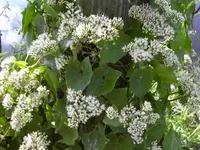
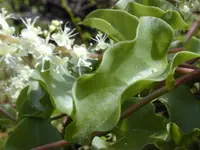
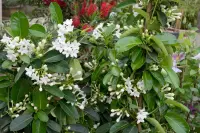
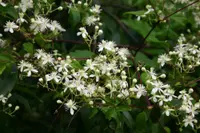
Climbing hempvine (Mikania scandens) is a fast-growing, twining vine native to wetlands, riverbanks, and marshes in eastern North America. It often forms dense, tangled mats over shrubs and small trees. The plant has slender, climbing stems with opposite, heart-shaped leaves and clusters of small, whitish flower heads that attract many pollinators. In gardens, it is sometimes used in naturalistic or wildlife-friendly plantings, especially near moist areas. It can spread quickly and may need regular control in suitable climates. Understanding how to care for climbing hempvine starts with knowing its preference for consistent moisture, rich soil, and full sun to light shade.

Care Difficulty
Moderate Care

Light Preference
Partial Sun

Water Requirements
Aquatic

Temperature Preference
Warm Climate

Hardiness Zone
5–11

Soil Texture
Loamy, Silty, Organic-rich

Soil pH
Acidic (5.5–6.5), Slightly acidic (6.5–7.0)

Soil Drainage
Waterlogged tolerant

Fertilization
Minimal (feed rarely)
Scan your plant to receive care tips personalized for your specific plant
Available on iOS and Android
This twining vine prefers bright, gentle light that mimics open, moist habitats along streams and wetlands.
This species prefers consistently moist conditions but reacts poorly to waterlogged soil.
This vine grows best in mild to warm conditions and is sensitive to frost.
This species prefers moderately humid air but usually adapts to average home levels if not too dry.
This vine grows best in moist, airy, organic-rich soil that does not stay waterlogged.
This species is suitable for container growing when the pot supports its trailing and climbing habit.
Mikania scandens grows well in average soil but responds to light feeding during the active growing season.
Pruning helps keep Mikania scandens in check and encourages dense, manageable growth.
This vigorous vine is more often transplanted outdoors than kept long term in small containers.
Mikania scandens is commonly propagated to establish new groundcover or to share plants.
This species is only moderately cold tolerant and benefits from some winter attention in cooler regions.

Plant Health Check
Not sure what's wrong with your plant? Check your plant's health inside the app.
This vine is naturally concentrated in brackish and tidal freshwater marshes along the Atlantic and Gulf coasts of North America, where it tolerates fluctuating salinity and periodic flooding better than many other herbaceous climbers.
In most of its range it behaves as a herbaceous perennial that dies back to the root system in winter, then rapidly produces new climbing stems in spring, allowing it to exploit seasonal light gaps in wetland vegetation.
Its small, lightly scented flower clusters attract a variety of native bees, flies, and wasps, and the fluffy, wind-dispersed seeds are eaten or incidentally carried by some bird species, integrating the plant into multiple wetland food webs.

In parts of its southeastern US range, this species can form dense tangles over shrubs and emergent marsh plants, and field studies have documented it contributing substantially to late-season nectar resources for pollinators when many other wetland species have already finished flowering.
Lack of flowers usually results from too much shade, heavy nitrogen fertilization, or very young vines. Ensure at least moderate light, avoid overfertilizing, and allow the plant to reach a reasonable size before expecting consistent blooming.
Keep your plants happy and healthy with plant identification, disease detection, and easy care guidance.