\the more noble cattleya\ Care (Cattleya nobilior)

Also known as: the more noble cattleya
\the more noble cattleya\

About \the more noble cattleya\

The more noble cattleya, Cattleya nobilior, is a compact epiphytic orchid from dry forest regions of Brazil. It typically grows on trees, forming tight clumps of pseudobulbs with thick, leathery leaves.

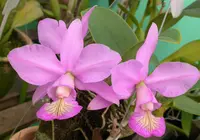
Its flowers are large, showy, and often fragrant, with broad petals and a prominent lip in shades of pink, lavender, or purple. Blooms usually appear on leafless pseudobulbs, which can surprise new growers.

This species prefers bright light, good air movement, and a marked dry rest after flowering, which influences how to care for \the more noble cattleya\. It is considered moderately challenging for beginners but rewarding once its seasonal rhythm is understood.

Main Plant Requirements

Care Difficulty

Moderate Care

Light Preference

Partial Sun

Water Requirements

Moderate Water

Temperature Preference

Tropical / Frost Sensitive

Hardiness Zone

Unknown

Soil Texture

Sandy, Rocky, Organic-rich

Soil pH

Acidic (5.5–6.5)

Soil Drainage

Well-drained

Fertilization

Moderate (every 2–4 weeks)

Get Personalized Care Plan

Scan your plant to receive care tips personalized for your specific plant

Available on iOS and Android

How to Care for the \the more noble cattleya\

Cattleya nobilior is a high-light orchid that needs bright, indirect sun to flower well.

  • Provide 6–8 hours of bright, filtered light daily, ideally with gentle morning sun and protection from harsh midday and afternoon rays.
  • Allow light levels similar to a bright east or lightly shaded south exposure; leaves should be medium green, not dark (too little light) or yellow with scorched patches (too much).
  • he more noble cattleyaenefits from slightly higher light in winter and light shade in summer, using sheer curtains or 30–40% shade cloth outdoors.

This orchid prefers thorough watering followed by a distinct drying period around the roots.

  • Water when the medium feels dry and the pot or mount feels noticeably lighter; typically after the top 2–3 cm have dried, rather than on a fixed schedule.
  • Use a very free-draining orchid mix; water until it flows freely out, then let roots dry to silvery or pale green before the next watering to reduce rot risk.
  • In active growth, drying intervals shorten; in cooler seasons or slight rest, extend intervals and watch for shriveling pseudobulbs (too dry) or blackened, mushy roots (too wet) as key signs.

This species prefers warm days with a gentle drop in temperature at night.

  • Aim for 70–85°F (21–29°C) by day and 60–68°F (16–20°C) at night for steady growth and reliable flowering.
  • Short periods up to 90–95°F (32–35°C) are tolerated if humidity and air movement are good; above this, increase shade and ventilation to prevent heat stress.
  • Avoid temperatures below 50°F (10°C); it is not frost tolerant, and repeated exposure near this minimum can slow growth, damage roots, and reduce flowering the following season.

This orchid prefers moderately humid air to support firm pseudobulbs and healthy roots.

  • Aim for 50–70% humidity, with strong air movement to prevent fungal problems.
  • It tolerates brief drops to 30–40% if watered correctly, but prolonged very dry air causes shriveled pseudobulbs and wrinkled leaves.
  • If air is dry, use a fan over a water-filled pebble tray or group plants to raise humidity for the more noble cattleya.

Cattleya nobilior grows best in a very airy, fast-draining orchid medium rather than regular potting soil.

  • Use a coarse mix such as medium bark with 10–20% perlite or pumice to keep roots well aerated.
  • Add a small amount of chunky charcoal to buffer salts and maintain structure over time.
  • Maintain a slightly acidic to neutral root zone, roughly pH 5.5–7, by avoiding heavy lime-rich components.
  • Do not use dense, peat-heavy mixes, which stay wet, reduce oxygen around roots, and encourage rot.

This species is well suited to container growing when drainage and root aeration are prioritized.

  • Choose a squat, wider pot or basket to accommodate its spreading rhizome without forcing new growths against the rim.
  • Use slotted or net pots so water runs through rapidly and roots receive maximum air exposure.
  • Place heavier containers or add weight to stabilize the pot, as mature plants can become top-heavy with multiple pseudobulbs.

This orchid benefits from modest, targeted feeding during active growth.

  • Use a balanced orchid fertilizer (around 20-20-20) diluted to 1/4–1/2 strength for the more noble cattleya.
  • Apply every 2–3 weeks in spring and summer when new roots and pseudobulbs are developing.
  • Rinse the potting medium with plain water once a month to prevent salt buildup.
  • Reduce feeding to once a month or stop entirely in fall and winter when growth slows.

Cattleya nobilior needs only light, maintenance pruning.

  • Best time is after flowering, when new growth is visible.
  • Remove dead or rotting pseudobulbs, dried sheaths, and yellow or damaged leaves with sterile scissors or pruners.
  • Cut spent flower spikes at the base if they are clearly dry and brown.
  • Pruning improves air flow, reduces disease risk, and keeps the clump compact.

Repotting is occasional but important to maintain root health and medium freshness.

  • Repot every 2–3 years or when roots circle the pot, climb over the rim, or growth slows.
  • Best timing is in late winter to early spring, just as new roots begin to emerge.
  • Use a coarse, airy orchid mix and a snug pot, then secure rhizomes to limit wobbling and root stress.
  • Trim only dead roots, keep live roots intact, and water lightly for 1–2 weeks after repotting.

This species is typically propagated by division rather than by seed at home.

  • Divide mature clumps in late winter or early spring when new growth starts.
  • Each division should carry at least 3–4 healthy pseudobulbs and active roots for stable recovery.
  • Use sterile cutting tools and dust cut surfaces with fungicide or powdered cinnamon to limit infection.
  • Pot divisions in fresh, coarse orchid mix, keep humidity moderate, and water lightly until roots reestablish.

Cool-season care focuses on avoiding freezing temperatures and managing a slight rest period.

  • Cattleya nobilior is frost sensitive and must be kept above 50°F, ideally 55–65°F in winter.
  • Move container plants indoors to a bright, airy spot before nights drop near 50°F.
  • Water less often, allowing the medium to dry more between waterings, and stop high-nitrogen feeding.
  • Ensure good air circulation indoors to prevent fungal problems during the cooler, slower-growth phase.

Care Tips

Adjust mount angle

Mount plants on a slab or in a basket at a slight downward angle so new growths can develop without crowding the rhizome and water can drain rapidly away from the roots.

Seasonal rest handling

During the dry winter rest, reduce watering but still mist roots lightly on warm, bright days to prevent complete desiccation while keeping pseudobulbs only slightly wrinkled, not fully shriveled.

Rhizome direction planning

When repotting or mounting, position the oldest pseudobulbs against one edge and leave open space in front of the leading growth so the rhizome has 2–3 years of room to advance before needing disturbance.

Airflow zoning

Place a gentle fan so air moves across leaves and roots but does not blow directly at flowers, which helps prevent fungal spots and bacterial rot while maintaining bloom quality when caring for \the more noble cattleya\.

Targeted root rehydration

If roots become slightly shriveled after a dry period, soak only the root zone in lukewarm water for 15–20 minutes, then let it drain completely to rehydrate velamen without saturating the pseudobulbs.

Common Pests and Diseases

Scale insects

This pest feeds on sap along cattleya pseudobulbs and leaf midribs, often hiding in leaf sheaths and around rhizomes. Symptoms include sticky honeydew, yellowing patches, and weakened new growth.

Solution

Remove old, dry sheaths and inspect the rhizome regularly, then wipe affected areas with cotton pads dipped in isopropyl alcohol to dislodge the insects. For larger infestations, use a systemic insecticide labeled for orchids and repeat at 7–14 day intervals, combined with improved air movement and lower humidity around heavily affected plants until populations decline.

Spider mites

These insects thrive on cattleya-type orchids grown in warm, dry conditions, especially on the undersides of leaves. Symptoms include fine stippling, dull or silvery leaves, and very fine webbing between leaves and sheaths.

Solution

Rinse foliage thoroughly under lukewarm water, focusing on leaf undersides, and increase ambient humidity while maintaining good air circulation. In persistent cases, apply a miticide or insecticidal soap labeled for mites on orchids, repeating treatments as directed to target successive mite generations.

Bacterial brown rot

This disease affects cattleyas by rapidly collapsing pseudobulbs and leaves, starting as water-soaked patches that turn brown and emit a foul odor. Symptoms include fast-spreading soft, mushy tissue, often beginning at the base or in leaf axils that stay wet.

Solution

Immediately cut out all affected tissue with a sterile blade, making sure to remove some healthy tissue beyond the visible damage, then dust the cuts with a bactericidal powder such as Physan or powdered cinnamon. Reduce watering, keep water off the foliage, increase air movement, and isolate the plant from others until no new lesions appear.

Black rot (Pythium/Phytophthora)

This disease attacks new cattleya shoots and roots, especially in cool, wet conditions or poorly drained media. Symptoms include black, firm lesions spreading from the base of pseudobulbs or new growths, which then shrivel and die.

Solution

Remove and discard all affected growth and roots using sterile tools, then repot into fresh, fast-draining medium and a well-ventilated pot. Keep the plant warmer and on the dry side between waterings, improve air movement, and apply a fungicide labeled for Pythium/Phytophthora if the plant has a history of recurring black rot.

Orchid viruses

Symptoms include distorted flowers, reduced vigor, and in some cases faint mosaic or streak patterns on leaves, which can be more visible on compact cattleyas over time. This disease cannot be cured and spreads mainly through contaminated cutting tools or sap contact between plants.

Solution

Isolate any plant suspected of virus and use disposable or flame-sterilized tools for every cut when dividing or trimming. If virus is confirmed by testing, the safest practice is to discard the plant to protect the collection and focus on strict tool sterilization and avoiding sap contact between plants in future Cattleya nobilior plant care routines.

Interesting Facts

Dry-forest epiphyte

This orchid naturally grows as an epiphyte or lithophyte on trees and rocks in seasonally dry gallery forests of central Brazil, tolerating much brighter light and drier air than many other Cattleya species.

Fragrant twilight flowers

The large, often pink to lilac flowers are strongly scented and tend to open and be most fragrant in the late afternoon and evening, reflecting adaptation to attract specific pollinators active at that time.

Short, thick pseudobulbs

It has compact, thick pseudobulbs with only 1–2 leaves, an adaptation that allows storage of water and nutrients to bridge dry periods between irregular rains in its native habitat.

Botan icon

Did you know?

This species has been important in breeding more compact, strongly scented Cattleya hybrids, passing on its strong fragrance, robust growth, and tolerance of brighter, drier conditions that are useful for Cattleya nobilior plant care in home collections.

FAQs about \the more noble cattleya\

Lack of flowering usually comes from insufficient light, no cooler, drier winter rest, or an overfed, constantly moist root system. Provide bright, filtered light, a distinct dry rest after growth matures, and avoid heavy nitrogen.

Grow Healthy Plants with Botan Care

Keep your plants happy and healthy with plant identification, disease detection, and easy care guidance.


Botan plant care app — identify plants on mobile

Explore More Plants