Aechmea ornata Care

Aechmea ornata

About Aechmea ornata

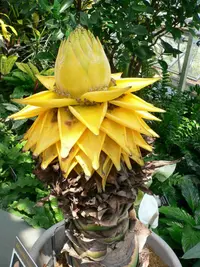
Aechmea ornata is an epiphytic bromeliad, often grown as a houseplant for its bold rosette of stiff, arching leaves and tall, showy flower spike. The foliage is typically gray-green with a powdery surface, and the inflorescence carries pink bracts with clustered flowers that can last for many weeks.

In nature, it occurs in the Atlantic Forest regions of Brazil, growing on trees where it collects water and debris in its central cup. Its slow growth, tolerance of indoor conditions, and modest care needs make it suitable for beginners who want to care for Aechmea ornata.

It prefers bright, indirect light, moderate room temperatures, and a well-draining mix that mimics its airy, epiphytic habitat.

Main Plant Requirements

Care Difficulty

Moderate Care

Light Preference

Bright Indirect Light

Water Requirements

Moderate Water

Temperature Preference

Tropical / Frost Sensitive

Hardiness Zone

10–12

Soil Texture

Sandy, Loamy, Organic-rich

Soil pH

Acidic (5.5–6.5), Slightly acidic (6.5–7.0)

Soil Drainage

Well-drained

Fertilization

Light (every 4–6 weeks)

Get Personalized Care Plan

Scan your plant to receive care tips personalized for your specific plant

Available on iOS and Android

How to Care for the Aechmea ornata

This bromeliad prefers bright, indirect light with limited direct sun exposure.

  • Provide 4–6 hours of bright, filtered light daily, such as near an east window or under light shade outdoors; short periods of gentle morning sun are acceptable.
  • Protect from strong midday and afternoon sun, which can bleach or scorch leaves; move to dappled shade if leaf tips turn brown or silvery.
  • In winter, when light is weaker and days are shorter, move Aechmea ornata slightly closer to the light source to prevent stretched, pale growth.

This species needs a consistently moist but not soggy root zone and a filled central cup.

  • Allow the top 2–3 cm of mix to dry before watering; in active growth, this often means watering when the pot feels lighter and the surface looks pale.
  • Keep the central tank about half full with fresh water and flush it every 1–2 weeks to prevent salt buildup and rot, especially in warm weather.
  • Use a fast‑draining mix and empty any standing water from saucers; yellowing, limp leaves suggest overwatering, while crisp, curling leaves indicate underwatering.

Stable warmth and frost protection are essential for healthy growth and flowering.

  • Aim for 65–80°F (18–27°C) for active growth, with the best performance near the middle of this range in bright, humid conditions.
  • Avoid temperatures below 50°F (10°C); brief dips near this level can slow growth, and any frost can permanently damage foliage and the central cup.
  • In hot periods above 85°F (29°C), provide shade, good air movement, and slightly higher humidity to limit stress and leaf scorching, especially in full-sun climates.

This bromeliad handles typical indoor humidity but benefits from moderately moist air.

  • Aim for 40–60% humidity to support steady foliage and flower development in Aechmea ornata.
  • Dry air causes brown leaf tips and curling margins, especially near heating or AC vents.
  • Increase humidity with a nearby humidifier, grouped plants, or a pebble tray, but keep the central cup water clean.

This species prefers a loose, airy, fast-draining mix rather than dense, heavy soil.

  • Use a bromeliad or orchid-style mix combining fine bark, perlite, and a small amount of peat or coco coir for moisture retention.
  • Ensure very sharp drainage so water drains through in seconds, preventing the roots from sitting in saturated pockets.
  • Keep pH slightly acidic to neutral, around 5.5–7.0, which supports nutrient uptake and reduces salt stress.
  • Avoid compacted garden soil, high-clay mixes, or constantly soggy substrates, which promote root and base rot in Aechmea ornata.

This bromeliad is well suited to container growing due to its compact root system and rosette form.

  • Choose a relatively heavy, low, and wide pot to counterbalance the tall flowering spike and prevent tipping.
  • Select a container material that matches your watering habits, such as terracotta for faster drying or plastic for slower moisture loss.
  • Keep the pot only slightly wider than the root base so the mix dries evenly rather than staying wet in unused outer zones.

This bromeliad has modest feeding needs but responds well to light, consistent nutrition during active growth.

  • Use a balanced liquid fertilizer (around 10-10-10 or 20-20-20) diluted to 1/4–1/2 strength for Aechmea ornata.
  • Feed every 4–6 weeks in spring and summer, applying to the soil or lightly to the leaf tank, then flush with plain water monthly.
  • Avoid heavy, salt-rich products; a gentle, slow-release or organic formula is sufficient in a loose, airy mix.
  • Reduce feeding to 1 light application in fall and stop during winter dormancy or under low-light, cool conditions.

Pruning needs are minimal and focus on cleanliness and directing energy to healthy rosettes.

  • After flowering, cut the spent flower stalk at the base with clean, sharp scissors or pruners.
  • Remove dead, damaged, or collapsing leaves at the leaf base to limit rot and improve air flow.
  • Thin out crowded offsets only when needed to maintain spacing and reduce competition for light and nutrients.
  • Disinfect cutting tools before and after use to reduce disease transmission between bromeliads.

Container-grown plants are repotted mainly to refresh the mix and give offsets space rather than to increase root volume.

  • Check for roots circling the pot, slow growth despite good care, or a wobbling plant as signs repotting is due.
  • Plan to repot every 2–3 years in spring, using a very airy bromeliad or orchid-type mix that drains quickly.
  • Gently remove the plant, shake off old medium, and trim dead roots; avoid breaking healthy, firm roots and offsets.
  • Replant at the same depth, water lightly, and keep in bright, indirect light for 1–2 weeks to reduce transplant stress.

New plants are most reliably produced from offsets rather than from seed.

  • Allow pups to reach about 1/3–1/2 the size of the mother rosette before separation for growing Aechmea ornata.
  • In late spring or early summer, unpot the clump and gently tease pups away, keeping a portion of the basal stem and roots.
  • Plant each offset in a free-draining bromeliad mix, then water lightly and maintain high humidity and bright, indirect light.
  • Seed growing is possible but slow; provide warmth (70–80°F), constant slight moisture, and very bright, filtered light.

This tropical bromeliad is not frost hardy and needs mild, protected conditions in winter.

  • Keep plants above 50°F; growth is best at 60–75°F with bright, indirect light indoors.
  • Move container plants indoors before night temperatures reach 45°F, placing them away from cold drafts and heater vents.
  • Water less often in winter, allowing the mix to dry slightly; keep the central cup only lightly filled to prevent rot.
  • In mild climates, outdoor plants benefit from a light mulch around the pot to buffer brief cool spells, not hard freezes.

Care Tips

Tank water management

Keep the central cup filled with low-mineral water and flush it fully every 2–4 weeks to prevent salt buildup, mosquito larvae, and fungal film in the water reservoir.

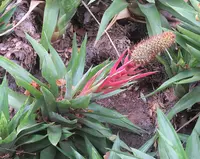
Offset removal timing

Detach pups only when they reach about 1/3–1/2 the height of the mother rosette, using a clean, sharp knife at the base to ensure each offset has its own small root system for faster establishment.

Stable display support

Set the pot inside a slightly heavier cachepot or add a topdressing of decorative gravel to the surface of the mix to reduce the chance of the tall flower spike toppling the plant.

Airflow during bloom

Provide gentle, consistent air movement around the inflorescence with a small fan on a low setting to reduce fungal spotting on bracts and keep the flower spike attractive for longer.

Quarantine and inspection

Quarantine new bromeliads for 2–3 weeks and inspect leaf axils and the central tank for scale or mealybugs so that caring for Aechmea ornata in a collection does not introduce pests to other plants.

Common Pests and Diseases

Mealybugs

This pest is often found tucked into the leaf bases and around the central cup where it feeds on plant sap and excretes sticky honeydew. Symptoms include cottony white clusters, stunted growth, and sooty mold growing on the honeydew.

Solution

Remove visible insects with a cotton swab dipped in isopropyl alcohol, then rinse the rosette and leaf bases thoroughly with lukewarm water. For recurring issues, apply a horticultural soap or neem oil spray to all leaf surfaces and leaf axils every 7–10 days until no new pests appear, and isolate the plant from others during treatment.

Scale insects

These insects attach tightly along the stiff leaves and sheaths, appearing as small brown or tan bumps that do not rub off easily. Symptoms include yellowing patches, weakened growth, and sticky residue on the leaves or nearby surfaces.

Solution

Gently scrape off individual scales with a fingernail or soft brush and wipe affected areas with alcohol-dampened cotton. Follow with repeated applications of horticultural oil or insecticidal soap, making sure to coat both sides of the leaves and the lower leaf bases, and improve light and air movement to support plant recovery.

Bacterial leaf spot

This disease causes water-soaked, translucent spots that may become tan or dark with a yellow halo, often starting where water accumulates in the leaf axils or central tank. Symptoms include expanding lesions that can distort or collapse sections of the leaf.

Solution

Remove and discard severely affected leaves, avoid splashing water on the foliage, and keep the central cup water clean and changed regularly. Improve air circulation, reduce overhead misting, and if the spread continues, use a copper-based bactericide labeled for bromeliads, following label directions carefully.

Leaf base rot

This disease affects the lower leaf bases and central rosette, where constantly wet conditions lead to soft, brown, foul-smelling tissue. Symptoms include leaves loosening at the base, collapse of the central cup, and rapid decline of the plant.

Solution

At early stages, cut away all softened tissue with a sterile blade and keep the plant drier, allowing the central cup to empty between waterings. Discard severely rotted plants to protect nearby bromeliads, sanitize pots and tools, and in collections prone to this issue, use a fast-draining mix and avoid letting cold water sit long-term in the rosette.

Fungal leaf spot

This disease produces small brown or purplish spots on the stiff leaves that may merge into irregular blotches under humid, stagnant conditions. Symptoms include cosmetic damage that can slowly enlarge, especially where water sits on the leaf surfaces for long periods.

Solution

Trim off badly spotted leaves and dispose of them, then reduce humidity around the foliage by increasing air movement and avoiding prolonged overhead wetting. Allow the plant to dry between misting sessions, keep the crown water fresh, and if new spots continue to appear, apply a broad-spectrum fungicide suitable for ornamental bromeliads as directed on the label for Aechmea ornata care instructions.

Interesting Facts

Riverbank epiphyte specialist

In the wild, this species often grows as an epiphyte on trees along Atlantic rainforest riverbanks in southeastern Brazil, where frequent mist and high ambient humidity keep its leaf tanks filled with water.

Heavily armed leaf margins

Its long, arching leaves have coarse, upward-curving spines along the edges, which help deter herbivores and may also trap organic debris that later decomposes and feeds the plant.

Long-lasting pink inflorescence

The branched flower stalk carries stiff, pink bracts that can remain showy for several months, outlasting the small, short-lived individual flowers that emerge from between the bracts.

Botan icon

Did you know?

Aechmea ornata can host miniature aquatic ecosystems in its central water-holding rosette, supporting small invertebrates and providing microhabitats that increase local biodiversity in its native Brazilian rainforest environment.

FAQs about Aechmea ornata

This bromeliad usually blooms only once when mature, then slowly declines while producing pups. Lack of bloom is often due to immaturity, insufficient light, or major stress such as repotting or temperature extremes.

Grow Healthy Plants with Botan Care

Keep your plants happy and healthy with plant identification, disease detection, and easy care guidance.

Botan plant care app — identify plants on mobile

Explore More Plants