Pyramidal Bugle Care (Ajuga pyramidalis)

Pyramidal Bugle

About Pyramidal Bugle

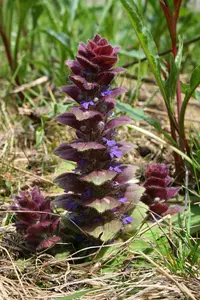
Pyramidal bugle (Ajuga pyramidalis) is a low, clump-forming perennial in the mint family, grown mainly for its neat rosettes and short flower spikes. It usually forms small, upright clusters rather than spreading aggressively like some other bugleweeds.

This species is native to mountainous and subalpine areas of Europe, where it grows in open meadows, rocky slopes, and light woodland clearings. Its dense foliage and showy blue to violet flowers make it useful for edging, rock gardens, and small groundcover patches.

Ajuga pyramidalis tends to be straightforward to grow if given moist but well-drained soil and light shade to partial sun. Learning how to care for Pyramidal Bugle mainly involves providing steady moisture and avoiding very hot, exposed sites.

Main Plant Requirements

Care Difficulty

Easy Care

Light Preference

Partial Shade

Water Requirements

Moderate Water

Temperature Preference

Cold Hardy

Hardiness Zone

4–8

Soil Texture

Loamy, Sandy, Organic-rich

Soil pH

Acidic (5.5–6.5), Slightly acidic (6.5–7.0)

Soil Drainage

Moist but well-drained

Fertilization

Minimal (feed rarely)

Get Personalized Care Plan

Scan your plant to receive care tips personalized for your specific plant

Available on iOS and Android

How to Care for the Pyramidal Bugle

Ajuga pyramidalis prefers cool, bright conditions with protection from intense midday sun.

  • Provide 3–5 hours of morning sun with light or dappled shade in the afternoon for best foliage color and flowering.
  • Plant in partial shade; it tolerates full shade but may flower less and grow more sparsely if light stays below 2–3 hours of sun daily.
  • Avoid hot, reflected afternoon sun, which can scorch leaves and dry the soil quickly, especially in summer and warmer climates.

Ajuga pyramidalis prefers consistently moist but not waterlogged soil.

  • Water when the top 2–3 cm of soil feels dry, aiming for evenly moist soil during the main growing season in spring and early summer.
  • Use well-drained soil; pooling water or a sour smell around the roots signals poor drainage and a risk of root rot from overwatering.
  • In hot, dry weather, watch for wilting or dry, crisp leaf edges as signs it needs more moisture, especially in newly planted areas.

This hardy perennial tolerates cool climates but grows best in moderate temperatures.

  • Optimal growth occurs around 55–75°F (13–24°C), with steady spring and fall temperatures supporting dense foliage and flowering.
  • Established plants usually tolerate winter down to about -20°F (-29°C) under snow cover or mulch, though foliage may burn or die back.
  • In summer, growth can slow above 85°F (29°C); provide shade and consistent moisture during hot spells to reduce heat stress and leaf scorch.

This species grows well in typical outdoor humidity and rarely needs special adjustments when grown as Pyramidal Bugle groundcover.

  • Performs reliably in 40–70% humidity, matching most temperate outdoor conditions.
  • Tolerates short dry-air spells, but prolonged hot, very dry wind can cause browning leaf edges and slower growth.
  • Increase humidity slightly during heatwaves by mulching the soil surface and avoiding hot, reflected sites near walls or paving.

Ajuga pyramidalis prefers moist, well-structured soil that stays aerated yet does not dry out quickly.

  • Use a loamy, organic-rich base soil that holds moisture but still feels springy, not compacted, when squeezed.
  • Ensure drainage is moderate to fast by blending in coarse sand or fine grit at 20–30% of the volume for heavy or clay soil.
  • Aim for slightly acidic to neutral pH around 6.0–7.0, which supports nutrient uptake and stable foliage color.
  • Avoid waterlogged, sticky, or very dry, stony ground; improve aeration with compost plus coarse particles before planting.

This species is suitable for containers, especially shallow, wide pots or troughs that match its low, spreading habit.

  • Choose a broad, stable container so lateral runners cannot tip the pot as they spread over the rim.
  • Use a slightly heavier pot material, such as ceramic, to reduce moisture swings and keep the shallow root system cool.
  • Fill the container so the crown sits just above the rim, preventing trapped moisture against foliage after watering or rain.

Ajuga pyramidalis generally needs modest feeding when grown in average, fertile garden soil.

  • Apply a light top-dressing of compost or well-rotted organic matter in early spring to support new growth.
  • In containers, use a balanced, slow-release fertilizer (around 10-10-10) once in spring at half the label rate.
  • During active growth, avoid high-nitrogen products that can reduce flowering and cause overly soft foliage.
  • Stop additional feeding in late summer and avoid fertilizing in winter dormancy.

Pruning Ajuga pyramidalis is mainly done to maintain a dense, neat mat and support healthy flowering.

  • Carry out main pruning after flowering in late spring or early summer to tidy spent flower spikes.
  • Shear or snip off old flower stems and any leggy, discolored foliage using sharp hand shears or scissors.
  • Thin crowded patches by removing small clumps to improve air circulation and reduce foliar disease risk.
  • Light trimming encourages fresh basal growth and keeps Pyramidal Bugle forming an even groundcover.

This low-growing perennial is usually transplanted in the garden rather than repotted frequently in containers.

  • Plan transplanting for early spring or early fall, when weather is cool and soil moisture is steady.
  • Move clumps when the center thins out, growth slows, or plants spread beyond their intended area.
  • Lift sections with a spade, keeping roots intact, and replant at the same depth in well-drained soil.
  • Water thoroughly after transplanting and shade for a few days if conditions are hot or sunny to limit stress.

Ajuga pyramidalis is most often propagated by division, with seed and cuttings used less commonly.

  • Divide mature clumps in early spring or early fall, when plants are actively rooting but temperatures are mild.
  • Lift the mat and separate rooted sections by hand or with a clean knife, keeping several shoots per piece.
  • Replant divisions promptly in moist, well-drained soil and water consistently until new growth is established.
  • For seeds, sow on the surface of a cool seed tray, keep lightly moist, and allow several weeks for germination.

Ajuga pyramidalis is generally cold hardy and needs minimal winter attention in most temperate gardens.

  • In cold regions, apply a 2–5 cm layer of mulch after the ground cools to buffer freeze–thaw cycles around roots.
  • Avoid waterlogged soil in winter, which can cause root and crown rot in this low-growing perennial.
  • Container-grown plants in very cold climates can be moved into a sheltered, unheated space to reduce freeze stress.

Care Tips

Control Ground Spread

Edge beds with a flat spade once or twice a year to cut off creeping stems before they root into lawns or paths, then lift and compost the unwanted pieces to keep the clump dense and tidy.

Encourage Dense Mats

Lightly pinch back the tips of longer runners after flowering to promote branching, which creates a tighter, more weed-suppressing carpet over time.

Divide For Vigor

Every 2–3 years, lift and divide crowded patches in early spring or early fall, replanting only the plump, healthy rosettes and discarding any woody or bare-centered sections.

Prevent Crown Rot

When mulching, keep mulch pulled back 3–5 cm from the plant crowns so the leaf rosettes stay dry at the base, which greatly reduces rot in wet seasons.

Spot-check For Pests

Once a month during the growing season, inspect the undersides of leaves for aphids or vine weevil notches and treat early with targeted controls, which is especially helpful when growing Pyramidal Bugle in small, dense plantings.

Common Pests and Diseases

Crown rot

This disease affects the dense crown where stems and leaves meet the soil, especially in poorly drained or waterlogged sites. Symptoms include browning at the base of shoots, plant collapse, and patches of dead rosettes within the mat.

Solution

Improve drainage, avoid overwatering, and keep mulch and debris away from the crown to keep it drier. Remove and discard affected plants and surrounding soil, then replant only in well-drained locations and avoid overhead irrigation to reduce future infections.

Powdery mildew

This disease appears as white or gray powdery patches on leaves, often in humid conditions with poor airflow. Symptoms include distorted foliage, reduced vigor, and a dull, dusty appearance on the mat.

Solution

Thin or divide dense clumps to increase airflow and avoid frequent overhead watering. Remove heavily infected leaves and, if needed, apply a sulfur or potassium bicarbonate-based fungicide labeled for ornamentals following all label directions as part of Ajuga pyramidalis care.

Southern blight

This disease attacks the lower stems and crown, typically in hot, humid climates and warm soils. Symptoms include sudden wilting, tan to brown lesions at the soil line, white fungal growth, and small round sclerotia resembling mustard seeds on the soil surface.

Solution

Promptly remove and destroy infected plants along with the surrounding soil surface layer. Improve drainage, avoid excess moisture, and do not replant susceptible groundcovers in the same spot for several years; solarization or replacement of topsoil may be needed in severe cases.

Crown and leaf spot

This disease causes small brown or purplish spots on leaves that can expand and merge, and may also infect the crown tissues in dense, moist plantings. Symptoms include thinning patches, tattered foliage, and a decline in the overall carpet-like growth.

Solution

Remove and dispose of spotted leaves and thin crowded areas to increase airflow and speed drying after rain. Water early in the day at soil level rather than overhead, and consider a copper or chlorothalonil-based fungicide labeled for foliar leaf spots if cultural changes are not enough.

Vine weevils

These insects damage plants in both adult and larval stages; adults notch leaf edges at night, while larvae feed on roots and crowns below the soil surface. Symptoms include scalloped leaf margins, stunted growth, and sudden wilting as roots are destroyed.

Solution

Hand-pick adult beetles at night using a flashlight and shake them from foliage onto a sheet for disposal. For larvae, use entomopathogenic nematodes (beneficial microscopic worms) applied to moist soil according to label directions, and remove severely damaged plants to reduce the breeding population.

Interesting Facts

Alpine turf specialist

Ajuga pyramidalis is naturally restricted to montane and subalpine grasslands and open rocky slopes in Europe, often growing in short turf and stony pastures rather than in typical woodland like several other Ajuga species.

Compact pyramid habit

The species forms a distinctly upright, pyramidal flower spike that is proportionally shorter and more compact than the common bugle, with overlapping bracts that give the inflorescence its characteristic cone-like shape.

Early pollinator resource

In its native habitats, it flowers relatively early in the season, providing nectar and pollen for bees and other early-flying insects at a time when few other low-growing alpine plants are in full bloom.

FAQs about Pyramidal Bugle

This species forms small clumps and short stolons but is generally much less spreading than common bugle (Ajuga reptans). It can gently self-seed, yet usually stays manageable in typical garden conditions with occasional thinning.

Grow Healthy Plants with Botan Care

Keep your plants happy and healthy with plant identification, disease detection, and easy care guidance.

Botan plant care app — identify plants on mobile

Explore More Plants