striped prince's pine Care (Chimaphila maculata)

Also known as: striped wintergreen, spotted wintergreen, Striped pipsissewa
striped prince's pine

About striped prince's pine

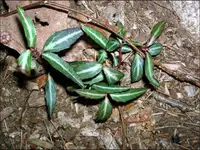
Striped prince's pine, Chimaphila maculata, is a small, evergreen woodland plant native to eastern North America. It forms low, spreading clumps on the forest floor. The plant is recognized by its dark green leaves with striking pale veins and its small, nodding white to pinkish flowers held on short stems. It often grows in dry, acidic, shady pine or oak woods. This species is slow growing and relies on specialized soil fungi, which makes it challenging to cultivate in typical garden settings. Gardeners who want to learn how to care for striped prince's pine should understand that it prefers undisturbed, humus-rich, consistently cool soil and dappled shade.

Main Plant Requirements

Care Difficulty

Hard Care

Light Preference

Shade

Water Requirements

Moderate Water

Temperature Preference

Cold Hardy

Hardiness Zone

4–9

Soil Texture

Loamy, Sandy, Organic-rich

Soil pH

Strongly acidic (4.5–5.5)

Soil Drainage

Moist but well-drained

Fertilization

Minimal (feed rarely)

Get Personalized Care Plan

Scan your plant to receive care tips personalized for your specific plant

Available on iOS and Android

How to Care for the striped prince's pine

This woodland perennial prefers cool, shaded conditions that mimic a mixed or coniferous forest floor.

  • Provide bright to medium shade with dappled or filtered light, such as under deciduous trees receiving 1–3 hours of gentle morning sun and no harsh afternoon sun.
  • Avoid direct midday sun, which can scorch striped prince's pine leaves, cause leaf curl, and dry the shallow root zone too quickly.
  • In summer, use denser canopy or shade cloth in exposed sites; in late fall and winter, increased low-angle light is usually safe in most temperate regions.

This species is adapted to consistently moist but never soggy, well-drained forest soils.

  • Water only when the top 2–4 cm of soil feels dry to the touch, aiming to keep the subsoil lightly moist rather than wet.
  • Use loose, humus-rich, acidic soil so excess water drains quickly; puddling or a sour odor indicates poor drainage and potential root damage.
  • Reduce watering in cool fall and winter conditions; dull, drooping leaves suggest dryness, while yellowing and mushy stems indicate overwatering stress in Chimaphila maculata.

This plant is naturally hardy in cool to temperate climates with distinct seasons.

  • Aim for an active growth range of 55–75°F (13–24°C), which supports steady foliage health under shaded, humus-rich conditions.
  • Mature plants often tolerate brief drops to about 0–10°F (-18 to -12°C) under insulating leaf litter or snow, but young plants benefit from extra winter protection.
  • In hot climates, limit exposure to extended periods above 85°F (29°C) by providing deep shade, thick organic mulch, and consistent soil moisture to prevent heat stress.

This species prefers moderately moist, cool air but adapts to typical indoor humidity if roots are not allowed to dry out.

  • Aim for 40–60% humidity, avoiding very hot, dry rooms that accelerate moisture loss from leaves and shallow roots.
  • Tolerates short dry-air periods, but curling, dull foliage and browned tips indicate humidity and root moisture stress.
  • Increase humidity by grouping pots and using a pebble tray under, not touching, the container rather than misting foliage.

Chimaphila maculata prefers a loose, acidic, forest-like substrate that stays lightly moist yet never stagnant.

  • Use a mix mimicking pine woodland duff: roughly 50% fine pine bark, 30% leaf mold or peat, and 20% coarse sand or perlite.
  • Target a pH of 4.5–5.5, avoiding lime or alkaline amendments that interfere with nutrient uptake in this ericaceous species.
  • Ensure very quick drainage by using a shallow pot and large drainage holes so water runs through within a few seconds of watering.
  • Avoid dense, clay-heavy, or fertiliser-rich mixes, which reduce aeration, hold water around fine roots, and encourage rot.

This species is possible but somewhat challenging in containers, best suited to cool, shaded outdoor conditions.

  • Choose a wide, shallow container to match its creeping root system and prevent deep, water-holding zones in the mix.
  • Select a thick-walled or clay pot that moderates temperature swings and helps keep the root zone cool in summer.
  • Elevate the container on pot feet so drainage holes stay clear and excess water escapes quickly after rainfall or watering.

Chimaphila maculata is a woodland species adapted to low-nutrient, acidic soils and usually needs no additional fertilizer.

Chimaphila maculata needs minimal pruning, mainly to keep groundcover patches clean and healthy.

  • Carry out light pruning in late winter or early spring before active growth resumes.
  • Snip off dead, discolored, or disease-damaged leaves at the base with clean scissors or hand pruners.
  • Remove any broken flower stems after blooming to maintain a tidy, even mat.
  • Avoid heavy cutting, which can thin the patch and slow spreading over time.

Striped prince's pine is rarely grown in pots and is best transplanted carefully to mimic its native forest conditions.

  • Transplant in early spring or early fall, when temperatures are mild and soil stays evenly moist.
  • Move plants only if necessary, since they dislike disturbance and form delicate, shallow root systems.
  • Lift a wide soil plug to keep roots and associated soil fungi intact, then replant at the same depth.
  • Water gently after transplanting, shade from strong sun, and keep soil moist (not waterlogged) to reduce stress.

Chimaphila maculata is slow and difficult to propagate because it depends on specific mycorrhizal fungi in the soil.

This evergreen woodland plant is cold hardy through typical temperate winters and usually needs no special winter care.

Care Tips

Leaf-litter mulching

Maintain a 2–5 cm layer of shredded oak or pine leaf litter around the crowns to mimic its natural forest floor and keep the shallow roots cool and evenly moist.

Mycorrhiza-friendly handling

Avoid disturbing the soil around established clumps, since this species depends on mycorrhizal fungi; do not double-dig or rake deeply, and limit foot traffic over the root zone.

Careful companion planting

Plant it near shallow-rooted, non-aggressive woodland species such as ferns and small epimediums, and avoid vigorous groundcovers that will outcompete its fine root system.

Low-disturbance weed control

Hand-pull weeds when the soil is slightly moist and lift them gently from the surface instead of using hoes or cultivators that break rhizomes and fungal networks.

Slow colony expansion

Encourage gradual spread by lightly top-dressing with fresh, pesticide-free deciduous leaf mold once a year, which supports the soil fungi essential for growing striped prince's pine.

Common Pests and Diseases

Leaf spot fungi

This disease causes small tan to dark brown spots on leaves that may merge and lead to partial leaf dieback, especially in damp, poorly ventilated sites. Symptoms include thinning patches in groundcover where affected leaves yellow and drop early.

Solution

Remove and discard spotted leaves to reduce spore spread, and avoid overhead watering so foliage dries quickly. Improve air flow by gently thinning surrounding vegetation and keep wild or cultivated striped prince's pine on slightly sloped, well-drained sites to limit prolonged leaf wetness.

Rust

This disease produces yellow to orange pustules or dusty patches on the undersides of leaves, sometimes with pale or discolored areas on the upper surface. Symptoms include gradual weakening of small colonies growing under dense conifers in humid woodland conditions.

Solution

Clip and remove the most affected shoots or rosettes and destroy the debris rather than composting it. Reduce humidity around plants by clearing dense ground litter lightly, spacing companion shade plants, and if grown in containers, providing good air circulation and watering at soil level only.

Scale insects

These insects appear as tiny, fixed bumps on stems or leaf midribs and may cause yellowing, reduced vigor, and sticky honeydew on nearby surfaces. This pest is more common when plants are lifted into pots or grown in sheltered, low-airflow locations.

Solution

Wipe stems and leaf midribs with a cotton swab dipped in 70% isopropyl alcohol to remove individual scales, repeating every 7–10 days until no new insects appear. For container plants, isolate infested specimens, gently rinse foliage with lukewarm water, and maintain moderate, stable light and moisture to support recovery and simplify Chimaphila maculata care.

Interesting Facts

Unusual leaf variegation

The leaves show pale, almost white veins against a dark green blade, a pattern caused by reduced chlorophyll along the veins and especially noticeable in shaded, acidic forest soils where the species typically grows.

Partially mycoheterotrophic

Although it has green leaves and can photosynthesize, this species also obtains some carbon through symbiotic fungi in the soil, a nutritional strategy called partial mycoheterotrophy that is relatively uncommon among evergreen shrubs.

Specialized forest habitat

It is strongly associated with dry to mesic, acidic, often pine- or oak-dominated woodlands in eastern North America, and its presence is frequently used as an indicator of long-established, undisturbed forest understories.

Botan icon

Did you know?

Genetic and ecological studies have shown that this species depends on very specific ectomycorrhizal fungi linked to nearby trees, which makes it extremely difficult to transplant or cultivate successfully outside its native forest environment and is a key challenge in Chimaphila maculata care.

FAQs about striped prince's pine

This species spreads slowly through shallow, creeping rhizomes and is not considered aggressive. It usually forms small, patchy colonies in stable woodland conditions rather than taking over beds or competing strongly with other shade plants.

Grow Healthy Plants with Botan Care

Keep your plants happy and healthy with plant identification, disease detection, and easy care guidance.

Botan plant care app — identify plants on mobile

Explore More Plants