


Mulch Management
Apply a thin, loose layer of leaf mold or shredded hardwood leaves around the clump in fall, then gently pull it back in late winter so emerging buds are not smothered or rotted.

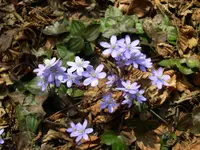
Round-lobe hepatica, Hepatica nobilis, is a small woodland perennial native to temperate forests in Europe, Asia, and parts of North America. It forms low clumps from a rhizome, with rounded, three-lobed evergreen leaves that hug the ground. In early spring, it produces delicate star-like flowers in shades of blue, lavender, pink, or white, often before trees leaf out. Plants spread slowly, creating neat patches rather than aggressive colonies. This species prefers cool, humus-rich woodland soil, consistent moisture, and light to medium shade. Once established, it can be long-lived but resents disturbance, so care for round-lobe hepatica focuses on stable conditions and minimal root disruption.

Care Difficulty
Moderate Care

Light Preference
Partial Shade

Water Requirements
Moderate Water

Temperature Preference
Cold Hardy

Hardiness Zone
3–8

Soil Texture
Loamy, Silty, Organic-rich

Soil pH
Strongly acidic (4.5–5.5), Acidic (5.5–6.5)

Soil Drainage
Moist but well-drained

Fertilization
Minimal (feed rarely)
Scan your plant to receive care tips personalized for your specific plant
Available on iOS and Android
This woodland perennial thrives in cool, dappled light that mimics a deciduous forest floor.
This plant prefers consistently moist, cool soil but is sensitive to waterlogging.
This hardy spring ephemeral is adapted to cool climates with cold winters and mild summers.
This woodland perennial prefers moderately moist air but adapts to most home humidity levels if soil moisture is stable.
Hepatica nobilis grows best in a loose, humus-rich mix that mimics leaf-litter woodland soil.
This species can grow successfully in containers when kept cool and evenly moist with stable root conditions.
Hepatica nobilis benefits from light, woodland-style feeding rather than heavy fertilization.
Hepatica nobilis needs minimal pruning, mainly to keep the clump clean and healthy.
This woodland perennial prefers to stay undisturbed, so transplant Hepatica nobilis only when clearly necessary.
Propagation of Hepatica nobilis is moderate in difficulty and is usually done by division or seed.
This species is generally cold hardy in temperate climates and needs little active winter care.

Plant Health Check
Not sure what's wrong with your plant? Check your plant's health inside the app.
This woodland perennial often flowers while snow is still on the ground, using stored energy in its rhizomes to bloom before tree canopies fully leaf out.
The flowers can open and close in response to temperature and light, helping protect pollen and reproductive organs from cold and moisture in early spring.
Its evergreen leaves are typically divided into three rounded lobes, which inspired both the common name liverleaf and the older belief that the plant resembled and was connected to the human liver.

Genetic and morphological studies show that what gardeners often treat as one species actually includes several closely related taxa and geographic forms, which helps explain the notable variation in flower color and leaf patterns seen across wild and cultivated populations.
This species spreads slowly by short rhizomes and self-seeding. It usually forms small clumps rather than large colonies. In typical garden conditions it is not considered aggressive and rarely crowds out neighboring shade perennials.
Keep your plants happy and healthy with plant identification, disease detection, and easy care guidance.

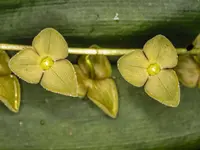
Stelis superbiens
Stelis superbiens
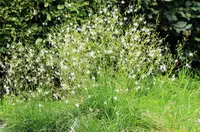
Branched St Bernard's lily
Anthericum ramosum
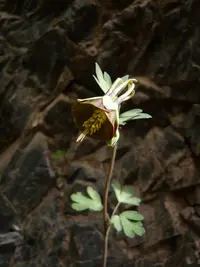
Green-flowered Columbine
Aquilegia viridiflora
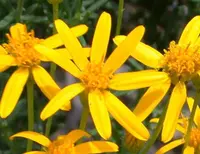
damianita
Chrysactinia mexicana
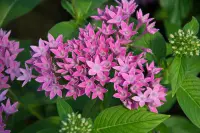
Egyptian starcluster
Pentas lanceolata
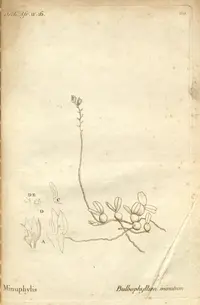
Bulbophyllum minutum
Bulbophyllum minutum
Mexican giant hyssop
Agastache mexicana
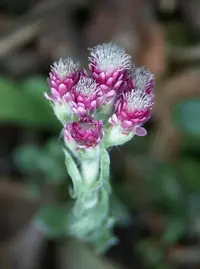
stoloniferous pussytoes
Antennaria dioica