Encourage Dense Mats
After flowering, lightly trim spent flower stems and any sparse patches to encourage new stolon growth and a denser, weed-suppressing carpet.

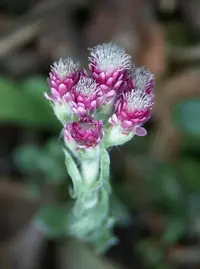
Antennaria dioica, commonly called stoloniferous pussytoes, is a low, mat-forming perennial from the daisy family. It spreads by slender runners, creating dense, silvery groundcover. The plant has narrow, woolly leaves and small, fuzzy flower heads that resemble tiny cat paws, usually in soft white or pink tones. Its compact habit suits rock gardens, dry slopes, and edging. In nature, it occurs in open, often rocky or sandy sites across cooler parts of Europe, Asia, and North America. It is generally undemanding, preferring sun, low to moderate moisture, and well-drained, lean soil. These traits usually make it easy to care for stoloniferous pussytoes in suitable climates.

Care Difficulty
Easy Care

Light Preference
Full Sun

Water Requirements
Low Water

Temperature Preference
Cold Hardy

Hardiness Zone
2–8

Soil Texture
Sandy, Loamy, Rocky

Soil pH
Acidic (5.5–6.5), Slightly acidic (6.5–7.0)

Soil Drainage
Well-drained

Fertilization
Minimal (feed rarely)
Scan your plant to receive care tips personalized for your specific plant
Available on iOS and Android
Antennaria dioica prefers bright, open conditions similar to sunny meadows and rocky slopes.
Antennaria dioica is drought-tolerant and prefers relatively dry, well-drained soil.
This alpine perennial handles cool conditions well but still has preferred temperature ranges for active growth.
Humidity is rarely a concern for Antennaria dioica, which is adapted to dry, open sites.
Antennaria dioica prefers lean, very free-draining soil that mimics dry, rocky grasslands.
This species can grow in containers if provided with a very shallow, sharply drained setup.
Antennaria dioica is adapted to lean soils and needs only light feeding to stay healthy.
Pruning Antennaria dioica is minimal and mainly keeps the mat neat and flowering well.
This species is usually grown in the ground; focus on careful transplanting rather than frequent repotting.
Antennaria dioica is commonly propagated by division, stolons, and seeds to expand groundcover patches.
This plant is very cold hardy and usually needs little special winter care in the ground.

Plant Health Check
Not sure what's wrong with your plant? Check your plant's health inside the app.
Antennaria dioica produces separate male and female flower heads on different plants, a condition called dioecy. Male plants usually have more open, fluffy, whitish flower heads, while female plants tend to have slightly pinker, denser clusters.
This species is naturally found in dry, nutrient-poor, often sandy or rocky habitats. It forms low mats that help it tolerate low fertility and drought, which is why Antennaria dioica plant care in gardens often emphasizes avoiding rich, wet soils.
The leaves are covered with fine, wool-like hairs that give them a silvery or grayish look. These hairs reduce water loss and reflect excess sunlight, helping the plant survive in exposed, open sites.

In parts of northern Europe, Antennaria dioica has long been associated with folklore about cats and has inspired several local names referring to cat paws or cat feet, reflecting the resemblance of its soft flower heads and foliage to small animal pads.
This species spreads by surface runners, forming low mats over time. It is usually moderate rather than invasive. In lean, well-drained soils, spread stays controlled. In richer soils, edging or lifting outer clumps may be needed.
Keep your plants happy and healthy with plant identification, disease detection, and easy care guidance.