Use marker stakes
Place discreet marker stakes where dormant crowns sit so you do not disturb or divide them accidentally when the plant is underground in winter and early spring.

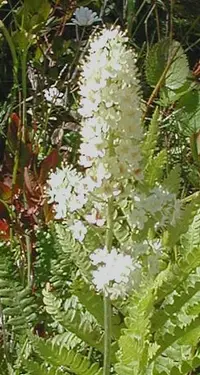
Osceola's plume, Stenanthium densum, is a clump-forming perennial native to moist pine barrens and boggy habitats in the southeastern United States. It belongs to the Melanthiaceae, a family that includes several naturally toxic woodland species.
The plant produces upright stems with narrow, grasslike leaves and tall, feathery flower spikes that create a soft, vertical accent in summer. Its preference for consistently moist, acidic, well-drained soil and cool roots makes it better suited to experienced gardeners.
It can be slow to establish and resents drying out or disturbance, so site selection and soil preparation matter when you care for Osceola's plume. In gardens it performs best in light shade to filtered sun, especially in regions that mimic its native wetland margins.

Care Difficulty
Hard Care

Light Preference
Partial Shade

Water Requirements
Keep Soil Moist

Temperature Preference
Cold Hardy

Hardiness Zone
6–9

Soil Texture
Sandy, Loamy, Organic-rich

Soil pH
Strongly acidic (4.5–5.5), Acidic (5.5–6.5)

Soil Drainage
Moist but well-drained

Fertilization
Minimal (feed rarely)
Scan your plant to receive care tips personalized for your specific plant
Available on iOS and Android
Stenanthium densum prefers bright outdoor conditions that mimic open, moist meadows or bog edges.
This species needs consistently moist soil and does not tolerate drying out for long.
This temperate perennial handles a range of outdoor conditions if extremes are limited.
This species prefers moderately moist air but usually adapts to typical outdoor humidity.
This species thrives in consistently moist, organic-rich soils that stay aerated but never waterlogged.
This plant is challenging but possible to grow in containers for short-term display.
Stenanthium densum is a native perennial that usually needs only light feeding in average garden soil.
Stenanthium densum needs only minimal pruning to stay healthy and tidy.
This species is mostly grown in the ground, so focus on careful transplanting rather than frequent repotting.
Stenanthium densum is usually propagated by seed, which can be slow and requires patience.
This hardy perennial dies back in winter and generally needs little special care in its suitable climate range.

Plant Health Check
Not sure what's wrong with your plant? Check your plant's health inside the app.
This species is native to acidic pine barrens, bogs, and wet savannas in the eastern United States, where it grows in nutrient-poor, seasonally saturated soils that many other flowering perennials cannot tolerate.
All parts of the plant are considered toxic to humans and livestock because they contain steroidal alkaloids, a group of nitrogen-containing compounds that can disrupt normal nervous system and cardiac function if ingested.
In suitable habitat, it produces narrow, plume-shaped spikes of many small white flowers that can rise well above surrounding vegetation, providing a distinctive vertical accent in late spring to midsummer.

The species has been historically confused with several other North American members of the Melanthiaceae family, and accurate identification often requires close examination of floral details such as the number and arrangement of tepals and stamens, which has made it a reference taxon in regional floras and botanical keys.
This species performs best outdoors in humus-rich, consistently moist soil, typically in woodland or boggy garden settings. Osceola's plume indoor care is challenging because the plant needs cool winters, strong light, and natural seasonal moisture patterns that containers rarely provide.
Keep your plants happy and healthy with plant identification, disease detection, and easy care guidance.