Scented Sundew Care (Drosera aberrans)

Scented Sundew

About Scented Sundew

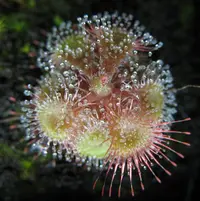
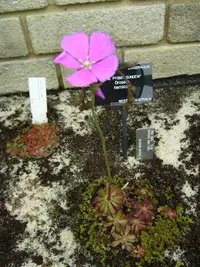
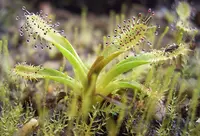
Scented sundew, Drosera aberrans, is a small rosette-forming carnivorous plant native to southern Australia. It grows close to the ground with rounded leaves covered in sticky, glistening hairs. These hairs trap small insects, which the plant digests to supplement nutrients in its usually poor, sandy or peaty soil. In spring, it often sends up slender stems with delicate white or pink flowers held above the foliage. This species is compact and slow-growing, which suits containers and small indoor setups. Its need for consistently moist, low-nutrient soil and good light means it is not difficult but does require attention to watering quality and humidity to care for Scented Sundew successfully.

Main Plant Requirements

Care Difficulty

Moderate Care

Light Preference

Full Sun

Water Requirements

Keep Soil Moist

Temperature Preference

Cool Climate

Hardiness Zone

8–10

Soil Texture

Sandy, Peaty, Organic-rich

Soil pH

Strongly acidic (4.5–5.5)

Soil Drainage

Waterlogged tolerant

Fertilization

Minimal (feed rarely)

Get Personalized Care Plan

Scan your plant to receive care tips personalized for your specific plant

Available on iOS and Android

How to Care for the Scented Sundew

This temperate sundew thrives with bright light that supports strong red coloration and sticky traps when caring for Scented Sundew.

  • Provide 4–6 hours of direct morning sun plus bright filtered light for the rest of the day in mild climates; in hotter regions, limit harsh midday sun to prevent leaf scorch.
  • Plant in an open site with only light partial shade; too much shade produces pale, floppy leaves and reduced dew production, which weakens its insect-catching ability.
  • In summer, protect from intense afternoon sun above 86°F (30°C); in winter, ensure at least 3–4 hours of unobstructed sun so the plant maintains compact rosettes.

This species prefers consistently moist, low-mineral conditions similar to a bog habitat.

  • Use rainwater, distilled, or reverse-osmosis water; keep soil moist to wet, allowing only the top 2–3 mm to lose surface sheen before rewatering to avoid salt buildup and stress to Drosera aberrans.
  • In warm growing seasons, check moisture daily; in cooler months, let the surface dull slightly between waterings but never allow the root zone to dry out completely.
  • Watch for signs of stress: brown, crisp leaf tips or shriveling indicate underwatering, while limp, pale leaves and sour-smelling, soggy soil suggest low oxygen and chronic overwatering.

This temperate sundew tolerates seasonal coolness but grows best within a moderate temperature range.

  • Aim for 65–77°F (18–25°C) during active growth; these temperatures support steady leaf production and healthy dew formation without heat stress.
  • The plant tolerates brief dips to around 32°F (0°C), but repeated hard frosts below 28°F (-2°C) can damage foliage, so protection such as temporary covering is useful in exposed sites.
  • In hot periods above 86°F (30°C), provide light shade and increased air movement; sustained heat over 95°F (35°C) may reduce dew, slow growth, and increase risk of desiccation.

This species prefers moderately humid air but adapts to many typical indoor conditions if not too dry.

  • Aim for 40–60% humidity to keep dew production steady on Scented Sundew leaves.
  • Dry air causes dull, reduced dew, leaf edge crisping, and stalled growth near heaters or vents.
  • Increase humidity with a nearby tray of water and pebbles, grouped plants, or a small room humidifier away from direct airflow.

This species requires a nutrient-poor, airy, and consistently moist medium rather than standard potting soil.

  • Use a mix such as 1:1 sphagnum peat moss and silica sand or perlite to create a loose, acidic, low-nutrient substrate.
  • Ensure the mix drains freely yet stays evenly damp; water should pass through quickly without the potting mass becoming compacted.
  • Target acidic conditions around pH 4.5–5.5, avoiding lime or any mix containing added fertilizer, compost, or manure.
  • Rinse sand or perlite before use to remove mineral residues that can accumulate salts and harm Drosera aberrans roots.

This species is very suitable for container growing when moisture and drainage are controlled carefully.

  • Choose a relatively deep pot so the root system has a stable, cool, and evenly moist zone below the surface.
  • Use plastic pots rather than porous clay to slow evaporation and keep the carnivorous substrate damp for longer.
  • Place the pot in a stable tray that allows quick overflow drainage while still holding a shallow standing water layer if using the tray method.

Drosera aberrans gains most nutrients from captured insects, so it needs only very light supplemental feeding.

  • Use a very dilute (1/4–1/8 strength) low-phosphorus balanced NPK liquid fertilizer, or specialized carnivorous plant fertilizer.
  • Apply only during active growth in spring–summer, no more than every 4–6 weeks, and never to dry soil.
  • Feed into the soil or tray water, not directly on the sticky leaves of Scented Sundew, to avoid damage.
  • Stop fertilizing during dormancy or cool winter rest, when metabolic activity and nutrient demand are low.

Pruning needs for Drosera aberrans are minimal and focus on hygiene rather than shaping.

  • Carry out light grooming year-round, with a slight emphasis at the end of the growing season.
  • Snip off dead, blackened, or moldy leaves at the base to limit fungal issues and maintain neat rosettes.
  • Remove badly damaged or crowded leaves to improve air flow and light penetration to inner growth.
  • Use small, sharp scissors or tweezers disinfected with alcohol to avoid tearing tissue or spreading disease.

Transplanting is infrequent but helpful to maintain healthy Drosera aberrans roots and fresh substrate.

  • Check for roots circling the pot, reduced dew production, or slow growth as signs a move is needed.
  • Plan to repot every 2–3 years, ideally in late winter to early spring before strong new growth begins.
  • Use a low-mineral mix such as 1:1 sphagnum peat and silica sand, handling the fragile roots very gently.
  • Water well with low-mineral water after repotting, keep out of strong sun for a few days, and maintain high humidity to limit stress.

Propagation of Drosera aberrans is commonly done by leaf cuttings and seed under controlled conditions.

  • Take leaf cuttings in late winter–spring, laying healthy leaves on damp sphagnum or peat-sand under bright, indirect light.
  • Maintain high humidity and stable warmth around 65–75°F to encourage plantlet formation along the leaf margins.
  • Sow fresh seed on the surface of nutrient-poor, wet medium and avoid covering, as light helps germination.
  • Keep seed pots consistently moist with low-mineral water and provide a cool stratification period if germination is slow.

Drosera aberrans is cool-tolerant and often forms a resting rosette, so winter care focuses on preserving roots and crowns.

  • In mild climates, plants in the ground usually overwinter without extra protection if drainage is good.
  • Reduce watering so the medium stays just damp, preventing rot in the dormant rosettes.
  • For containers, move pots to a bright, frost-free but cool location around 40–50°F during hard freezes.
  • Avoid disturbing or dividing plants in winter, since dormancy is a low-energy period for recovery.

Care Tips

Winter dormancy setup

Provide a cool, bright winter rest at 40–55°F for 3–4 months by moving pots to an unheated but frost-free space, which maintains the plant’s natural growth cycle and strengthens crowns for spring growth.

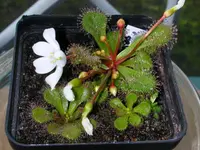
Mineral-free water tray

Use a shallow tray with 0.5–1 cm of rain, distilled, or reverse-osmosis water and let it dry for 1–2 days between fillings to mimic natural wet-dry cycles and reduce risk of root rot in this tuberous species.

Tuber protection method

When repotting, handle the underground tuber with blunt tweezers or a small spoon over a tray, and replant it just below the surface in barely moist mix so it is not damaged or buried too deeply.

Seasonal feeding control

Allow it to catch small insects only during the active growing season and gently remove any large or stuck prey with tweezers to prevent mold and leaf damage.

Labeling and tracking

Label pots clearly with species name and the date dormancy began or ended, which helps time watering changes correctly and supports more precise long-term Drosera aberrans plant care.

Common Pests and Diseases

Aphids

This pest often colonizes the sticky leaves and flower stalks, feeding on plant sap and causing distortion of new growth. Symptoms include clustered soft-bodied insects and shiny honeydew deposits that can promote sooty mold.

Solution

Rinse infested areas gently with a fine stream of distilled or rainwater, then remove remaining insects using tweezers or by wiping carefully with a damp cotton swab. Improve air movement, avoid overfertilizing, and if needed use a very dilute insecticidal soap only on non-carnivorous parts, testing on a small area first.

Fungus gnats

These insects are attracted to the constantly moist substrate used for Drosera aberrans and larvae can damage fine roots and crowns. Symptoms include tiny black flies around the pot and slow, weakened growth in compact or waterlogged media.

Solution

Allow the soil surface to dry slightly between waterings without letting the potting mix dry out completely, and use clean, low-organic carnivorous plant media. Yellow sticky traps help catch adults, and a biological control such as Bacillus thuringiensis israelensis (BTI) can be used in the water to reduce larvae populations.

Botrytis gray mold

This disease develops in cool, stagnant, high-humidity conditions and attacks old leaves, dead insect remains, and flower stalks. Symptoms include gray, fuzzy mold on decaying tissue and spreading soft brown lesions that can move into healthy leaves or the crown.

Solution

Promptly remove and discard all affected leaves and flower stalks and any dead insects stuck on the plant. Increase airflow, avoid water sitting on foliage, reduce overcrowding, and in severe or recurring cases consider a targeted fungicide labeled for ornamental use, applied carefully and sparingly away from the active dew surfaces.

Powdery mildew

This disease can appear when plants are grown in warm, humid conditions with poor air circulation, especially under artificial lighting. Symptoms include white, dusty patches on leaves and traps, leading to reduced photosynthesis and weakened growth.

Solution

Improve ventilation around the plant, reduce excessive humidity, and avoid overhead misting. Remove affected leaves if damage is localized, and if necessary use a mild fungicide or a sulfur-based product suitable for carnivorous plants, applying lightly and monitoring for any phytotoxic reaction.

Spider mites

This pest may appear in drier indoor conditions and can damage the delicate leaves by piercing cells and sucking out contents. Symptoms include tiny pale speckling, webbing on leaf surfaces, and loss of dew droplets, which reduces the plant’s ability to feed.

Solution

Increase humidity slightly and rinse foliage thoroughly with lukewarm distilled or rainwater, focusing on the undersides of leaves. For persistent infestations, use a gentle, carnivorous-plant-safe miticide or insecticidal soap applied only to a small test area first, and repeat treatments as needed while monitoring overall Drosera aberrans plant care conditions such as light and moisture.

Interesting Facts

Winter rosette strategy

This species forms a tight, flat winter rosette with reduced, less sticky leaves that sit close to the soil, allowing it to survive the cold, dry South Australian winter while conserving energy and moisture.

Tuber underground storage

Drosera aberrans grows from a small underground tuber that stores water and carbohydrates, enabling the plant to retreat completely below ground during summer dormancy and re-sprout when cool, moist conditions return.

Highly localized distribution

The species is naturally restricted to parts of South Australia and western Victoria, where it typically grows in open, seasonally damp habitats on sandy or loamy soils over clay, often in heathland or open woodland.

Botan icon

Did you know?

Plants of this species can produce white, pink, or occasionally bicolored flowers on relatively tall, wiry stems that rise above the sticky leaves, a separation that helps avoid trapping their own pollinators in the insect-catching foliage.

FAQs about Scented Sundew

This species performs best outdoors in bright, cool to mild conditions that mimic its native habitat. Scented Sundew indoor care is possible under strong artificial light and cool temperatures, but outdoor culture usually gives stronger color, dew, and flowering.

Grow Healthy Plants with Botan Care

Keep your plants happy and healthy with plant identification, disease detection, and easy care guidance.

Botan plant care app — identify plants on mobile

Explore More Plants