roughfruit fairybells Care (Prosartes trachycarpa)

Also known as: rough-fruited fairybells
roughfruit fairybells

About roughfruit fairybells

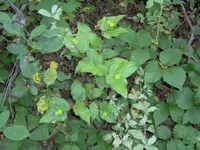
Roughfruit fairybells (Prosartes trachycarpa) is a woodland perennial from the lily family, native to shaded forests and mountain slopes of western North America. It forms upright, arching stems with broad, soft leaves and nodding, bell-shaped creamy flowers in spring. Later, it develops rough-textured, speckled berries that give the plant its common name. This species prefers cool, moist, humus-rich soil and dappled or open shade, similar to many native woodland wildflowers. For gardeners who want to care for roughfruit fairybells successfully, it is important to provide stable moisture and protection from hot, direct sun and drying winds.

Main Plant Requirements

Care Difficulty

Moderate Care

Light Preference

Partial Shade

Water Requirements

Regular Water

Temperature Preference

Cold Hardy

Hardiness Zone

4–8

Soil Texture

Loamy, Silty, Organic-rich

Soil pH

Acidic (5.5–6.5), Slightly acidic (6.5–7.0)

Soil Drainage

Moist but well-drained

Fertilization

Minimal (feed rarely)

Get Personalized Care Plan

Scan your plant to receive care tips personalized for your specific plant

Available on iOS and Android

How to Care for the roughfruit fairybells

This woodland perennial prospers in cool, sheltered light conditions that mimic its native forest habitat.

  • Provide bright dappled shade or filtered light, with only 1–3 hours of soft morning sun; avoid direct midday or afternoon sun for roughfruit fairybells to prevent leaf scorch.
  • Site plants under open deciduous trees so they receive more light in early spring and deeper shade once the canopy leafs out.
  • In hot summer climates, protect from reflected heat and intense sun; pale, crispy leaf edges indicate too much light, while weak, stretched stems signal insufficient light.

This species prefers consistently moist, cool soil but reacts poorly to both drought and prolonged saturation.

  • Water when the top 2–4 cm of soil feel barely moist, aiming to keep the root zone evenly damp but never soggy for Prosartes trachycarpa.
  • Use loose, humus-rich soil with good drainage; standing water after rain or irrigation is a sign that the site is too heavy or compacted.
  • In spring and early summer, check moisture more often; in cooler fall weather, reduce frequency, watching for drooping, dry leaves (too little water) or yellowing, mushy stems (too much).

This hardy woodland plant tolerates cold winters and mild summers, with best growth in cool to moderate temperatures.

  • Active growth occurs around 55–70°F (13–21°C); plants slow in hotter conditions and benefit from shade and mulch that keep roots cool.
  • Dormant crowns survive down to about -20°F (-29°C) under mulch or snow cover, making the species suitable for many cold-winter climates.
  • Short periods of 80–86°F (27–30°C) are tolerated if soil stays moist and shaded; prolonged heat or warm, snowless winters can reduce vigor the following season.

This woodland perennial handles typical outdoor humidity if soil moisture is stable.

  • Performs best around 40–70% humidity, matching shaded garden or woodland conditions.
  • Tolerates short dry-air periods if roots stay evenly moist, but prolonged hot, dry winds may cause leaf edges to brown.
  • Watch for limp, curling leaves and stalled growth as signs of humidity plus moisture stress.
  • Increase local humidity by planting roughfruit fairybells among groundcovers or mulching to keep the root zone cooler and moister.

This species prefers cool, humus-rich woodland soil that stays moist yet freely draining.

  • Use a loose loam rich in organic matter, such as garden soil mixed with compost and shredded leaf mold.
  • Ensure drainage is moderate to fast; avoid sites where water puddles or soil stays sticky after rain.
  • Aim for slightly acidic to neutral pH, roughly 5.8–7.0, typical of many deciduous woodland soils.
  • Improve aeration by incorporating fine bark or perlite into dense clay, and avoid compacted or heavily amended peat-only mixes for Prosartes trachycarpa.

This species can be grown in containers if the pot mimics a cool, deep woodland soil profile.

  • Choose a tall, narrow container to provide root depth and help keep the lower substrate cooler in summer.
  • Use a heavier material like clay or ceramic to stabilize the arching stems and reduce tipping in wind.
  • Elevate the pot slightly on feet or bricks so drainage holes stay clear and excess water escapes quickly, preventing root rot in this woodland plant.

This woodland perennial needs only light feeding when grown in garden beds or containers.

  • Use a thin topdressing of leaf mold or compost in early spring to mimic its native forest soil.
  • If needed, apply a balanced slow-release fertilizer (around 10-10-10) at 1/2 strength once in spring.
  • Avoid summer and fall feeding so roughfruit fairybells can harden growth before winter dormancy.

Pruning Prosartes trachycarpa is minimal and mainly focused on cleanliness and safety for nearby plants.

  • Cut back dead or winter-damaged stems in late winter or very early spring using clean, sharp hand pruners.
  • Remove only broken, diseased, or badly crowded shoots to maintain a natural, arching habit.
  • Snip spent stems at ground level after berries have dropped if tidier appearance is desired.

This species is usually grown in the ground and dislikes frequent disturbance once established.

  • Transplant in early spring or early fall when top growth is minimal and soil is moist.
  • Move clumps only when growth declines or shoots become crowded, typically every 5–7 years.
  • Lift with a wide root ball, keep roots shaded and damp, and replant at the same depth.
  • Water thoroughly after transplanting, then keep soil evenly moist to limit transplant shock.

Prosartes trachycarpa is most reliably propagated by seed, with division used more cautiously.

  • Sow fresh seeds in fall outdoors or in cold frames to allow natural winter stratification.
  • Use a loose, humus-rich mix, keep evenly moist, and expect slow, irregular germination.
  • Divide mature clumps in early spring, keeping divisions large to reduce setback.
  • Replant divisions at original depth in shaded, cool soil, then water consistently.

This woodland perennial is cold hardy in much of its range and needs only simple winter care.

  • Tolerates freezing temperatures once dormant, with underground parts surviving normal winter lows.
  • Apply 5–8 cm of leaf mulch over the root zone in late fall to buffer freeze–thaw cycles.
  • Leave old stems in place until late winter to mark the plant’s location and protect crowns.

Care Tips

Discreet staking

Install a short, thin stake or twig behind each stem early in spring and tie loosely with soft garden tape so the arching shoots stay visible and upright without kinking in wind or rain.

Mulch for cool roots

Apply a 3–5 cm layer of shredded leaf mulch or fine bark around but not against the stems each spring to keep the root zone cool, suppress weeds, and maintain the humus-rich conditions this woodland species prefers.

Gentle clump division

Divide mature clumps only every 4–6 years in early spring just as growth points emerge, slicing off outer sections with several buds and replanting immediately at the same depth to expand a colony without stressing the parent plant.

Understory companion planting

Plant alongside compatible woodland perennials like ferns, Trillium, or epimediums to create light root competition and stable shade that reduces soil temperature swings and moisture loss, which supports long-term vigor.

Seed ripening management

Allow only a few fruits to ripen fully for seed, then remove the rest after bloom so the plant can direct more energy into root and shoot development, which improves long-term performance when growing roughfruit fairybells.

Common Pests and Diseases

Aphids

These insects cluster on tender stems, leaf undersides, and flower stalks, sucking sap and causing distortion or yellowing. This pest is more common on plants growing at woodland edges or in slightly disturbed, nutrient-rich sites.

Solution

Remove heavily infested shoot tips by hand and discard away from the planting area. For remaining colonies, rinse plants thoroughly with a strong but controlled stream of water, or apply a ready-to-use insecticidal soap or neem oil, repeating every 5–7 days until new growth appears clean.

Slugs and snails

These pests feed on young shoots and leaves, leaving irregular holes and silvery slime trails, especially in cool, moist woodland conditions. This pest can significantly disfigure foliage and weaken small clumps of roughfruit fairybells.

Solution

Hand-pick slugs and snails in the evening or early morning and reduce hiding places such as dense debris or boards near plants. Use iron phosphate bait placed outside the main clump rather than directly around stems, and maintain an open mulch layer so the soil surface stays visible and less attractive as shelter.

Leaf spot

This disease produces scattered brown to purplish spots on leaves that may merge into larger blotches in prolonged cool, wet weather. Symptoms include premature yellowing and drop of the most affected foliage, usually on lower leaves first.

Solution

Prune and remove spotted leaves from the plant and ground to reduce fungal spore levels, and avoid overhead watering so foliage dries quickly. If wet, crowded conditions persist, improve spacing, increase airflow by thinning nearby plants, and consider a labeled copper or sulfur-based fungicide applied at the first sign of new spotting.

Powdery mildew

This disease shows as a white to gray, powdery coating on leaf surfaces, often in late season when days are warm and nights are cool. Symptoms include dull, roughened foliage that may yellow early and lose vigor, especially in shaded but stagnant air pockets.

Solution

Increase air movement by thinning nearby vegetation and avoid excess nitrogen fertilization that stimulates soft, mildew-prone growth. Remove and dispose of heavily coated leaves, and, if needed, use a horticultural oil or potassium bicarbonate spray labeled for powdery mildew, applied in the evening and repeated according to label directions.

Interesting Facts

North American endemic

This species is native to western North America, occurring from the Rocky Mountains into parts of the Pacific Northwest, where it typically grows in cool, moist coniferous or mixed forests.

Rough-textured berries

The common name roughfruit fairybells refers to its distinctive yellow to orange berries that are covered with small rough projections, a feature that helps distinguish it from related fairybells species.

Nodding bell flowers

Its small, creamy to yellowish flowers hang in a nodding fashion beneath the leaves, with narrow tepals that give a delicate bell-like appearance early in the growing season.

FAQs about roughfruit fairybells

All parts are considered mildly toxic if eaten, especially the berries. Ingestion may cause nausea, vomiting, or diarrhea in pets and humans. Keep children and animals from chewing foliage or fruits, and contact poison control if symptoms appear.

Grow Healthy Plants with Botan Care

Keep your plants happy and healthy with plant identification, disease detection, and easy care guidance.


Botan plant care app — identify plants on mobile

Explore More Plants