Bulb Spacing Strategy
Plant bulbs in tight clusters of 5–9, spaced 8–12 cm apart, to create a fuller display and help the foliage shade the soil surface, which reduces weed pressure and moisture loss.

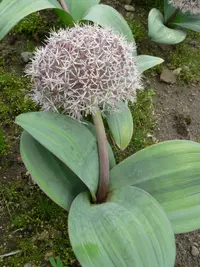
Turkestan onion (Allium karataviense) is a compact ornamental onion grown mainly for its broad, gray-green leaves and rounded flower heads. It forms a low, symmetrical clump, making it suitable for rock gardens, borders, and small spaces.
The plant is native to Central Asia, where it grows in dry, open habitats with well-drained, often rocky soils. Its sturdy bulbs and drought tolerance make it relatively easy to maintain once established.
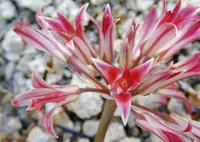
Pale pink to soft purple globe-shaped flowers appear on short stems above the foliage, giving a neat architectural look. It prefers sunny, dry spots with free-draining soil, and those conditions guide how to care for Turkestan onion.

Care Difficulty
Easy Care

Light Preference
Full Sun

Water Requirements
Low Water

Temperature Preference
Cold Hardy

Hardiness Zone
4–8

Soil Texture
Sandy, Loamy, Rocky

Soil pH
Slightly acidic (6.5–7.0), Slightly alkaline (7.0–7.5)

Soil Drainage
Well-drained

Fertilization
Minimal (feed rarely)
Scan your plant to receive care tips personalized for your specific plant
Available on iOS and Android
This bulb prefers bright outdoor conditions with direct sun for strong flowering.
This species prefers dry to moderately moist soil and is sensitive to excess water around the bulb.
This hardy bulb thrives in cool to mild climates and tolerates cold winters outdoors.
Humidity is not a significant factor for Allium karataviense, which is naturally adapted to dry mountain air.
Allium karataviense grows best in lean, sharply drained soil that mimics rocky mountain slopes.
This species grows reliably in containers when the pot and medium are chosen to stay dry between waterings.
This bulb needs only light feeding, as Allium karataviense stores most of its energy in the bulb.
Pruning needs are minimal for Allium karataviense and focus on cleanliness rather than reshaping the plant.
This bulb is usually grown in the ground, so care focuses on lifting and transplanting clumps rather than frequent repotting.
Allium karataviense is commonly propagated by bulb division, with seed used when increasing numbers more slowly.
This hardy bulb tolerates typical outdoor winters in much of the US with minimal intervention when planted in well-drained soil.

Plant Health Check
Not sure what's wrong with your plant? Check your plant's health inside the app.
This species is native to the rocky, high-altitude slopes of the Karatau mountains in Kazakhstan, which explains its compact growth, drought tolerance, and preference for well-drained, gritty soils.
Unlike many ornamental onions, it produces broad, paddle-shaped, gray-blue leaves that often arch elegantly around the flower head, forming a low rosette that is as ornamental as the bloom itself.
Its flower heads form dense, almost perfectly spherical umbels of pale pink to soft lilac star-shaped florets, typically only 7–10 cm across, making it one of the smaller yet striking ornamental alliums suited to the front of borders and rock gardens.

The foliage of Allium karataviense often emerges and reaches its peak decorative stage before many spring perennials leaf out, allowing the plant to fill an early-season visual niche in rock gardens and dry borders with its blue-green rosettes and developing flower buds.
Lack of flowers is often due to insufficient cold during winter, overcrowded bulbs, or planting too shallow or deep. Allow foliage to die back naturally after flowering to recharge bulbs and support future blooms when growing Turkestan onion.
Keep your plants happy and healthy with plant identification, disease detection, and easy care guidance.