Neomarica caerulea Care

Neomarica caerulea

About Neomarica caerulea

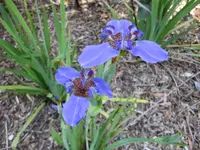
Neomarica caerulea, often called walking iris, is a clump-forming perennial with tall, sword-like leaves and striking blue-purple flowers that appear above the foliage. Each bloom is short-lived, but the plant can produce several flowers in succession for a notable display.

This species comes from warm regions of Brazil, where it grows in bright conditions with regular moisture. It tends to be forgiving if basic needs are met, so learning how to care for Neomarica caerulea is manageable for most home gardeners.

It prefers bright, indirect light, evenly moist but not waterlogged soil, and moderate temperatures, which makes it suitable for containers and sheltered outdoor spots in mild climates.

Main Plant Requirements

Care Difficulty

Moderate Care

Light Preference

Partial Sun

Water Requirements

Regular Water

Temperature Preference

Tropical / Frost Sensitive

Hardiness Zone

9–11

Soil Texture

Loamy, Sandy, Organic-rich

Soil pH

Acidic (5.5–6.5), Slightly acidic (6.5–7.0)

Soil Drainage

Moist but well-drained

Fertilization

Light (every 4–6 weeks)

Get Personalized Care Plan

Scan your plant to receive care tips personalized for your specific plant

Available on iOS and Android

How to Care for the Neomarica caerulea

This plant prefers bright outdoor conditions similar to those for many sun-tolerant perennials.

  • Provide 4–6 hours of morning sun or bright filtered light, with protection from intense afternoon sun, especially in hotter climates.
  • Tolerates light to partial shade (around 2–4 hours of direct sun) but may produce fewer flowers if light is too low.
  • In summer, monitor for leaf scorch or pale, dry tips from excessive sun; in winter, ensure the site still receives as much indirect light as possible.

This rhizomatous perennial prefers steady moisture without staying saturated.

  • Water when the top 3–5 cm of soil feel dry, aiming for lightly moist soil around the roots rather than fully drying out.
  • Use well-drained soil so excess water runs off; persistent soggy conditions cause root rot, yellowing leaves, and a soft rhizome.
  • In cool seasons, allow the surface to dry a bit more between waterings, and watch for folding or crisping leaves as signs the plant is too dry.

This species grows best in warm, frost-free conditions typical of mild to subtropical climates.

  • Aim for 65–80°F (18–27°C) during active growth, as this range supports strong leaves and flowering.
  • Protect from cold below about 40°F (4°C); freezing temperatures can kill foliage and may damage the rhizomes.
  • In hot weather above 90°F (32°C), provide afternoon shade and consistent soil moisture to limit heat stress and leaf scorch.

This species benefits from moderate humidity and reacts if air stays very dry.

  • Aim for 40–60% humidity, which is typical of many homes, to support regular growth and flowering in Neomarica caerulea.
  • It tolerates brief dips to 30–35% but prolonged dry air may cause browning leaf tips and edges.
  • Increase humidity by grouping plants, placing the pot on a pebble tray with water below the pot base, or running a nearby humidifier.

This rhizomatous perennial prefers a moist, free-draining, slightly fertile substrate.

  • Use a loose, loamy mix with structure, such as 2 parts all-purpose potting mix, 1 part coarse sand, and 1 part compost.
  • Ensure fast drainage; the mix should drain within seconds yet retain light moisture without staying waterlogged.
  • Aim for slightly acidic to neutral pH around 6.0–7.0, which supports nutrient availability and healthy root development in Neomarica caerulea.
  • Improve aeration by adding perlite or fine bark chips, and avoid heavy clay or compacted garden soil that can suffocate rhizomes.

This species adapts well to container growing when the pot supports its spreading rhizomes and tall foliage.

  • Choose a broad, shallow to medium-depth pot that allows rhizomes to spread horizontally without crowding quickly.
  • Select a heavier container material like ceramic or clay to counterbalance tall leaves and reduce tipping in wind.
  • Use a pot with wide, unobstructed drainage holes so excess water exits rapidly and does not pool around the rhizomes.

This rhizomatous iris responds well to moderate feeding during its active season.

  • Use a balanced liquid fertilizer (around 10-10-10 or 20-20-20) at 1/2 strength every 4–6 weeks in spring and summer for Neomarica caerulea.
  • Alternative feeding with a thin layer of compost around the root zone can support soil structure and nutrients.
  • Choose slow-release granules in outdoor beds, applied lightly once in spring, and keep pellets off the leaves.
  • Stop feeding in fall and winter, when growth slows, to avoid weak, elongated foliage.

Pruning focuses on tidying foliage and spent flower stalks rather than reshaping the plant.

  • In late spring to early summer, remove faded flower stalks at the base to encourage clean new growth.
  • Cut yellow, dead, or damaged leaves at their base using sharp, sanitized scissors or hand pruners.
  • Thin out crowded, crossing fans to improve air movement and maintain a neat, fan-shaped clump of Neomarica caerulea.
  • Avoid heavy cutting into healthy green fans, which can temporarily reduce flowering the following season.

This clump-forming perennial prefers slightly snug conditions but benefits from occasional division and transplanting.

  • Plan to repot or divide every 3–4 years when roots circle the pot, soil dries very fast, or growth becomes crowded.
  • Move plants in early spring, just before strong new growth starts, to allow roots to re-establish quickly.
  • Shift into a container only 2–5 cm wider, using a free-draining mix to limit waterlogging and root stress.
  • After transplanting, water thoroughly once, then keep soil lightly moist and shaded for 7–10 days to reduce shock.

Propagation is commonly done from divisions and plantlets rather than seeds for faster, predictable results.

  • In spring or early summer, divide mature clumps, keeping several healthy fans and rhizome sections together per division.
  • Use the natural plantlets that form on spent flower stalks, potting them in a light, well-draining mix.
  • Maintain temperatures around 68–75°F, bright indirect light, and evenly moist (not wet) substrate for root formation.
  • Seeds can be sown on the surface of a sterile mix, kept warm and lightly moist, but germination is slower and variable.

This species is only moderately cold tolerant and benefits from simple winter precautions in cooler regions.

  • In-ground plants in mild climates down to about 25–30°F usually survive but may lose foliage.
  • Apply a 5–8 cm mulch layer around the root zone in late fall, keeping mulch slightly away from the fans.
  • Move container plants indoors to a bright, cool, frost-free spot and reduce watering to prevent rot.
  • Remove dead or mushy leaves at the end of winter to lower disease risk and allow fresh growth.

Care Tips

Division for renewal

Lift and divide crowded clumps every 3–4 years, replanting only the youngest, firmest rhizomes to maintain strong flowering and reduce disease build-up in the planting area.

Support tall fans

In windy or exposed sites, place low, discreet hoops or short stakes around leaf fans before they bloom so that long flower stalks stay upright and do not kink or snap at the base.

Manage spent fans

After flowering, allow flowering fans to finish producing plantlets at the tips, then remove those exhausted fans at the base to redirect energy into newer growth.

Rooting tip plantlets

When tips arch down and form small plantlets, pin or lightly bury the plantlet nodes into a nearby pot of moist, well-drained mix until roots form, then cut and pot them up as new plants.

Winter protection strategy

In cooler regions, grow plants in containers that can be moved to a bright, frost-free area in winter, keeping the soil just barely moist to protect rhizomes while avoiding rot and helping with overall Neomarica caerulea plant care.

Common Pests and Diseases

Iris borer

This pest tunnels into fans and rhizomes, causing yellowed, collapsing leaves and mushy, foul-smelling bases. Symptoms include ragged leaf edges with brown streaks and internal damage that can destroy clumps if not controlled.

Solution

Remove and destroy any affected leaves and rhizomes as soon as tunneling or frass is seen, and clean up all old foliage and debris around the plant in fall to eliminate overwintering larvae. Where iris borers are common, use a targeted systemic insecticide labeled for borers in early spring as new growth emerges, and avoid overhead watering that keeps foliage wet for long periods.

Leaf spot

This disease causes tan to dark brown spots on the sword-like leaves, often with yellow halos and a tendency to merge into larger dead patches. Symptoms include premature browning and collapse of older foliage, especially in warm, humid weather or in crowded plantings.

Solution

Remove and discard spotted or heavily damaged leaves to reduce fungal spores, and increase spacing and airflow so foliage dries quickly after rain or irrigation. If leaf spot recurs, apply a labeled ornamental fungicide during humid periods and water at the base in the morning rather than wetting the foliage in the evening.

Rhizome soft rot

This disease leads to soft, water-soaked, foul-smelling tissue in the thick rhizomes, often following mechanical injury or prolonged wetness. Symptoms include stunted growth, yellowing fans, and sections of the clump that pull away easily due to decayed tissue.

Solution

Lift affected clumps, cut away all soft or discolored rhizome tissue with a clean knife, and discard the rotted parts rather than composting them. Allow healthy cut surfaces to dry for 1–2 days, then replant into well-drained soil or a fast-draining potting mix and avoid overwatering, which is central to Neomarica caerulea care instructions in warm climates.

Spider mites

These insects feed on the undersides of leaves, causing fine speckling, dull discoloration, and in severe cases, webbing between leaf blades. This pest becomes more problematic in hot, dry conditions or indoors with low humidity.

Solution

Rinse foliage thoroughly with a strong but gentle stream of water, focusing on the undersides of leaves, and repeat every few days to disrupt the mite population. For persistent infestations, use insecticidal soap or horticultural oil labeled for mites and raise humidity slightly around the plant while maintaining good airflow.

Aphids

These insects cluster on flower stalks and young leaves, sucking sap and causing distortion, sticky honeydew, and sometimes sooty mold growth on surfaces. This pest is often most noticeable on fresh flowering shoots and new fans in spring and early summer.

Solution

Pinch or rinse off small colonies with water, and remove heavily infested flower stalks if blooming is already past its peak. For ongoing issues, apply insecticidal soap or a light horticultural oil, making sure to coat all sides of the foliage and repeat according to the label until populations are reduced.

Interesting Facts

Walking iris habit

This species forms plantlets at the tips of its arching flower stalks, which bend down and root when they touch the soil, giving rise to the common name walking iris.

Complex blue flowers

The flowers show a combination of broad pale blue outer segments and intricately patterned inner segments with white and brown markings, a structure that guides pollinators toward the reproductive organs.

Short-lived blossoms

Individual blooms typically last for only a single day, but the plant produces multiple buds in sequence so flowering can continue over several weeks under suitable conditions.

FAQs about Neomarica caerulea

This species often produces several flushes of flowers in warm weather, especially when clumps are mature. Individual blooms last only a day, but new buds can open repeatedly over weeks if light, nutrition, and moisture remain stable.

Grow Healthy Plants with Botan Care

Keep your plants happy and healthy with plant identification, disease detection, and easy care guidance.

Botan plant care app — identify plants on mobile

Explore More Plants