Staking tall stems
Install discreet stakes or a low support ring early in the season so the tall flowering stems stay upright in wind and heavy rain, especially in exposed sites.

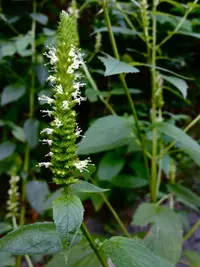
Yellow giant hyssop, Agastache nepetoides, is a tall, long-lived herbaceous perennial in the mint family. It forms upright clumps with square stems and coarse, toothed leaves.
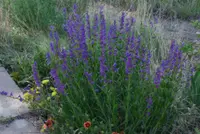
Plants produce narrow, pale yellow flower spikes that can reach impressive heights and attract many bees, butterflies, and other pollinators. The overall look is airy and vertical, fitting well into naturalistic plantings and wildflower borders.
This species is native to eastern and central North America, where it grows in open woods, meadows, and roadsides. It adapts well to average garden conditions and is generally considered easy to grow once established.
It prefers full sun to light shade, moderately moist but well-drained soil, and benefits from consistent conditions, which makes it relatively simple to care for Yellow Giant Hyssop.

Care Difficulty
Easy Care

Light Preference
Full Sun

Water Requirements
Moderate Water

Temperature Preference
Cold Hardy

Hardiness Zone
4–8

Soil Texture
Sandy, Loamy, Organic-rich

Soil pH
Acidic (5.5–6.5), Slightly acidic (6.5–7.0)

Soil Drainage
Well-drained

Fertilization
Minimal (feed rarely)
Scan your plant to receive care tips personalized for your specific plant
Available on iOS and Android
This tall North American perennial thrives in open, bright conditions but tolerates some shade.
This species prefers evenly moist, well-drained soil and handles brief dryness better than constant wetness.
This hardy perennial tolerates a wide temperature range but grows best in moderate warmth.
Agastache nepetoides handles a wide humidity range and usually does not need special humidity control outdoors.
This species prefers free-draining, moderately fertile soil with a loose, open structure.
This plant can be grown in containers if the pot is large and stable enough for its tall growth.
This North American native needs only light feeding, especially in richer garden soils.
Agastache nepetoides responds well to thoughtful pruning that maintains structure and flowering.
This tall perennial is usually grown in the ground and is transplanted only when necessary.
New Agastache nepetoides plants are most often raised from seed, with division used for established clumps.
This species is cold hardy in much of the US and usually needs minimal winter care in the ground.

Plant Health Check
Not sure what's wrong with your plant? Check your plant's health inside the app.
This tall mint-family perennial flowers from late summer into early fall, providing one of the few abundant nectar sources for native bees, wasps, butterflies, and moths when many other wildflowers have finished blooming.
Crushed foliage often smells mildly anise-like due to aromatic compounds, but the flowers and leaves lack the strong sweet flavor typical of other Agastache species commonly used as culinary herbs.
Unlike many sun-loving relatives, this species is adapted to bright woodland edges and open forests in eastern and central North America and can reach 1.5–2.5 m tall in rich, moist soils, forming loose colonies over time.

Botanists consider this species one of the most shade-tolerant members of the genus Agastache, which is otherwise dominated by sun-loving, drought-adapted species from more open and arid habitats.
This species is highly attractive to bees, butterflies, and many other pollinating insects due to its abundant nectar and late-summer bloom. Planting several together helps support local pollinator populations and increases seed production in nearby plants.
Keep your plants happy and healthy with plant identification, disease detection, and easy care guidance.