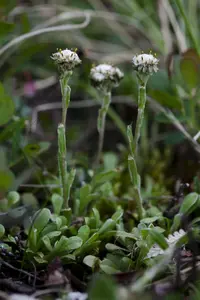
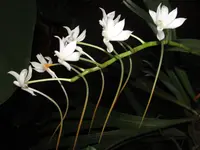
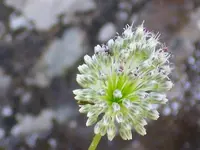
Large-flowered Orlaya Care (Orlaya grandiflora)

Large-flowered Orlaya

About Large-flowered Orlaya

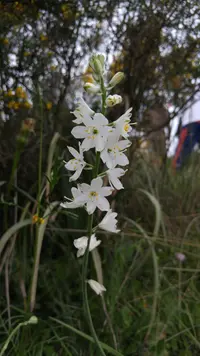
Large-flowered Orlaya (Orlaya grandiflora) is a cool-season annual from southern Europe, grown mainly for its finely cut foliage and lacy white flower umbels. Plants form airy clumps with slender stems, giving a light, transparent look in mixed borders and meadow-style plantings.

The flowers resemble delicate white lace over a soft green background, attracting bees and other small pollinators. It self-seeds in suitable conditions, so established plantings often return each year with minimal effort.

In garden settings, it prefers full sun, moderate moisture, and well-drained soil. These traits make it relatively easy to grow for gardeners who want to learn how to care for Large-flowered Orlaya without complex maintenance routines.

Main Plant Requirements

Care Difficulty

Easy Care

Light Preference

Full Sun

Water Requirements

Moderate Water

Temperature Preference

Cool Climate

Hardiness Zone

5–9

Soil Texture

Sandy, Loamy, Organic-rich

Soil pH

Acidic (5.5–6.5), Slightly acidic (6.5–7.0)

Soil Drainage

Well-drained

Fertilization

Minimal (feed rarely)

Get Personalized Care Plan

Scan your plant to receive care tips personalized for your specific plant

Available on iOS and Android

How to Care for the Large-flowered Orlaya

This annual prefers bright conditions and performs best in open beds or borders.

  • Provide 6–8 hours of direct sun daily, ideally with morning sun and light afternoon shade in hotter regions to protect the lacy blooms of Large-flowered Orlaya.
  • Allow light partial shade (4–5 hours sun) in warm climates; flowering may reduce slightly but plants usually remain healthy and upright.
  • Avoid deep shade, which causes leggy stems and fewer umbels, and avoid intense, reflected afternoon sun that can scorch foliage in midsummer.

This plant prefers evenly moist, free-draining soil rather than constant saturation.

  • Water when the top 3–5 cm of soil feels dry, applying a deep soak so moisture reaches the root zone without leaving the soil soggy.
  • Use well-drained soil with added grit or sand to prevent standing water; prolonged wetness around roots increases risk of rot in Orlaya grandiflora.
  • Reduce watering in cool, rainy weather and after flowering; watch for wilting and crisp leaves as signs of underwatering, or yellowing and soft stems as signs of overwatering.

This cool-season annual thrives in mild conditions and dislikes temperature extremes.

  • Aim for active growth in 55–70°F (13–21°C); flowering is strongest in spring and early summer under these cooler conditions.
  • Tolerates light frost down to about 25°F (-4°C) once established but young seedlings are more vulnerable and benefit from protection in sudden cold snaps.
  • Handles short warm spells up to about 85°F (29°C), but prolonged heat above this can shorten bloom time, so use mulch and light afternoon shade in hot summers.

This species is adapted to dry, open sites, so humidity is rarely a concern for Large-flowered Orlaya in typical home or garden conditions.

Orlaya grandiflora prefers light, well-aerated soil that drains quickly yet holds enough moisture for steady growth.

  • Use a lean, sandy or sandy-loam mix with 20–30% sharp sand to mimic its native, free-draining habitats.
  • Incorporate a modest amount of compost (10–20%) to add nutrients without making the substrate heavy or waterlogged.
  • Aim for slightly alkaline to neutral pH around 7.0–7.5; avoid strongly acidic media that can reduce nutrient availability.
  • Avoid compacted clay, peat-heavy, or constantly wet mixes; improve such soils with coarse sand or fine gravel to enhance drainage and aeration.

This species can grow successfully in containers if the pot and substrate are chosen to prevent waterlogging and root stress.

  • Choose a pot at least 25–30 cm deep so the taproot can extend downward without curling tightly at the base.
  • Select a heavier clay or ceramic pot outdoors to keep the relatively tall, airy stems from tipping in wind.
  • Raise the pot on feet or spacers so drainage holes stay clear and runoff leaves the container area quickly.

Orlaya grandiflora grows best in moderately fertile soil and benefits from light feeding rather than heavy fertilization.

  • Before sowing, mix in well-rotted compost or a light application of balanced granular fertilizer, such as 10-10-10.
  • During the active growing season, use a balanced liquid fertilizer at 1/2 strength every 4–6 weeks if growth appears weak or soil is poor.
  • Skip feeding in winter or after plants finish flowering and start to decline, as annuals do not benefit from extra nutrients then.
  • Avoid high-nitrogen products that promote lush foliage at the expense of flowers when caring for Large-flowered Orlaya.

Pruning Orlaya grandiflora focuses on deadheading and light clean-up to extend flowering and keep plants tidy.

  • In late spring through summer, snip off spent flower heads with clean scissors or hand pruners to encourage continued blooming.
  • Remove dead, damaged, or badly tangled stems at the base to improve air flow and reduce disease risk.
  • For a neater outline, lightly shear back straggly growth, but avoid cutting into very young seedlings.
  • At season’s end, cut plants down to ground level once frost has blackened foliage or flowering is finished.

This species is usually grown as a direct-sown annual, so transplanting young Orlaya grandiflora seedlings requires gentle handling.

  • Sow in final beds when possible, as plants dislike root disturbance and rarely need true repotting.
  • If grown in cell trays, transplant when roots hold the plug together but are not circling, typically at 3–4 true leaves.
  • Move seedlings in early spring or early fall while weather is cool and soil is moist to reduce stress.
  • Handle by the root ball or leaves, keep roots shaded, water in thoroughly, and avoid disturbing the root mass during planting.

Propagation of Orlaya grandiflora is most successful from seed rather than from cuttings or division.

  • Sow fresh seeds in late summer to fall or very early spring, as natural cold exposure improves germination.
  • Outdoors, surface-sow or barely cover seeds in well-drained soil, keeping the area evenly moist but not waterlogged.
  • For indoor starts, chill seeds in moist medium at 35–40°F for 4–6 weeks before moving to 60–68°F light conditions.
  • Thin seedlings rather than transplanting repeatedly, to avoid root disturbance and ensure strong, well-spaced plants.

In most climates Orlaya grandiflora behaves as a cool-season annual, so extensive winter care is usually unnecessary.

  • In mild winter areas, fall-sown plants often overwinter as rosettes, needing only good drainage to avoid root rot.
  • Where winters are cold but not extreme, a light 2–5 cm mulch can buffer soil temperature around young plants.
  • Container-grown specimens in very cold zones can be placed in a sheltered, unheated porch or cold frame to prevent freeze-thaw stress.

Care Tips

Succession Sowing

Stagger sowing every 2–3 weeks in late winter and spring so flowering continues over a longer season instead of one short flush.

Support Tall Stems

In windy or exposed sites, run low pea netting or a grid of twine 20–30 cm above the soil so stems grow through it and are supported without the need for individual staking.

Pinch for Branched Stems

When young plants have 3–4 true leaf pairs and are 8–10 cm tall, pinch out the growing tip once to encourage more side shoots and a higher number of flower stems.

Timed Deadheading

Regularly remove spent blooms down to a side shoot until midseason to prolong flowering, then allow later flower heads to set seed if you want self-sown plants next year.

Encourage Self-Seeding

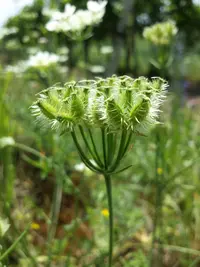
For growing Large-flowered Orlaya as an easy annual, leave a few late flower heads to dry fully on the plant, then gently shake the umbels so ripe seed falls onto bare soil beneath.

Common Pests and Diseases

Powdery mildew

This disease often appears in warm, dry conditions with poor air movement. Symptoms include white, powdery patches on leaves, stems, and sometimes flower stalks, which can lead to yellowing and reduced vigor.

Solution

Remove heavily affected leaves to reduce spore load, then thin surrounding vegetation so plants have better airflow and lower humidity around the foliage. Avoid overhead watering, water early in the day so foliage dries quickly, and if needed apply a sulfur or potassium bicarbonate fungicide labeled for ornamentals at the first sign of infection.

Leaf spot

This disease typically shows as small brown, tan, or purplish spots on lower leaves that may enlarge and merge under prolonged wet conditions. Symptoms include premature yellowing and shedding of foliage, especially in dense plantings or during rainy periods.

Solution

Remove and dispose of affected leaves and any fallen plant debris to reduce the source of infection. Improve spacing and airflow in the planting, water at soil level rather than over the foliage, and consider a copper-based fungicide if wet weather persists and spotting continues to spread.

Aphids

These insects cluster on young stems, leaves, and flower buds, sucking sap and excreting sticky honeydew that can attract sooty mold. This pest may cause curling, distortion, and stunted growth of tender shoots.

Solution

Dislodge colonies by spraying plants with a firm stream of water, then encourage natural predators such as lady beetles by avoiding broad-spectrum insecticides. For persistent infestations, use insecticidal soap or a light horticultural oil, applied thoroughly to the undersides of leaves and growing tips.

Leaf miners

These insects create pale, winding tunnels inside leaves as larvae feed between the leaf surfaces. Symptoms include serpentine trails, blotches, and eventual yellowing or early drop of damaged foliage.

Solution

Hand-remove and dispose of leaves that show fresh tunnels to remove larvae before they mature. Use floating row covers early in the season to reduce adult egg-laying on young foliage, and where pressure is high consider a targeted systemic product labeled for leaf miners, following all label directions carefully.

Thrips

These insects are tiny, slender pests that feed by rasping and sucking on leaves and flowers, most often in dry, warm conditions. Symptoms include silvery streaks, small black specks of frass, distorted petals, and reduced flower quality.

Solution

Inspect flower heads and foliage regularly and remove heavily damaged flower stems. Increase humidity around the plants if feasible, use blue or yellow sticky traps to monitor populations, and treat severe infestations with insecticidal soap or horticultural oil, ensuring thorough coverage of buds and leaf undersides as part of Orlaya grandiflora plant care.

Interesting Facts

Lacy halo flowers

The flower heads have large, showy outer florets around a tight cluster of tiny inner florets, creating a flattened white “lace” that often shows a slight asymmetry, which helps attract a wider range of pollinators.

Mediterranean annual life cycle

This species is native to Mediterranean regions and behaves as a cool-season annual, germinating in mild, moist conditions, then flowering and setting seed quickly once temperatures rise.

Fine-textured dissected leaves

Its leaves are finely divided into narrow segments, giving a fern-like texture that increases leaf surface area while allowing good air movement around the foliage in hot, dry climates.

Botan icon

Did you know?

In traditional cereal fields of southern Europe, this species has long been part of the arable wildflower flora, and modern ecological planting schemes now use it intentionally to mimic those historic meadow-like grain landscapes while supporting diverse pollinating insects.

FAQs about Large-flowered Orlaya

This species is usually grown as a hardy annual, completing its life cycle in one growing season. In very mild climates it may self-seed and appear perennial, but each individual plant is short-lived.

Grow Healthy Plants with Botan Care

Keep your plants happy and healthy with plant identification, disease detection, and easy care guidance.

Botan plant care app — identify plants on mobile

Explore More Plants