Anthericum baeticum Care

Anthericum baeticum

About Anthericum baeticum

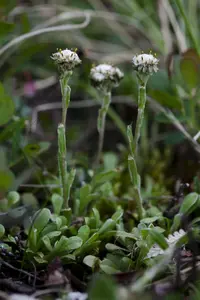
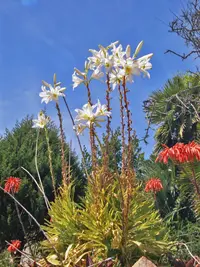
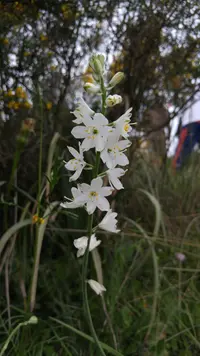
Anthericum baeticum is a small, clump-forming perennial from the asparagus family, valued for its narrow, grass-like leaves and delicate white star-shaped flowers. It typically forms neat tufts with flower stems rising above the foliage, giving a light, airy look in mixed borders or naturalistic plantings.

This species is native to the western Mediterranean region, where it grows in open, often rocky or grassy habitats with good drainage. It is generally undemanding if provided with sun to light shade, moderately moist but free-draining soil, and protection from prolonged waterlogging, so how to care for Anthericum baeticum is straightforward for most gardeners.

Main Plant Requirements

Care Difficulty

Moderate Care

Light Preference

Partial Shade

Water Requirements

Moderate Water

Temperature Preference

Warm Climate

Hardiness Zone

Unknown

Soil Texture

Loamy, Sandy, Organic-rich

Soil pH

Acidic (5.5–6.5), Slightly acidic (6.5–7.0)

Soil Drainage

Well-drained

Fertilization

Minimal (feed rarely)

Get Personalized Care Plan

Scan your plant to receive care tips personalized for your specific plant

Available on iOS and Android

How to Care for the Anthericum baeticum

This sun-loving perennial prefers bright exposure but benefits from some protection at the hottest times of day.

  • Provide 6–8 hours of sun daily, ideally with morning sun and light afternoon shade, especially in hotter regions.
  • Tolerates partial shade (3–5 hours sun), but flowering and compact growth decline if light stays much lower than this.
  • In summer, strong afternoon sun can scorch leaves; use light shade or filtered light, while in winter a more open, sunnier position helps Anthericum baeticum maintain vigor.

Watering should keep the soil moderately moist while allowing clear drying between thorough soakings.

  • Allow the top 3–5 cm of soil to dry before watering again, then water deeply so moisture reaches the root zone.
  • During active growth in spring and early summer, check soil every few days; in cooler or rainy periods, extend the interval to avoid waterlogging.
  • Yellowing, soft leaves and a sour smell indicate overwatering or poor drainage, while limp, curling, or browning leaf tips suggest the plant is staying too dry.

This species prefers mild conditions and does best where extremes of heat and cold are avoided.

  • Optimal growth occurs around 65–77°F (18–25°C), with steady temperatures supporting strong foliage and root development.
  • It tolerates brief drops to about 25–28°F (-4 to -2°C), but repeated frosts or freezing wet soil can damage crowns and roots.
  • In hot spells above 86°F (30°C), growth may slow; provide some afternoon shade and consistent soil moisture to limit heat stress for Anthericum baeticum.

This species prefers moderate air moisture but copes fairly well with typical indoor conditions.

  • Aim for 40–60% humidity to limit leaf tip browning and keep growth steady.
  • Dry air below about 30% can cause brown, crispy tips and slower growth, especially near heating vents.
  • Increase humidity by grouping plants, placing the pot on a pebble tray with water, or locating it in a slightly more humid room.

This plant needs loose, well-structured soil that drains quickly yet holds some moisture.

  • Use a mix of roughly 50–60% peat-free compost, 20–30% perlite, and 10–20% coarse sand for a light, airy texture.
  • Ensure rapid drainage so water does not pool; the soil should feel moist after watering but not remain wet for more than a few hours.
  • Keep pH slightly acidic to neutral, around 6.0–7.0, which supports nutrient availability and root health for Anthericum baeticum.
  • Improve aeration by avoiding compaction; lightly fork or loosen the top 2–3 cm if it crusts, and never press soil down hard around the roots.

This species grows reliably in containers when root space and drainage are managed carefully.

  • Choose a pot only slightly wider than the root mass to prevent waterlogged soil in unused mix around the edges.
  • Select a stable, heavier container if the foliage becomes arching or top-heavy, reducing the risk of tipping in wind or on balconies.
  • Use a potting setup that allows fast removal of drainage water, such as a cachepot or saucer that can be emptied within 10–15 minutes after watering.

This species grows in modest soils and usually needs only light, occasional feeding in cultivation.

  • Apply a balanced liquid fertilizer at 1/4–1/2 strength every 4–6 weeks during spring–summer growth if Anthericum baeticum looks pale or weak.
  • Use either a balanced NPK feed or a thin layer of well-rotted compost around the root zone, keeping it off the crown.
  • Avoid feeding in late autumn and winter, when growth is slow or dormant.
  • Flush the pot with plain water every few months to prevent salt buildup from repeated fertilization.

Pruning needs are low and mainly focus on cleanliness and maintaining a neat clump.

  • In late winter or early spring, remove dead, yellowed, or damaged leaves at the base using clean, sharp scissors or hand pruners.
  • Cut back spent flower stalks to the foliage line after blooming to keep Anthericum baeticum tidy and direct energy to root and leaf growth.
  • Thin out crowded or crossing shoots occasionally to improve light penetration and airflow within the clump.
  • Disinfect tools before and after use to reduce the risk of transmitting fungal or bacterial diseases.

This species tolerates being slightly root-bound but benefits from occasional division or a fresh planting position.

  • Check for roots circling the pot, pushing through drainage holes, or noticeably slowed growth as signs it is time to move Anthericum baeticum.
  • Plan repotting or transplanting in early spring, about every 2–3 years, when active growth is starting and recovery is fastest.
  • Step up only 1 pot size with a free-draining mix, handle the root ball gently, and loosen roots lightly without tearing them.
  • Water thoroughly after moving, then keep soil just slightly moist and shaded for 3–7 days to limit transplant shock.

Division is the most reliable way to increase plants, with seed used where larger numbers are needed.

  • Divide mature clumps in early spring, lifting the plant and separating sections so each has healthy roots and several shoots.
  • Replant divisions at the same depth in free-draining soil, firm gently, and water to settle roots without leaving the soil waterlogged.
  • For seed, sow fresh in spring on the surface of a light seed mix, keep at 60–70°F, and maintain even, slight moisture.
  • Provide bright, indirect light and good airflow for both divisions and seedlings to reduce rot and encourage steady establishment.

This plant is moderately hardy, and established clumps usually cope with normal outdoor winters in mild regions.

  • In zones with frost, add a 3–5 cm layer of mulch around the root zone in late autumn, keeping it away from the crown.
  • Container plants are more vulnerable; move pots to a cold but frost-free spot such as an unheated greenhouse or bright garage.
  • Reduce watering in winter so the soil stays only slightly moist, as cold, wet conditions increase root rot risk.

Care Tips

Divide clumps strategically

Lift and divide mature clumps every 3–4 years in early spring, replanting only the firm, white-rooted sections to maintain vigor and flower production.

Use gravel mulch

Apply a 1–2 cm layer of fine grit or gravel around the crown to keep leaf bases dry, reduce soil splash on the narrow foliage, and limit rot in wet periods.

Enhance drainage profile

In heavy soils, create a low, free-draining berm or raised strip at least 8–10 cm high and amend only that band, so roots sit above the wettest zone while surrounding soil stays structurally stable.

Targeted seed collection

If seed is desired, mark the earliest, strongest flowering stems, allow capsules to dry fully on the plant, then collect and sow the darkest, firmest seeds within a few weeks for best viability when trying to grow Anthericum baeticum from seed.

Monitor nutrient drift

In mixed borders, place the plant just outside zones receiving frequent lawn fertilizer or heavy feeding, which helps prevent overly lush, floppy growth and preserves its naturally upright, grassy habit.

Common Pests and Diseases

Spider mites

This pest feeds on the undersides of leaves, causing fine stippling, dull foliage, and sometimes thin webbing in dry, warm conditions.

Solution

Rinse foliage thoroughly with a strong but controlled stream of water, then increase ambient humidity and improve air circulation; if needed, apply insecticidal soap or a horticultural oil to leaf undersides, repeating weekly until no new damage appears.

Aphids

These insects cluster on young shoots and flower stems, sucking sap and excreting sticky honeydew that can attract sooty mold.

Solution

Prune or pinch off heavily infested tips, then wash remaining stems and leaves with water; follow with insecticidal soap or a dilute horticultural oil, making sure to coat all soft tissues and repeating at 5–7 day intervals if live insects persist.

Leaf spot

This disease produces irregular brown or dark spots on leaves, sometimes with yellow halos, which can coalesce and cause premature leaf dieback in dense clumps.

Solution

Remove and discard affected leaves, reduce overhead watering, and water at the base in the morning; improve spacing and airflow, and if spotting continues, use a copper-based or other labeled ornamental fungicide according to Anthericum baeticum care instructions.

Crown rot

Symptoms include yellowing, collapsing leaves starting near the base and a soft, brown, rotting crown, usually under chronically wet, poorly drained conditions.

Solution

Discard severely affected plants, and for mild cases unpot and cut away all soft, brown tissue, then replant in fresh, free-draining soil; adjust watering so the crown dries slightly between waterings and avoid water sitting around the plant base.

Interesting Facts

Iberian range specialist

This species is native to the Baetic mountain ranges of southern Spain and nearby areas, where it grows in open, rocky habitats rather than the woodland or meadow settings more typical for many related Anthericum species.

Narrow, grasslike foliage

Its leaves are distinctly narrow, linear, and grasslike, forming loose tufts that help it tolerate intense sun and periodic dryness in its natural Mediterranean environment.

Star-shaped white flowers

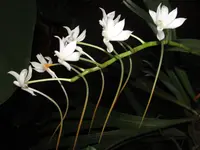
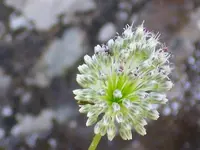
The plant produces small, white, star-shaped flowers on slender, branching stems, which open successively and are mainly pollinated by local bees and small insects in its native range.

FAQs about Anthericum baeticum

This species forms small clumps and slowly enlarges by short rhizomes and self-seeding if conditions suit it. It is not considered aggressive but can naturalize over time if seedheads are left in place.

Grow Healthy Plants with Botan Care

Keep your plants happy and healthy with plant identification, disease detection, and easy care guidance.

Botan plant care app — identify plants on mobile

Explore More Plants