Wind-hardy shaping
In open or windy sites, lightly pinch back new growth several times in spring to encourage a bushier, lower plant that is less likely to snap or lodge in strong winds.

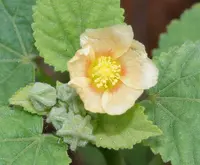
‘ilima, Sida cordifolia, is a small shrub in the mallow family, often grown for its delicate yellow to orange flowers and traditional cultural uses in Hawai‘i. It typically forms a low, branching mound with soft, slightly hairy leaves and a somewhat informal, bushy habit.
In the wild it occurs in warm, dry to moderately moist lowland areas, often on sandy or rocky soils with good drainage. The plant grows best in full sun, tolerates heat and wind, and is fairly drought-tolerant once established, which generally makes it easier to manage in suitable climates.
Gardeners who want to care for ‘ilima should provide bright light, lean well-drained soil, and avoid prolonged waterlogging or heavy, compacted substrates.

Care Difficulty
Easy Care

Light Preference
Full Sun

Water Requirements
Low Water

Temperature Preference
Tropical / Frost Sensitive

Hardiness Zone
10–12

Soil Texture
Sandy, Loamy, Rocky

Soil pH
Slightly acidic (6.5–7.0), Neutral (7.0)

Soil Drainage
Well-drained

Fertilization
Minimal (feed rarely)
Scan your plant to receive care tips personalized for your specific plant
Available on iOS and Android
This sun-loving shrub grows best with strong light and moderate heat exposure.
This drought-tolerant species prefers deep, infrequent watering in freely draining soil.
This warm-climate shrub thrives in heat but is damaged by cold and frost.
Sida cordifolia handles a wide humidity range and usually does not need special humidity control indoors or outdoors.
This species prefers light, well-drained soil that does not stay wet after irrigation or rain.
This species adapts well to container culture when provided with adequate root space and drainage control.
This plant grows in poor soils but responds well to light feeding in cultivation.
Pruning helps keep Sida cordifolia controlled, healthy, and more floriferous in managed landscapes.
This species is more often transplanted in the ground than kept long term in containers.
Sida cordifolia is commonly propagated from both seeds and softwood cuttings in warm conditions.
This warm-climate species is frost-tender and needs protection in regions with cold winters.

Plant Health Check
Not sure what's wrong with your plant? Check your plant's health inside the app.
This shrub is native to India and other parts of tropical Asia and Africa, but has become naturalized in many warm regions worldwide, especially in disturbed and overgrazed areas.
It produces large numbers of seeds that remain viable in the soil and germinate readily after disturbance, which is why it often behaves as an invasive weed in pastures and along roadsides.
The small yellow flowers provide nectar and pollen for a range of insects, and in some regions the plant is considered a minor but reliable resource for bees during dry seasons.

In some traditional fiber crafts, the tough, fibrous stems of Sida cordifolia have been used locally as a substitute for jute and other bast fibers to make cordage and coarse rope, especially in rural areas where more conventional fiber crops are not available.
Poor flowering usually comes from insufficient light, depleted soil nutrients, or heavy pruning at the wrong time. Check that the plant receives strong sun, refresh soil fertility, and prune lightly after flowering, not before buds form.
Keep your plants happy and healthy with plant identification, disease detection, and easy care guidance.