big-leaf palm Care (Marojejya darianii)

Also known as: Ravimbe Palm
big-leaf palm

About big-leaf palm

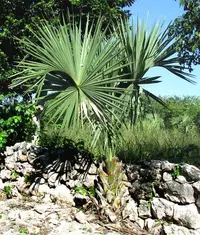
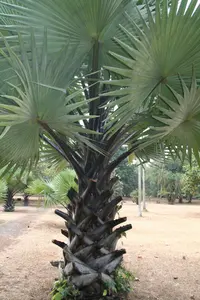
Marojejya darianii, commonly called big-leaf palm, is a rare tropical palm valued for its huge, glossy, arching fronds and strong architectural form. It develops a solitary trunk and very large leaves that create a dramatic, almost prehistoric look as the plant matures. Native to the rainforests of Madagascar, it naturally grows in warm, shaded, humid understory conditions. This species is considered challenging, mainly due to its need for stable warmth, high humidity, and ample space as it grows. It prefers bright, filtered light, evenly moist but well-drained soil, and consistent conditions, which are key when learning how to care for big-leaf palm.

Main Plant Requirements

Care Difficulty

Hard Care

Light Preference

Bright Indirect Light

Water Requirements

Keep Soil Moist

Temperature Preference

Tropical / Frost Sensitive

Hardiness Zone

11–12

Soil Texture

Loamy, Peaty, Organic-rich

Soil pH

Acidic (5.5–6.5), Slightly acidic (6.5–7.0)

Soil Drainage

Moist but well-drained

Fertilization

Light (every 4–6 weeks)

Get Personalized Care Plan

Scan your plant to receive care tips personalized for your specific plant

Available on iOS and Android

How to Care for the big-leaf palm

This palm prefers bright, filtered light that mimics a forest understory environment.

  • Provide 4–6 hours of bright, indirect light daily; gentle morning sun through a sheer curtain is acceptable, but avoid direct midday or afternoon rays on the leaves.
  • Tolerates light to medium shade, yet growth of the big-leaf palm slows and fronds stretch if light stays low for many weeks.
  • In summer, protect from harsh, reflected sun to prevent leaf scorch; in winter, move closer to bright windows or supplement with a grow light if days are very short.

Marojejya darianii prefers consistently moist but not waterlogged soil.

  • Water when the top 2–4 cm of soil feel dry, using enough water to moisten the entire root zone, then let excess drain freely.
  • Reduce watering slightly in cooler, darker months, allowing the surface to dry a bit more while avoiding complete drying of the root ball.
  • Watch for yellowing, soft leaf bases as a sign of overwatering and root stress, and for crisp brown leaf edges as an indicator of underwatering.

This species thrives in warm, stable temperatures similar to a lowland tropical forest.

  • Aim for 70–85°F (21–29°C) during active growth, with consistent warmth and minimal daily swings to support steady leaf and root development.
  • Protect from cold; growth slows below 65°F (18°C) and foliage can be damaged below 55°F (13°C), with near-freezing temperatures causing severe injury or death.
  • In hot spells above 90°F (32°C), increase shade and airflow and monitor soil moisture, as heat stress combines quickly with drought to cause leaf scorch.

This palm prefers consistently high humidity to maintain large, healthy leaves.

  • Aim for 60–80% humidity; use a humidifier or place the pot on a wide pebble tray with water below the pot base.
  • It tolerates only brief dips to 40–50% before big-leaf palm fronds brown at tips and edges.
  • Crisping margins, folding leaflets, and stalled new growth indicate low humidity; group plants or move away from heating or AC vents.

Marojejya darianii grows best in deep, loose, organic-rich soil that drains freely yet stays evenly moist.

  • Use a mix of roughly 50% peat or coco coir, 25% fine bark, and 25% perlite or pumice for both moisture retention and aeration.
  • Aim for slightly acidic to neutral pH, around 6.0–7.0, which supports root nutrient uptake and reduces micronutrient lockout.
  • Ensure the mix feels springy, not compact; add extra bark and perlite if water lingers on the surface for more than a few seconds.
  • Avoid heavy garden soil, unamended clay, or mixes with a high proportion of fine sand that can compact and suffocate roots.

This species can be grown in containers if the pot provides ample, stable root volume.

  • Choose a tall, heavy pot or add weight at the base to counterbalance the large, arching canopy as it matures.
  • Select thick-walled plastic or glazed ceramic to moderate moisture loss while still allowing a freely draining mix to dry evenly.
  • Use a pot wide enough to spread the root system, leaving at least 5–8 cm of space between roots and the pot wall for air movement.

This palm responds well to light, consistent feeding during active growth.

  • Use a balanced liquid NPK fertilizer at 1/2 strength or a gentle slow-release formula suited to tropical foliage plants.
  • Feed every 4–6 weeks in spring and summer when Marojejya darianii is producing new leaves.
  • Skip or greatly reduce fertilization in fall and winter when growth slows.
  • Water before and after feeding to avoid root burn and distribute nutrients evenly.

Pruning is mainly cosmetic and hygienic for Marojejya darianii rather than structural.

  • Carry out most pruning in late winter or early spring before strong new growth starts.
  • Remove only dead, yellowing, or damaged fronds at their base using clean, sharp pruners.
  • Avoid cutting green, healthy fronds, as this slows growth and weakens the palm.
  • Sanitize tools with alcohol between cuts to limit disease spread on large leaf bases.

Container-grown plants benefit from careful, infrequent repotting due to their large root system.

  • Plan to move to a larger pot every 2–3 years, ideally in spring when growth resumes.
  • Check for roots circling the pot, growing from drainage holes, or unexplained slow growth as signs to repot.
  • Choose a sturdy container 5–8 cm wider, with fast-draining, rich mix to support caring for big-leaf palm.
  • Minimize root stress by sliding the plant out gently, loosening circling roots lightly, watering well, and shading for several days after repotting.

Propagation of Marojejya darianii is specialized and usually left to nurseries.

  • Most plants are grown from seed, which can be slow and inconsistent to germinate.
  • Sow fresh seed in warm conditions around 75–85°F with high humidity and sterile, well-drained medium.
  • Keep the medium evenly moist, never waterlogged, and provide bright, indirect light for several months.
  • Vegetative methods like division are rarely suitable because the palm typically has a single growing point.

This tropical palm is very cold sensitive and needs careful winter management in most climates.

  • Keep temperatures above 55–60°F; exposure near freezing can cause leaf damage or death.
  • For container plants outdoors, move them indoors to a bright, draft-free spot before nights drop below 55°F.
  • Reduce watering in winter, allowing the top soil to dry slightly more between waterings.
  • In very mild climates, a thick organic mulch around the root zone helps buffer brief cool spells.

Care Tips

Plan for size

Place the container where there is at least 1.5–2 m of horizontal clearance so the huge fronds can expand fully without rubbing walls, furniture, or doorways, which reduces tearing and mechanical stress.

Stabilize heavy fronds

As fronds elongate, use discreet, soft ties to anchor the heaviest petioles to a sturdy stake or to the pot rim to prevent the crown from leaning or the root ball from loosening when the plant is moved.

Use weighted containers

Choose a wide, heavy pot or add a layer of clean gravel or stones at the base of the container to lower the center of gravity and keep the plant from tipping as the canopy becomes top-heavy.

Rotate with support

Rotate the pot 1/4 turn every 2–3 weeks while keeping any stakes or supports in place, so light reaches all sides evenly and the trunk develops straight, not leaning toward a single light source.

Routine pest scouting

Inspect the undersides of fronds and along the petioles every 1–2 weeks for scale, spider mites, and mealybugs, and wipe foliage with a damp, soft cloth during caring for big-leaf palm to remove dust that shelters pests and reduce early infestations.

Common Pests and Diseases

Spider mites

This pest often appears on big-leaf palms kept in warm, dry indoor air, causing stippled, dull foliage and fine webbing on the undersides of leaves. Symptoms include gradual yellowing and loss of leaf vigor.

Solution

Rinse fronds thoroughly with a strong but controlled stream of lukewarm water, focusing on leaf undersides, then allow the plant to dry in good airflow. For persistent infestations, apply insecticidal soap or a neem oil solution every 7–10 days, keeping humidity higher (40–60%) to make conditions less favorable to mites.

Scale insects

These insects attach to stems and leaf midribs as small, rounded bumps that exude sticky honeydew and can lead to yellowing or premature leaf drop. Infestations tend to build slowly but can weaken this slow-growing palm significantly.

Solution

Manually remove visible scale with a cotton swab dipped in isopropyl alcohol, then wash the foliage and stems with a mild insecticidal soap solution. Repeat inspections weekly and isolate the plant from others until no new scale appears, as part of consistent Marojejya darianii care.

Mealybugs

This pest forms white, cottony clusters in leaf bases, between leaflets, and around new growth, where it feeds on plant sap and causes distortion and stunting. Honeydew and sooty mold may develop on affected foliage.

Solution

Inspect leaf bases and remove visible mealybugs with a cotton swab dipped in isopropyl alcohol, then shower the plant to dislodge hidden insects. Follow up with repeated applications of neem oil or insecticidal soap, ensuring good coverage in crevices and monitoring new growth closely.

Leaf spot

This disease causes dark, water-soaked or tan lesions with possible yellow halos on the broad leaf surfaces, often starting on lower or crowded fronds. Symptoms include progressive spotting, coalescing patches, and eventual browning of affected areas.

Solution

Remove and discard the most affected fronds, avoiding overhead watering that keeps leaves wet for long periods. Improve air circulation around the plant and, if spots continue to spread, use a copper-based or other palm-safe fungicide according to label directions, treating both upper and lower leaf surfaces.

Pink rot

This disease, caused by the fungus Gliocladium (Nalanthamala) vermoeseni, produces soft, decaying tissue at the crown or base of young fronds, sometimes with salmon-pink fungal growth. Symptoms include collapsed new leaves and dieback from the growing point in poorly ventilated, overly moist conditions.

Solution

Promptly remove and discard all affected tissue and any dead or dying fronds, then reduce watering so the root zone dries slightly between waterings while maintaining even, not saturated, moisture. Increase airflow, avoid water collecting in the crown, and if caught early, treat the crown and surrounding tissues with a palm-labeled fungicide to prevent further spread.

Interesting Facts

Massive undivided leaves

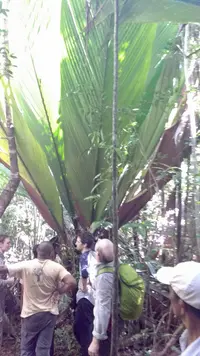
This palm produces some of the largest entire (undivided) leaves of any palm, with individual blades that can exceed several meters in length and create a single, continuous leaf surface rather than the usual feathered or fan shape seen in most palms.

Madagascar rainforest endemic

It is naturally restricted to lowland rainforests in northeastern Madagascar, where it grows under high, humid canopy conditions and is considered rare in the wild due to habitat loss and forest fragmentation.

Solitary canopy-forming trunk

Unlike clustering palms, it develops a single, robust trunk that can eventually reach canopy height in its native habitat, supporting a relatively small number of very large leaves that capture light efficiently in shaded forest understories.

Botan icon

Did you know?

Specialist palm botanists regard this species as one of the largest entire-leaved palms in the world, which has made it a reference plant in discussions of leaf size evolution and mechanical support limits in woody monocots.

FAQs about big-leaf palm

Brown leaf edges usually result from low humidity, underwatering, excess fertilizer salts, or cold drafts. Flush the soil, trim only fully dead tissue, raise humidity to 50–60%, and keep temperatures stable to prevent further damage.

Grow Healthy Plants with Botan Care

Keep your plants happy and healthy with plant identification, disease detection, and easy care guidance.

Botan plant care app — identify plants on mobile

Explore More Plants