Mulch For Cool Roots
Apply a 3–5 cm layer of fine bark or leaf mold around the crowns each spring to keep roots cool, conserve moisture, and reduce weed competition without covering the crown itself.

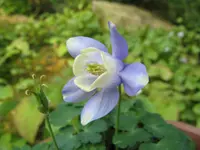
Siberian columbine (Aquilegia sibirica) is a hardy, herbaceous perennial known for its nodding, spurred flowers in shades of blue, violet, or white. It forms loose clumps of finely divided, bluish-green foliage and sends up slender flowering stems in late spring to early summer.
This species is native to Siberia and parts of northern Asia, so it is well adapted to cold climates and short growing seasons. It generally prefers cool summers, moderate moisture, and well-drained, humus-rich soil.
Aquilegia sibirica is usually considered easy to grow in temperate gardens, though it may be short-lived and often relies on self-seeding to persist. Understanding how to care for Siberian columbine helps maintain healthy plants and regular flowering over the years.

Care Difficulty
Moderate Care

Light Preference
Partial Shade

Water Requirements
Moderate Water

Temperature Preference
Cold Hardy

Hardiness Zone
3–7

Soil Texture
Loamy, Sandy, Organic-rich

Soil pH
Acidic (5.5–6.5), Slightly acidic (6.5–7.0)

Soil Drainage
Moist but well-drained

Fertilization
Minimal (feed rarely)
Scan your plant to receive care tips personalized for your specific plant
Available on iOS and Android
This species prefers cool conditions with bright, gentle light rather than intense heat.
This perennial prefers evenly moist, well-drained soil rather than extremes of wet or dry.
This cold-tolerant perennial is adapted to cool summers and harsh winters.
Aquilegia sibirica handles typical outdoor humidity well and rarely needs special adjustment.
Soil preparation for Aquilegia sibirica should prioritize drainage, moderate fertility, and stable moisture.
This species can be grown in containers if the potting setup compensates for its dislike of waterlogged roots.
This perennial benefits from modest feeding on lean soils but does not require heavy fertilization for healthy growth.
Aquilegia sibirica benefits from light, timely pruning to maintain a tidy clump and support good flowering.
This species is usually grown in garden beds, so transplanting young plants is more common than repotting mature clumps.
Propagation of Aquilegia sibirica is most reliable from seed, with some limited division of younger clumps.
This cold-hardy perennial needs minimal winter care in most temperate climates.

Plant Health Check
Not sure what's wrong with your plant? Check your plant's health inside the app.
This columbine is one of the few Aquilegia species truly native to continental Siberia, naturally occurring in cold, continental climates from the Ural region eastward into central Siberia.
In its native range it survives very long, harsh winters with deep soil freezing, showing strong adaptation to freeze–thaw cycles and a short growing season.
In the wild it often grows on rocky slopes, open forest edges, and thin mountain soils, indicating a natural tolerance for well-drained, relatively nutrient-poor substrates.

Genetic and morphological studies show that this species forms a distinct lineage within the Eurasian columbines, helping botanists reconstruct the evolutionary history and past migration routes of Aquilegia across northern Asia.
This species is a hardy perennial that returns for several years from the same root system. Individual plants often self-seed nearby, slowly forming small clumps and a naturalized look in suitable garden conditions.
Keep your plants happy and healthy with plant identification, disease detection, and easy care guidance.