Mounting strategy
Grow this orchid on cork or tree fern with a thin, moisture-retentive moss layer, and secure the roots lightly with biodegradable ties so new roots can attach and dry quickly between waterings.

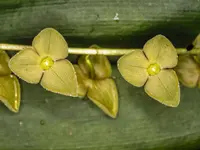
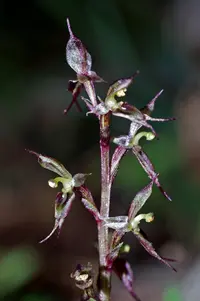
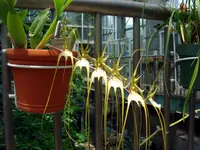
Stelis superbiens is a miniature epiphytic orchid, usually found growing on trees in cloud forests of Central and South America. It forms tight clumps of slender, upright leaves and many small, intricate flowers on short spikes. The blooms often appear in succession, creating a subtle but long-lasting display rather than a few showy flowers. This species prefers cool to intermediate temperatures, high humidity, and gentle, filtered light, which reflects its misty forest origins. These specific conditions mean care for Stelis superbiens can be moderately challenging indoors without good humidity and air circulation.

Care Difficulty
Hard Care

Light Preference
Partial Shade

Water Requirements
Keep Soil Moist

Temperature Preference
Tropical / Frost Sensitive

Hardiness Zone
11–13

Soil Texture
Peaty, Organic-rich, Loamy

Soil pH
Acidic (5.5–6.5)

Soil Drainage
Moist but well-drained

Fertilization
Light (every 4–6 weeks)
Scan your plant to receive care tips personalized for your specific plant
Available on iOS and Android
This cloud-forest orchid prefers soft, filtered light that mimics bright shade under a canopy.
This species thrives with consistently moist conditions but reacts poorly to stagnant, waterlogged media.
This orchid prefers cool to intermediate temperatures with minimal daily and seasonal extremes.
This cloud-forest orchid needs consistently high humidity to stay healthy.
This epiphytic orchid prefers a loose, airy medium rather than standard potting soil.
This species is well suited to container and basket culture.
This orchid benefits from light, consistent feeding during active growth but is sensitive to excess salts.
This species needs only light, hygienic pruning to maintain a healthy clump and encourage fresh growth.
Repotting keeps this fine-rooted orchid healthy by refreshing its airy medium and preventing suffocation or rot.
Division is the most practical way to propagate this clumping orchid for consistent, healthy new plants.
This orchid is not frost hardy and needs cool to mild, frost-free winter conditions to stay healthy.

Plant Health Check
Not sure what's wrong with your plant? Check your plant's health inside the app.
This species is native to high-elevation Andean cloud forests, where it grows as an epiphyte on mossy tree trunks in consistently cool, moist, and shaded conditions.
Its slender inflorescences carry many tiny flowers that often open in sequence along the spike, creating an extended, but subtle, blooming period rather than one short flush.
The individual flowers are very small and best appreciated with magnification, revealing intricate sepal and petal structures typical of the Pleurothallidinae subtribe.
This orchid often skips flowering when light is too low, nights are too warm, or humidity and airflow are unstable. Slightly cooler, stable nights, consistent moisture, and mature, unstressed growth are important for reliable blooming.
Keep your plants happy and healthy with plant identification, disease detection, and easy care guidance.