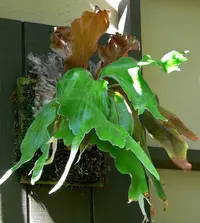
Codiaeum peltatum Care

About Codiaeum peltatum

Codiaeum peltatum is an evergreen shrub from tropical Southeast Asia, valued mainly for its colorful, patterned foliage rather than its flowers. The plant forms a bushy habit with leathery leaves that may be narrow, lobed, or slightly twisted, depending on the form.

In warm climates it can grow outdoors as a landscape shrub, while in cooler regions it is usually kept as a container or indoor ornamental. It prefers bright light, stable warmth, and evenly moist but well-drained soil, which influences how to care for Codiaeum peltatum successfully.

This species can be moderately demanding, as it reacts to drafts, low light, or irregular watering with leaf drop. Once stable conditions are provided, it becomes a long-lived decorative foliage plant.

Main Plant Requirements

Care Difficulty

Moderate Care

Light Preference

Partial Shade

Water Requirements

Moderate Water

Temperature Preference

Warm Climate

Hardiness Zone

Unknown

Soil Texture

Loamy, Sandy, Organic-rich

Soil pH

Acidic (5.5–6.5), Slightly acidic (6.5–7.0)

Soil Drainage

Well-drained

Fertilization

Light (every 4–6 weeks)

Get Personalized Care Plan

Scan your plant to receive care tips personalized for your specific plant

Available on iOS and Android

How to Care for the Codiaeum peltatum

This species develops best color and compact growth with bright, indirect light and brief direct sun.

  • Aim for 4–6 hours of bright, filtered light daily, such as near an east- or southeast-facing exposure, to support healthy foliage color and density.
  • It tolerates light partial shade, but long periods below bright indirect light cause leggy stems and dull leaves in Codiaeum peltatum.
  • Protect from harsh midday and late-afternoon sun, which can scorch leaves; increase light gradually in spring after darker winter conditions.

This plant prefers evenly moist but not saturated soil, with brief drying at the surface between waterings.

  • Water when the top 2–3 cm of soil feels dry, using enough water so excess drains away and roots are moistened without standing in water.
  • Reduce watering slightly in cooler, lower-light seasons, allowing the top 3–4 cm to dry, while avoiding total soil dryness for extended periods.
  • Watch leaves for cues: yellowing, mushy foliage or a sour soil smell suggest overwatering, while limp, curling, or crispy edges indicate underwatering for Codiaeum peltatum.

Stable, warm conditions are important for maintaining healthy growth and leaf quality.

  • Provide an ideal range of 65–80°F (18–27°C), where growth is steady and stress is minimal during the main growing season.
  • Avoid exposing the plant to temperatures below 55°F (13°C); short dips near this level can slow growth, while frost will damage or kill foliage.
  • In hotter periods above 85°F (29°C), increase shade and airflow to limit leaf scorch, and protect from cold drafts or rapid temperature swings year-round.

This species prefers moderate to high humidity and reacts quickly to dry indoor air.

  • Aim for 50–70% humidity for stable foliage color and reduced leaf drop.
  • In dry air, leaf edges may brown, curl, or show dull, speckled patches, especially near heaters or vents.
  • Increase humidity with a nearby humidifier, grouping plants, or a wide pebble tray, rather than frequent misting.

This plant needs a loose, aerated, fast-draining mix that still retains moderate moisture.

  • Use a peat- or coco-based potting mix amended with 20–30% perlite and 10–20% fine bark for structure and air spaces.
  • Target a slightly acidic to neutral pH around 6.0–7.0, which supports nutrient uptake and stable leaf coloration in Codiaeum peltatum.
  • Ensure rapid drainage; water should flow through in seconds rather than pooling on the surface or in the saucer.
  • Avoid heavy clay, compacted mixes, or those with excessive fine peat that stay wet for days and promote root rot.

This species grows reliably in containers when the pot supports its woody, upright habit.

  • Choose a pot slightly heavier or made of ceramic to prevent tipping as stems become taller and leafier.
  • Select a container with a broad base to stabilize the top-heavy crown and reduce the risk of breakage from accidental bumps.
  • Use a pot only 2–4 in wider than the root mass to balance root space with controlled moisture, preventing waterlogged conditions.

This species benefits from modest, consistent feeding during the warm growing season to support foliage color and steady growth.

  • Use a balanced liquid fertilizer (around 10-10-10 or 20-20-20) at 1/4–1/2 strength every 4–6 weeks in spring and summer.
  • Alternatively, apply a slow-release balanced fertilizer once at the start of the growing season, following label rates.
  • Pause feeding or reduce to very light applications in fall and winter when growth slows.
  • Ensure soil is moist before feeding Codiaeum peltatum to limit root burn and flush occasionally with plain water to prevent salt buildup.

Light, periodic pruning helps maintain a compact, well-branched shape and removes weak tissue.

  • Plan main pruning in late winter or early spring before vigorous new growth starts.
  • Use clean, sharp hand pruners to remove dead, diseased, or storm-damaged stems back to healthy wood.
  • Thin crowded interior shoots to improve light penetration and airflow, which supports denser foliage.
  • Shorten overly long branches to a leaf node to control height and encourage side-branching in Codiaeum peltatum.

Container-grown plants benefit from infrequent but careful repotting to refresh the root zone and support gradual growth.

  • Check for roots circling the pot, emerging from drainage holes, or slowing top growth as indicators it is time to repot Codiaeum peltatum.
  • Plan repotting in spring, every 2–3 years, stepping up only 1 pot size with a well-drained, peat-free, humus-rich mix.
  • Water thoroughly 1–2 days before and after shifting to reduce root stress and help new soil settle around the root ball.
  • Keep the plant shaded and sheltered for 1–2 weeks post-repotting, maintaining even moisture until active growth resumes.

This species is most often propagated from semi-ripe stem cuttings under warm, humid conditions.

  • Take 8–12 cm semi-ripe cuttings in late spring or early summer from healthy, non-flowering shoots of Codiaeum peltatum.
  • Remove lower leaves, lightly wound the stem base, and dip in rooting hormone to improve root initiation.
  • Insert cuttings into a sterile, well-drained medium such as 1:1 perlite and peat or coco coir.
  • Maintain 70–80°F, high humidity, and bright, indirect light, using a propagator or clear cover until firm roots develop.

This plant is frost-tender and needs protection in regions with cold winters.

  • In USDA zones colder than 10, grow Codiaeum peltatum in containers and move indoors before temperatures drop below 50°F.
  • Provide a bright, draft-free indoor spot and reduce watering so the soil stays lightly moist, never saturated.
  • Outdoor specimens in mild climates benefit from 5–8 cm of organic mulch over the root zone to buffer temperature swings.

Care Tips

Rotational light training

Rotate the pot 45–90° every 1–2 weeks to prevent the plant from leaning and to keep leaf coloration even on all sides, especially if it sits near a window with light from one direction.

Branching by selective pinching

Pinch out only the very soft, green shoot tips on overly tall stems in late spring or early summer to encourage more lateral branches and a fuller crown without stressing the plant.

Structured staking support

Use slim, padded stakes placed close to the main stems and loosely tie them with soft plant ties in a figure‑8 pattern to support tall, top‑heavy growth while still allowing slight movement for stronger stems.

Quarantine and pest checks

Quarantine any new plant for 2–3 weeks and inspect leaf undersides and stem joints with a magnifying glass every few days, so scale or spider mites are detected early before they spread to C. peltatum or other plants.

Seasonal fertilizer tapering

Begin reducing fertilizer strength and frequency by half in late summer, then stop feeding by late fall so the plant can shift into a slower growth phase and avoid salt buildup in the potting mix while growing Codiaeum peltatum indoors.

Common Pests and Diseases

Spider mites

This pest thrives on croton-type foliage in warm, dry indoor air and feeds by piercing leaves and sucking sap, leading to stippling and dull, dusty-looking foliage. Symptoms include very fine webbing between leaves and stems and progressive leaf drop if infestations are heavy.

Solution

Rinse foliage thoroughly with a strong but gentle stream of lukewarm water, including leaf undersides, then repeat every few days for 2–3 weeks; for ongoing Codiaeum peltatum care, maintain higher humidity and avoid very dry, hot air. For persistent infestations, apply insecticidal soap or a horticultural oil labeled for spider mites, ensuring full coverage and repeating as directed on the label.

Scale insects

These insects attach tightly along stems and leaf midribs, appearing as small, dome-shaped bumps that do not move. This pest feeds on plant sap, causing yellowing, sticky honeydew deposits, and sometimes sooty mold growth on leaves.

Solution

Gently scrape or wipe off visible scales with a cotton swab dipped in isopropyl alcohol, then wash the plant with lukewarm water and mild insecticidal soap. Inspect stems and leaf axils weekly and repeat treatments until no new scales appear, isolating the plant from others during control efforts.

Mealybugs

This pest appears as soft, white, cottony clusters in leaf axils, along stems, and sometimes on roots in potted plants. Feeding weakens the plant, distorts new growth, and deposits sticky honeydew that can attract sooty mold.

Solution

Remove visible mealybugs with cotton swabs dipped in isopropyl alcohol, then thoroughly spray foliage and stems with insecticidal soap, repeating every 7–10 days until populations decline. Isolate the plant, check the root ball for hidden colonies when repotting, and dispose of heavily infested potting mix if root mealybugs are present.

Bacterial leaf spot

This disease causes small, water-soaked spots on leaves that turn dark brown to black, often with a yellow halo, and can coalesce into larger necrotic areas. Symptoms include premature leaf drop, particularly on crowded, poorly ventilated plants kept too wet on the foliage.

Solution

Remove and discard affected leaves promptly, avoid overhead watering, and keep foliage as dry as possible while improving air circulation around the plant. Disinfect pruning tools, reduce leaf crowding, and if the problem persists, consider replacing heavily affected plants, as chemical options for bacterial diseases are limited in home settings.

Anthracnose

This disease produces irregular tan to dark brown lesions along leaf margins and tips, sometimes with darker borders, and can cause distortion of young foliage. Symptoms include gradual expansion of dead tissue under warm, humid conditions, especially when leaves stay wet for long periods.

Solution

Prune out and discard infected leaves and any severely affected stems, then increase spacing and airflow and avoid prolonged leaf wetness by watering at the soil level. Keep the plant in conditions with good light and moderate humidity, and if outbreaks recur, apply a copper-based fungicide labeled for anthracnose, following the product directions carefully.

Interesting Facts

Naturally narrow habitat

This species is naturally recorded from a limited area in Papua New Guinea and nearby regions, where it grows in lowland tropical forest margins rather than deep shade or fully open sites.

Distinct leaf morphology

Unlike the broad, paddle-shaped leaves of the common croton, this species typically has narrower, more elongated blades, sometimes with subtle lobing that reflects its adaptation to filtered forest light.

Late inclusion in cultivation

Although the genus Codiaeum has been grown ornamentally for well over a century, this particular species entered ornamental collections much later and remains uncommon compared with standard croton hybrids.

FAQs about Codiaeum peltatum

This species can be used indoors if given bright conditions, stable warmth, and higher humidity. It performs best in bright rooms away from drafts, where its foliage color and shape provide a strong structural accent.

Grow Healthy Plants with Botan Care

Keep your plants happy and healthy with plant identification, disease detection, and easy care guidance.

Botan plant care app — identify plants on mobile

Explore More Plants