Ajuga lupulina Care

About Ajuga lupulina

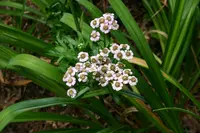
Ajuga lupulina is a low-growing perennial from the mint family, valued mainly as a groundcover. It forms dense patches of foliage with short flower spikes that attract pollinators. Native to parts of Asia, it typically grows in open woodland edges, grasslands, and disturbed sites with moderate moisture. This background makes it adaptable in temperate gardens when given similar conditions. The plant is generally considered undemanding if placed in well-drained soil and protected from extremes of drought or waterlogging. Partial shade to light sun and consistent, moderate moisture usually support healthy growth. With the right site choice, it is relatively straightforward to care for Ajuga lupulina in many outdoor settings.

Main Plant Requirements

Care Difficulty

Moderate Care

Light Preference

Partial Shade

Water Requirements

Moderate Water

Temperature Preference

Warm Climate

Hardiness Zone

Unknown

Soil Texture

Loamy, Sandy, Organic-rich

Soil pH

Acidic (5.5–6.5), Slightly acidic (6.5–7.0)

Soil Drainage

Moist but well-drained

Fertilization

Minimal (feed rarely)

Get Personalized Care Plan

Scan your plant to receive care tips personalized for your specific plant

Available on iOS and Android

How to Care for the Ajuga lupulina

This species prefers bright, gentle light with protection from intense afternoon sun.

  • Provide 3–5 hours of morning sun or light dappled shade under taller plants for Ajuga lupulina.
  • Aim for partial shade, especially in hot summers; strong afternoon sun can scorch leaves and dry soil too fast.
  • In deep shade, foliage becomes sparse and flowering declines, so adjust by thinning overhead cover or shifting to a brighter, filtered spot.

This plant prefers consistently moist, but not saturated, soil.

  • Water when the top 2–3 cm of soil feel dry, using enough water to moisten the root zone without leaving puddles.
  • Ensure soil drains freely; standing water or a sour smell indicates overwatering and risks root rot.
  • In hot, dry periods, check moisture every 1–2 days, while in cool or rainy seasons natural rainfall often covers the needs of Ajuga lupulina.

This groundcover is fairly hardy and adapts to a range of outdoor temperatures.

  • Optimal active growth occurs around 60–75°F (16–24°C), with steady moisture and partial shade improving heat tolerance.
  • Mature plants usually tolerate down to about 20°F (-6°C) with mulch; below this, crowns may be damaged, especially in exposed sites.
  • Prolonged heat above 90°F (32°C) can stress plants, so increase shade and soil moisture during heatwaves and avoid planting in heat-reflecting spots.

This species tolerates a wide humidity range, so air moisture is rarely a limiting factor.

This species prefers moist, well‑structured soil that balances drainage and water retention.

  • Use a loamy, organic‑rich soil that holds moisture yet does not stay waterlogged.
  • Aim for slightly acidic to neutral pH around 6.0–7.0 for stable growth.
  • Improve drainage and aeration by mixing native soil with compost and coarse sand or fine grit.
  • Avoid heavy, compacted clay or spots where water pools for more than a few hours.

This species can grow reliably in containers outdoors if moisture and spread are managed.

  • Choose a wide, shallow pot to accommodate its creeping habit and rapid lateral spread.
  • Select a heavier material like ceramic to prevent planters from shifting as foliage thickens.
  • Raise the container slightly on feet or bricks so drainage holes clear quickly after rain or watering.

This species generally grows well in modest soils, so fertilizing Ajuga lupulina is light and targeted rather than intensive.

  • Use a balanced, slow-release granular fertilizer (for example 10-10-10) in early spring if growth looks weak or leaves pale.
  • Apply a thin layer of compost around the root zone once a year to maintain soil organic matter.
  • Feed only during the active growing season, at most 1–2 times, and avoid fertilizing in winter dormancy.
  • Use fertilizers at half the label-recommended strength to limit salt buildup and root stress.

Pruning Ajuga lupulina is simple and mainly focused on keeping the clump healthy and tidy.

  • Cut back spent flower spikes and ragged foliage in late spring or early summer to encourage fresh leaves.
  • Remove dead, diseased, or winter-damaged shoots at ground level with clean hand pruners or sharp scissors.
  • Thin out overly crowded rosettes to improve air movement and reduce fungal problems.
  • Edge or trim spreading patches to control shape and prevent unwanted spread into nearby beds.

This groundcover is more often transplanted in the garden than grown as a long-term container plant.

  • Transplant Ajuga lupulina in early spring or early fall, when temperatures are mild and soil moisture is stable.
  • Look for signs such as tightly crowded rosettes, poor vigor, or roots circling a small pot to decide when to move it.
  • Lift clumps with a trowel or fork, keeping a firm soil ball, and replant at the same depth in well-drained soil.
  • Water thoroughly after transplanting, shade for a few days if conditions are hot, and keep soil evenly moist until established.

Propagation of this species is usually done vegetatively to keep desirable traits consistent.

  • Divide mature clumps in early spring or early fall, separating rooted rosettes with a sharp knife or spade.
  • Replant divisions immediately into moist, well-drained soil, spacing them so rosettes do not touch.
  • For seed propagation, sow fresh seed in trays outdoors in fall to benefit from natural cold stratification.
  • Keep young plants in bright, indirect light and consistently moist, but not waterlogged, substrate until well rooted.

Ajuga lupulina is generally cold hardy in temperate climates and usually needs only minimal winter care outdoors.

  • In regions with freezing winters, apply a 3–5 cm layer of organic mulch around the root zone after the ground cools.
  • Avoid waterlogged soil going into winter, since saturated roots are more prone to rot in cold conditions.
  • Move container-grown plants to a sheltered, unheated but frost-free location if pots are small or prone to freezing solid.

Care Tips

Rhizome Division Timing

Lift and divide congested clumps every 3–4 years in early spring, replanting only firm, healthy rhizomes to maintain dense, vigorous groundcover when growing Ajuga lupulina.

Weed-Smothering Mulch Edge

Run a 10–15 cm wide strip of coarse organic mulch around the planting area border to slow weed invasion while allowing the mat-forming foliage to spread inward freely.

Airflow In Damp Sites

In humid or poorly ventilated spots, space plants a little wider and remove dense leaf mats at soil level after flowering to improve airflow and reduce foliar disease pressure.

Slope And Erosion Use

On gentle slopes, plant in staggered rows and lightly pin young stems with biodegradable U-pins so the mat roots firmly and helps stabilize soil against erosion.

Root Zone Monitoring

In heavy or compacted soils, use a narrow trowel to check root color and smell once or twice a season, trimming and discarding any black, foul-smelling roots to catch waterlogging issues early when caring for Ajuga lupulina.

Common Pests and Diseases

Powdery mildew

This disease causes a white to gray, powdery coating on leaves and young stems, often in warm days and cool, humid nights. Symptoms include distorted growth and reduced vigor in dense groundcover plantings.

Solution

Improve air circulation by thinning crowded patches and avoid overhead watering, especially late in the day. Remove and discard heavily infected foliage and, if needed, apply a sulfur or potassium bicarbonate fungicide labeled for ornamental groundcovers according to label directions.

Crown rot (Phytophthora)

This disease leads to sudden wilting, browning, and collapse of rosettes, often starting in low, poorly drained spots. Symptoms include dark, soft crowns at soil level and rapid patch dieback in mats of plants.

Solution

Improve drainage, avoid overwatering, and do not allow water to stand around the crowns. Remove and discard affected plants and surrounding soil, then replant only in raised or well-drained beds; in high-value plantings, a phosphite-based drench can be used according to label instructions as part of broader Ajuga lupulina care instructions.

Leaf spot (Cercospora)

This disease produces small, brown to purplish spots on leaves that may merge into larger blotches, leading to thinning of the groundcover. Symptoms include premature leaf drop and unsightly foliage, especially in warm, humid conditions.

Solution

Remove and discard spotted leaves to reduce inoculum, and water at soil level rather than over the foliage. Improve spacing and airflow; if outbreaks persist, use a labeled ornamental fungicide with active ingredients such as chlorothalonil or myclobutanil, following all safety and timing directions.

Aphids

These insects cluster on tender shoots and undersides of leaves, sucking sap and causing curling or distortion. This pest also excretes sticky honeydew that can lead to sooty mold on foliage.

Solution

Spray colonies off with a firm stream of water and pinch back heavily infested shoot tips. For ongoing problems, apply insecticidal soap or a light horticultural oil to leaf undersides and new growth, repeating as needed according to product directions while protecting beneficial insects as much as possible.

Slugs and snails

This pest feeds on foliage, leaving irregular holes and ragged edges, often with slime trails visible on or near the plants. Damage is typically worse in cool, moist weather and in dense plantings with heavy mulch.

Solution

Hand-pick at night or early morning and reduce hiding places by keeping debris and thick mulch away from crowns. Use iron phosphate bait around plantings according to label instructions, and consider barriers such as copper tape or rough grit to make the area less favorable to these pests.

Interesting Facts

Himalayan stream specialist

This species is native to moist, shaded habitats along mountain streams in the eastern Himalaya, where it grows among rocks and leaf litter rather than in open grassland like many other Ajuga species.

Distinctive hooked bracts

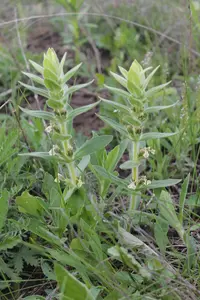
The plant has characteristic small, hooked bracts (the lupulina feature) surrounding the flower spikes, giving the inflorescences a textured, cone-like appearance that distinguishes it from more commonly grown bugleweeds.

Cool-climate ground cover

In cultivation it behaves as a low, mat-forming ground cover best adapted to cooler, upland or foothill climates, reflecting its origin from higher-elevation Asian forests and stream banks.

FAQs about Ajuga lupulina

This species spreads slowly to moderately by short runners, forming small clumps rather than large mats. In garden settings it is usually easy to contain with edging and periodic division, and is not considered an aggressive spreader.

Grow Healthy Plants with Botan Care

Keep your plants happy and healthy with plant identification, disease detection, and easy care guidance.

Botan plant care app — identify plants on mobile

Explore More Plants