redblotch tufted orchid Care (Jacquiniella globosa)

redblotch tufted orchid

About redblotch tufted orchid

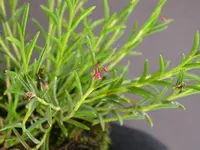
Jacquiniella globosa, commonly called the redblotch tufted orchid, is a miniature epiphytic orchid that grows on trees rather than in soil. It forms tight clumps of fine roots and short stems, dotted with small, rounded flowers often marked with reddish patches.

This species is native to tropical regions of Central and South America, where it enjoys warm, humid forests with moving air and bright but filtered light. Its compact size, slow growth, and need for good humidity and ventilation make it better suited to growers who already know how to care for redblotch tufted orchid than to complete beginners.

In cultivation it usually prefers mounted culture, regular light moisture, and a free-draining setup that lets the roots dry slightly between waterings.

Main Plant Requirements

Care Difficulty

Moderate Care

Light Preference

Partial Shade

Water Requirements

Moderate Water

Temperature Preference

Tropical / Frost Sensitive

Hardiness Zone

11–13

Soil Texture

Organic-rich, Loamy

Soil pH

Acidic (5.5–6.5)

Soil Drainage

Moist but well-drained

Fertilization

Light (every 4–6 weeks)

Get Personalized Care Plan

Scan your plant to receive care tips personalized for your specific plant

Available on iOS and Android

How to Care for the redblotch tufted orchid

This miniature epiphytic orchid prefers bright but gentle light that mimics dappled forest conditions.

  • Provide 8–10 hours of bright, filtered light daily, such as morning sun with light shade from late morning to afternoon to protect the leaves.
  • Allow partial shade at midday; leaves should stay medium green, as yellowing or scorched patches indicate excessive direct sun exposure.
  • In summer, shift Jacquiniella globosa to slightly shadier positions; in winter, move closer to an east- or south-facing exposure to compensate for weaker light.

This species prefers frequent moisture around the roots but does not tolerate waterlogged conditions.

  • Water when the surface roots or medium feel just barely dry, avoiding long dry periods that cause shriveling or dull, leathery leaves.
  • Ensure very sharp drainage using a fine bark or moss-based epiphytic mix so excess water runs through within seconds, reducing root-rot risk.
  • Reduce watering slightly in cooler months, but never let the plant stay completely dry for more than 1–2 days; pale, wrinkled pseudobulbs suggest underwatering.

This warm-growing orchid performs best in stable, mild to warm conditions year-round.

  • Aim for 65–80°F (18–27°C) by day and 60–68°F (16–20°C) at night to support steady growth and flowering.
  • Protect from cold below 55°F (13°C); brief dips to 50°F (10°C) are usually tolerated, but repeated chills weaken roots and new growth.
  • Limit exposure above 90°F (32°C) and combine shade with higher humidity and airflow during hot spells, since small epiphytes overheat and dehydrate quickly.

This miniature epiphytic orchid prefers consistently humid air to thrive in cultivation.

  • Aim for 60–80% humidity; it tolerates brief dips to 40–50% but growth slows in prolonged dry air.
  • Low humidity causes shriveled pseudobulbs, wrinkled leaves, and buds that dry before opening on redblotch tufted orchid.
  • Increase humidity with a nearby humidifier, grouped plants, or a pebble tray under (not touching) the pot, plus regular gentle air movement.

Jacquiniella globosa grows best mounted or in a very loose, airy orchid medium rather than compact terrestrial soil.

  • Use a fine to medium orchid mix of bark, sphagnum moss, and a little perlite to keep roots moist yet well aerated.
  • Ensure rapid drainage; water must flow through within seconds, leaving the mix damp but never waterlogged or heavy.
  • Maintain slightly acidic to neutral conditions around pH 5.5–6.5, which supports nutrient uptake and healthy root growth.
  • Avoid dense peat-heavy or regular potting soil that compacts, reduces oxygen around roots, and promotes rot in this epiphytic species.

This species can be grown in containers, though many growers prefer mounting for long-term vigor.

  • Choose a small, snug pot or basket that just fits the root mass so the medium dries evenly and does not stay wet for long periods.
  • Use slotted or net pots to increase side ventilation and allow roots to attach and air-dry more like they would on tree bark.
  • Place the container in a stable holder or cachepot to prevent tipping, since a light pot with airy media can be top-heavy as foliage develops.

Jacquiniella globosa benefits from light, consistent feeding during its active growth in warm months.

  • Use a balanced orchid fertilizer (such as 20-20-20) diluted to 1/4–1/2 strength in low-mineral water.
  • Apply every 2–4 weeks during the growing season, ensuring the medium is already moist before feeding.
  • Reduce feeding to once every 6–8 weeks in winter or cool, low-light periods.
  • Flush the medium with plain water monthly to prevent salt buildup and root burn when caring for redblotch tufted orchid.

Jacquiniella globosa requires minimal pruning, mainly to keep the plant tidy and healthy.

  • Best time to prune is after the main flowering flush, when new growth is visible.
  • Remove dead, damaged, or hollow stems and any rotting roots using sterilized scissors or fine snips.
  • Avoid cutting green, healthy shoots, as this can reduce flowering and slow overall growth.
  • Trim only dried flower spikes, leaving green bases intact to support future growth.

This small epiphytic orchid prefers to stay slightly root-bound and does not need frequent repotting.

  • Repot every 2–3 years or when roots circle tightly, push the plant off its mount, or growth clearly slows.
  • Choose late spring to early summer, just as new roots start, for lowest transplant stress.
  • Move onto fresh bark, cork, or mount, gently spreading roots and removing only soft, rotten material.
  • Keep humidity high, light bright but indirect, and watering slightly reduced for 1–2 weeks after repotting to allow roots to recover.

Propagation of Jacquiniella globosa is possible but limited mainly to advanced growers and collectors.

  • Vegetative division is rarely practical because plants are small and form tight clumps on mounts.
  • Seed propagation requires sterile in vitro (flasking) techniques, as orchid seeds lack stored nutrients.
  • Specialist labs germinate seeds on nutrient media under controlled light, temperature, and hygiene.
  • For most home growers, obtaining healthy nursery plants is more reliable than home propagation attempts.

This tropical orchid is frost-sensitive and needs careful winter management in temperate climates.

  • Maintain temperatures above 55–60°F and avoid exposure to frost, cold drafts, or unheated windowsills.
  • For mounted or potted plants outdoors, move indoors to a bright spot before night temperatures drop below 60°F.
  • Provide bright, filtered light and good air movement, while slightly reducing watering but not allowing complete dryness.

Care Tips

Mounting strategy

Use a small, rough-textured mount such as cork bark or tree fern fiber and keep the plant compactly tied with soft plastic-coated wire or fishing line so the fine roots stay in close contact and do not dry out between mistings.

Airflow management

Place a small fan on a low setting to create constant, gentle air movement across the plant and mount, which reduces fungal problems and helps the micro roots dry just enough between frequent misting cycles.

High-frequency hydration

If grown mounted in a warm, bright spot, set up a routine of several light mistings per day or use a fine-mist fogger on a timer rather than occasional heavy watering to better match this species’ natural cloud-forest conditions when growing redblotch tufted orchid.

Fertilizer dilution plan

Apply orchid fertilizer at 1⁄4–1⁄8 the label strength in every second or third watering during active growth, then once a month rinse thoroughly with plain water to prevent salt build-up on the tiny roots and mounting surface.

Microclimate positioning

Hang the plant slightly below and to the side of stronger light-demanding orchids so it benefits from bright but diffused light and shared humidity without exposure to the most intense heat or direct lamp output.

Common Pests and Diseases

Scale insects

These insects feed on plant sap along stems and at leaf bases, weakening the plant and causing yellowing or poor growth. Symptoms include small, dome-shaped brown or tan bumps that are hard to the touch.

Solution

Remove affected flowers and stems with clean scissors, then wipe the remaining scale off the plant with cotton swabs dipped in 70% isopropyl alcohol. Improve air movement around mounted plants and, if needed, use a horticultural oil labeled for orchids, applied in the evening and rinsed lightly the next day to avoid smothering the tissues.

Spider mites

These pests thrive on redblotch tufted orchid in hot, dry conditions and feed on leaf surfaces, causing stippling, dull color, and fine webbing in tight leaf clusters. This pest can be difficult to see without magnification.

Solution

Rinse plants thoroughly with lukewarm water, paying special attention to leaf undersides and crevices, and repeat every few days for several cycles. Increase humidity to 60–80% with good airflow and, if needed, apply a miticide or insecticidal soap labeled for orchids, avoiding use in direct sun to prevent leaf burn.

Mealybugs

These insects hide in leaf axils, under roots on mounts, and around flower spikes, appearing as white cottony clusters. This pest weakens plants by sucking sap and can leave sticky honeydew that encourages sooty mold.

Solution

Inspect all leaf joints and root bases, then remove visible insects with a cotton swab dipped in 70% isopropyl alcohol and trim heavily infested spike sections. Repeat inspections weekly and consider a systemic insecticide labeled for orchids if infestations persist, isolating the plant from others during treatment.

Bacterial soft rot

This disease causes rapidly spreading, water-soaked spots on leaves or pseudobases that turn mushy and emit a foul odor. Symptoms include tissue collapse, especially in tight, humid spaces on mounts or baskets with poor air movement.

Solution

Isolate the plant immediately, cut out all affected tissue well into healthy tissue with a sterile blade, and allow cut surfaces to dry quickly. Improve ventilation, keep water off the foliage, and reduce overhead misting; a preventive copper-based bactericide labeled for orchids can be used sparingly, avoiding direct contact with roots where possible.

Leaf spot fungi

This disease presents as small yellow, brown, or black spots on leaves that may coalesce under persistently wet, shaded conditions. Symptoms include blemished foliage but usually progress slowly on well-ventilated mounts or baskets.

Solution

Remove affected leaves or cut out heavily spotted sections with sterile scissors, then keep foliage dry during the cooler parts of the day. Increase air circulation around the plant and, if new spots continue to appear, apply a broad-spectrum fungicide approved for orchids following label directions and avoid spraying in strong light.

Interesting Facts

Miniature cloud forest orchid

This species is a tiny epiphytic orchid that naturally grows on tree branches in humid, lowland to montane forests from Mexico through Central America to northern South America, often in areas influenced by frequent mist and cloud cover.

Nectar guides for pollinators

Its small, globose flowers often show a contrasting, thickened callus on the lip that is thought to work as a visual and tactile guide for pollinating insects, helping them position correctly to contact the pollen masses (pollinia).

Branch-hugging growth habit

Plants form dense, tufted clusters of short, slender stems that cling closely to twigs and thin branches, an adaptation that reduces mechanical damage from wind and rain while maximizing access to light in the forest canopy.

Botan icon

Did you know?

This orchid often occurs on very small branches and outer twigs rather than large trunks, so it can exploit brighter, better-ventilated microhabitats high in the canopy that many larger epiphytic orchids cannot occupy efficiently.

FAQs about redblotch tufted orchid

Lack of blooming usually relates to insufficient light, overly warm nights, or lack of a slight seasonal rest. Provide bright, filtered light, good air movement, and a modest drop in night temperature to stimulate flower spike initiation.

Grow Healthy Plants with Botan Care

Keep your plants happy and healthy with plant identification, disease detection, and easy care guidance.

Botan plant care app — identify plants on mobile

Explore More Plants