Red Button Ginger Care (Costus woodsonii)

Red Button Ginger

About Red Button Ginger

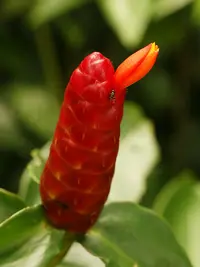
Red button ginger, Costus woodsonii, is a compact tropical perennial from Central America, often grown as an ornamental in warm climates and indoor collections. It forms upright, leafy stems with smooth, spiral foliage and short, bright red cone-like bracts that can hold small yellow flowers. In suitable conditions it creates a dense, low hedge or clump, making it useful for borders and containers. This species is considered moderately easy to grow because it tolerates heat and humidity well and recovers from pruning. To care for Red Button Ginger, provide consistently moist but well-drained soil, warm temperatures, and bright, filtered light rather than harsh direct sun.

Main Plant Requirements

Care Difficulty

Moderate Care

Light Preference

Partial Shade

Water Requirements

Keep Soil Moist

Temperature Preference

Tropical / Frost Sensitive

Hardiness Zone

10–11

Soil Texture

Loamy, Organic-rich

Soil pH

Acidic (5.5–6.5), Slightly acidic (6.5–7.0)

Soil Drainage

Moist but well-drained

Fertilization

Light (every 4–6 weeks)

Get Personalized Care Plan

Scan your plant to receive care tips personalized for your specific plant

Available on iOS and Android

How to Care for the Red Button Ginger

Costus woodsonii prefers bright, warm conditions that mimic its tropical understory habitat.

  • Provide 4–6 hours of bright, filtered light daily, such as dappled shade under taller plants or sheer-curtained windows for Red Button Ginger.
  • Allow gentle morning sun but shield from strong midday and afternoon sun, which can scorch leaves and fade color.
  • In summer, increase shade during heat waves; in winter, move plants to the brightest spot available to prevent stretched, weak growth.

Costus woodsonii needs consistently moist but not waterlogged soil to stay healthy.

  • Water when the top 2–3 cm of soil feel slightly dry, aiming for evenly moist soil from spring through early fall.
  • Use well-drained, humus-rich soil so excess water can escape; yellowing, soft stems signal overwatering and root stress.
  • Reduce watering in cooler months, letting the top 3–5 cm dry; curling or crisp leaf edges indicate the plant is staying too dry.

This tropical species thrives in warm, stable temperatures with no exposure to frost.

  • Aim for 70–85°F (21–29°C) for best growth, with steady warmth and moderate humidity to support strong shoots.
  • Protect the plant from temperatures below 55°F (13°C); prolonged exposure near this level can slow growth and damage foliage.
  • In hot spells above 90°F (32°C), provide shade and extra humidity; avoid cold drafts, sudden temperature swings, and any frost, which can kill stems.

This species prefers moderately high humidity to keep foliage lush and reduce stress.

  • Target 50–70% humidity; it tolerates brief dips lower but prolonged very dry air causes leaf issues.
  • Low humidity stress shows as brown, crisp leaf tips and edges, especially on newer growth of Red Button Ginger.
  • Increase humidity by grouping plants, placing the pot on a pebble tray with water, or running a small nearby humidifier.

This species grows best in loose, moist, organic-rich soil that drains freely yet holds some moisture.

  • Use a mix of roughly 50% peat or coco coir, 30–40% compost, and 10–20% perlite or pumice for structure and aeration.
  • Aim for slightly acidic to neutral pH around 6.0–7.0, which supports nutrient uptake and healthy root activity.
  • Ensure the mix drains within a few minutes after watering; water should not pool on the surface or sit in the pot saucer.
  • Avoid heavy clay, compacted, or pure sand soils, which either suffocate roots or dry too fast for Costus woodsonii.

This species is well suited to container growing when the pot supports its upright, clumping habit.

  • Choose a stable, relatively wide container so the tall, leafy stems do not tip the pot in wind or when watered heavily.
  • Select a pot depth that allows at least 20–30 cm of root zone so rhizomes can spread without circling tightly.
  • Use slightly porous materials like unglazed clay if the mix stays wet for long periods, to reduce the risk of persistent soggy conditions.

Costus woodsonii responds well to moderate feeding during its warm growing season.

  • Use a balanced liquid fertilizer (such as 10-10-10) diluted to 1/2 strength every 4–6 weeks in spring and summer.
  • For containers, a slow-release, balanced granular fertilizer can replace some liquid feedings.
  • Reduce or stop feeding in fall and winter when growth slows or stops.
  • Supplement with a thin layer of compost over the root zone to support long-term soil health for Red Button Ginger.

Pruning Costus woodsonii helps maintain a tidy clump and supports vigorous new shoots.

  • Best time is late winter or early spring, before strong new growth starts.
  • Remove dead, damaged, or leafless canes at the base using clean, sharp pruners.
  • Thin out the oldest, most crowded stems to improve air flow and light penetration.
  • Lightly tip back overly tall stems to control height and encourage bushier growth.

Repotting or transplanting helps maintain healthy roots and sustained growth in this clumping ginger.

  • Look for roots circling the pot, pushing from drainage holes, or slowing top growth as signs it needs more space.
  • Plan to repot every 2–3 years in spring, moving up only 1 pot size with a rich, well-draining mix.
  • Water well before and after repotting, handling the root ball gently to limit disturbance and stress.
  • Keep the plant shaded and evenly moist for 1–2 weeks after moving to help roots re-establish.

Costus woodsonii is commonly propagated by stem cuttings or division of clumps.

  • Best time is late spring to early summer, when growth is active and temperatures are warm.
  • For division, lift the clump, separate healthy rhizome sections with at least 1–2 shoots, and replant promptly.
  • For stem cuttings, use 10–15 cm sections with several nodes, and place lower nodes in moist, well-draining mix.
  • Maintain high humidity, bright indirect light, and warmth around 70–80°F to encourage rapid rooting.

This tropical ginger is frost-sensitive and needs protection in regions with cold winters.

  • In USDA zones below 10, grow in containers and move indoors before temperatures drop near 45°F.
  • Indoors, provide bright indirect light and reduce watering while growth slows.
  • In mild climates, add 5–8 cm of organic mulch over the root zone to buffer brief cool spells.
  • Do not allow soil to stay cold and waterlogged, which increases root rot risk.

Care Tips

Rotate Containers

Turn the pot 90° every 2–3 weeks so stems receive light from different angles, which keeps the clump symmetrical and reduces leaning or weak, one-sided growth when growing Red Button Ginger.

Divide Overgrown Clumps

Every 2–3 years, lift and divide congested rhizomes in warm weather, replanting only the healthiest, firm sections to maintain vigorous flowering and prevent the center of the clump from thinning out.

Mulch The Root Zone

Apply a 3–5 cm layer of fine bark or composted mulch around, but not touching, the stems to buffer soil temperature, reduce surface root stress, and stabilize moisture in outdoor plantings.

Support Tall Stems

In windy or exposed spots, install low, discreet ring supports or short stakes around the clump to keep taller canes upright and prevent snapping at the base.

Monitor Salt Build‑Up

If grown in containers and fertilized regularly, flush the pot thoroughly with plain water every 1–2 months to wash out excess salts that can burn the shallow rhizomes and leaf tips.

Common Pests and Diseases

Spider mites

This pest prefers the warm, sheltered foliage and tightly spiraled stems, causing fine stippling, dulling of leaves, and fine webbing between bracts and leaves.

Solution

Rinse foliage and stems thoroughly with a firm stream of lukewarm water, then increase humidity and airflow; if populations persist, apply insecticidal soap or horticultural oil to all leaf surfaces and stem spirals every 5–7 days until no new damage appears.

Mealybugs

These insects hide in leaf axils and within the tight flower bracts, sucking sap and leaving cottony clusters and sticky honeydew that can lead to sooty mold.

Solution

Isolate the plant, dab visible mealybugs with cotton swabs dipped in 70% isopropyl alcohol, then follow with repeated applications of insecticidal soap or neem oil directed into leaf axils and bract crevices, checking weekly for reinfestation.

Aphids

These insects often gather on young shoots and flower bracts, causing distorted new growth, sticky honeydew, and attracting ants.

Solution

Dislodge colonies with a strong water spray, remove heavily infested soft tips if necessary, and treat remaining clusters with insecticidal soap, repeating after 5–7 days while also controlling nearby ant activity so natural predators can return.

Leaf spot

This disease produces brown or dark purple spots with possible yellow halos on older leaves, favored by overhead watering and dense foliage around the canes.

Solution

Remove and discard affected leaves, water at the base to keep foliage dry, thin or divide dense clumps to improve airflow, and if spotting continues, apply a copper- or chlorothalonil-based fungicide according to label directions during warm, wet periods.

Bacterial soft rot

Symptoms include water-soaked lesions at the stem base or rhizome, leading to foul-smelling, mushy tissue and sudden collapse of canes, especially in poorly drained sites or containers kept constantly wet.

Solution

Promptly cut out and discard all affected canes and rhizome sections, improve drainage, reduce watering frequency so the top 2–3 cm of soil dries slightly between waterings, and avoid overhead watering or wounding the stems to prevent new infection when growing Costus woodsonii outdoors or indoors.

Interesting Facts

Wax-like cone bracts

This species forms dense, bright red cone-shaped inflorescences made of waxy bracts that can last for weeks, with the small yellow tubular flowers emerging briefly from between the bracts.

Frequent urban hummingbird plant

In its native and introduced tropical range, the plant is commonly used in urban and garden plantings because its bright red cones and nectar-rich flowers are highly attractive to hummingbirds and some butterflies.

Clumping spiral habit

Unlike some taller spiral gingers, this species stays relatively compact and forms neat clumps of upright, spirally arranged shoots, which has made it a favored ornamental edging and mass-planting ginger in tropical landscaping.

Botan icon

Did you know?

This species has become so widely planted as an ornamental in tropical and subtropical regions that it is now naturalized in parts of Florida, where it can escape cultivation and establish stable populations outside gardens.

FAQs about Red Button Ginger

Lack of blooms is usually linked to insufficient light, too little warmth, or low nutrients. Ensure bright, indirect light, consistently warm conditions, and a balanced fertilizer during active growth. Crowded or old stems can be thinned to redirect energy.

Grow Healthy Plants with Botan Care

Keep your plants happy and healthy with plant identification, disease detection, and easy care guidance.

Botan plant care app — identify plants on mobile

Explore More Plants