Gradual Light Shifts
When moving the plant closer to a window or outdoors for summer, increase light exposure over 7–10 days to avoid leaf scorch and sudden leaf drop.

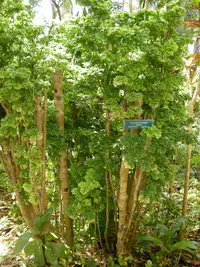
Geranium aralia, Polyscias guilfoylei, is a tropical evergreen shrub grown mainly as a foliage houseplant. It is valued for its finely divided, glossy leaves that create a textured, upright form. Plants are often grown as small indoor trees or bushy shrubs in containers.
In nature, it occurs in tropical regions of the Pacific and Southeast Asia, where it grows in warm, sheltered, partially shaded sites. It tends to be moderately demanding, as it dislikes cold drafts, sudden changes in conditions, and very dry air. Understanding how to care for geranium aralia starts with providing stable warmth, bright but indirect light, and evenly moist, well-drained soil.

Care Difficulty
Moderate Care

Light Preference
Bright Indirect Light

Water Requirements
Moderate Water

Temperature Preference
Tropical / Frost Sensitive

Hardiness Zone
11–12

Soil Texture
Loamy, Sandy, Organic-rich

Soil pH
Acidic (5.5–6.5), Slightly acidic (6.5–7.0)

Soil Drainage
Moist but well-drained

Fertilization
Light (every 4–6 weeks)
Scan your plant to receive care tips personalized for your specific plant
Available on iOS and Android
This plant prefers bright, indirect light with some gentle direct sun for best growth.
This species prefers evenly moist but never soggy soil, with brief drying between waterings.
This plant prefers warm, stable temperatures and does poorly in cold or drafty conditions.
This species prefers moderate to moderately high humidity but usually adapts to typical home conditions.
Polyscias guilfoylei grows best in a loose, well-drained, organic-rich mix that stays evenly moist but not wet.
This species is well suited to container growing for both indoor and sheltered outdoor settings.
Polyscias guilfoylei benefits from light, consistent feeding during the active growing season.
Pruning Polyscias guilfoylei helps maintain a compact, well-branched form indoors.
Polyscias guilfoylei grows slowly and prefers slightly tight containers, so repotting is infrequent but sometimes necessary.
Polyscias guilfoylei is most often propagated from stem cuttings taken during the warm growing season.
Polyscias guilfoylei is frost-sensitive and needs mild, protected conditions through winter in most climates.

Plant Health Check
Not sure what's wrong with your plant? Check your plant's health inside the app.
This species is native to lowland coastal forests and thickets in islands of the southwest Pacific, where it often grows in slightly shaded, wind-sheltered sites rather than in fully exposed positions.
Its finely divided, serrated leaflets are arranged on upright, sparsely branched stems, giving the plant a vertical, columnar outline that differs from many broader, bushier Polyscias species.
In its natural range, it produces small greenish-white flowers in umbrella-like clusters (umbels) that provide nectar to visiting insects, although flowering is uncommon in typical indoor cultivation.

Historically, some Pacific island cultures have used related Polyscias species as living boundary markers and household shrubs, and this species has been adopted in a similar way in parts of its native range, planted around dwellings for its dense, upright screens and ease of propagation from stem cuttings.
Brown, crispy leaf edges usually result from low humidity, underwatering, or salt buildup from fertilizer. Check soil moisture, flush the pot occasionally, and increase humidity slightly. Avoid sudden drafts or direct heat from vents and radiators.
Keep your plants happy and healthy with plant identification, disease detection, and easy care guidance.