satinwood Care (Buchanania arborescens)

satinwood

About satinwood

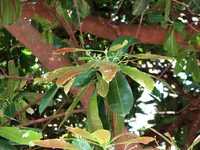
Satinwood, Buchanania arborescens, is an evergreen tree known for its dense, glossy foliage and fine-grained timber. It naturally occurs in tropical forests of northern Australia, Southeast Asia, and nearby islands.

In cultivation it is usually grown as an ornamental shade tree or landscape feature, valued for its rounded crown and neat appearance. Growth is moderate and long-lived, so it suits permanent plantings rather than containers.

To care for satinwood, gardeners typically provide warm conditions, steady moisture, and well-drained soil. Its needs are straightforward in tropical and subtropical climates, but it is more challenging in cooler or very dry regions.

Main Plant Requirements

Care Difficulty

Moderate Care

Light Preference

Full Sun

Water Requirements

Moderate Water

Temperature Preference

Tropical / Frost Sensitive

Hardiness Zone

11–12

Soil Texture

Sandy, Loamy, Organic-rich

Soil pH

Acidic (5.5–6.5), Slightly acidic (6.5–7.0)

Soil Drainage

Well-drained

Fertilization

Minimal (feed rarely)

Get Personalized Care Plan

Scan your plant to receive care tips personalized for your specific plant

Available on iOS and Android

How to Care for the satinwood

This tropical tree prefers bright outdoor conditions with some protection from intense midday sun.

  • Provide 4–6 hours of direct morning sun with light afternoon shade; satinwood handles open exposure better near the coast than inland.
  • Allow partial shade, especially in hot climates; dappled light under taller trees works well and reduces leaf scorch risk.
  • Monitor foliage: pale, sparse growth suggests too little light, while brown, crispy leaf edges indicate excessive afternoon sun, especially in summer.

This species prefers consistently moist but not saturated soil in warm climates.

  • Before watering, let the top 3–5 cm of soil dry; in the ground, check that the surface feels dry but underlying soil is still slightly damp.
  • Use deep, infrequent watering guided by conditions: more often in hot, dry weather and less in cool or rainy seasons, always with free-draining soil.
  • Watch for stress signs; yellowing, soft leaves and a sour smell suggest overwatering, while drooping, brittle foliage and dry soil indicate underwatering in Buchanania arborescens.

This tropical tree thrives in warm, frost-free climates year-round.

  • Ideal growth occurs around 70–86°F (21–30°C), typical of lowland tropical and subtropical regions.
  • Avoid temperatures below 40°F (4°C); foliage and young shoots can be damaged near this level, and the plant is highly sensitive to frost.
  • In heat above 95°F (35°C), provide mulch and some afternoon shade to protect roots and foliage from stress and leaf scorch.

This species prefers moderately humid air but adapts to many home environments if extremes are avoided.

  • Aim for 50–70% humidity, as very dry indoor air can slow growth and cause marginal leaf browning.
  • Expect curled, crispy leaf edges and stalled new growth as signs of low-humidity stress in satinwood.
  • Increase humidity with a nearby room humidifier, grouping plants together, or placing the pot on a pebble tray above (not in) water.

Soil for Buchanania arborescens should be deep, free-draining, and slightly on the sandy to loamy side.

  • Use a mix of roughly 40% coarse sand, 40% loam or all-purpose potting substrate, and 20% compost to balance drainage and water retention.
  • Keep pH slightly acidic to neutral, around 6.0–7.0, avoiding highly alkaline conditions that limit nutrient availability.
  • Improve aeration and structure by adding chunky components such as pine bark fines or perlite, especially in heavier mixes.
  • Avoid compacted, waterlogged, or pure clay soils, as persistent saturation around the root zone encourages rot and weak root development.

This species can be grown in large containers when given enough root volume and stable support.

  • Choose a tall, heavy container that resists tipping as the canopy becomes dense and wind-catching outdoors.
  • Select a pot wide enough to allow a strong lateral root system, not just deep, to maintain anchoring and nutrient uptake.
  • Use a high-drainage potting mix and elevate the container slightly so drainage holes never sit directly in pooled water.

This species benefits from light, balanced feeding in containers or nutrient-poor sites, but mature in-ground trees often need little extra input.

  • Use a balanced slow-release fertilizer (such as 10-10-10) or well-aged compost for satinwood in spring as growth begins.
  • Feed container plants every 6–8 weeks during the warm growing season, following label rates at 1/2 strength to prevent salt buildup.
  • Reduce or stop feeding in winter or cool dormant periods, as nutrient demand drops and excess salts can damage roots.
  • Water thoroughly after applying fertilizer to move nutrients into the root zone and lower the risk of root burn.

Light, targeted pruning keeps Buchanania arborescens safe, tidy, and structurally sound without stressing the tree.

  • Schedule pruning at the end of the dry or cool season, just before strong new growth starts, to help cuts seal quickly.
  • Remove dead, diseased, crossing, or storm-damaged branches first, cutting back to sound wood or a branch collar.
  • Thin crowded interior shoots to improve light penetration and airflow, which supports healthy foliage and reduces fungal issues.
  • Use clean, sharp bypass pruners or a pruning saw, making smooth cuts and avoiding large wounds unless needed for safety.

This tree is best grown in the ground; transplanting young plants carefully is more important than frequent repotting.

  • Look for roots circling the pot, very slow growth, or quick drying soil as signs that a container-grown plant needs a larger space.
  • Plan transplanting for warm, mild weather with stable moisture, usually in late spring or early summer in frost-free climates.
  • Shift young trees every 2–3 years into a pot or site only 1–2 sizes larger, using well-drained soil to limit waterlogging stress.
  • Water deeply before and after moving, keep the root ball intact, shade the canopy for 1–2 weeks, and maintain even moisture while new roots establish.

Sexual propagation from seed is the usual method for this species and suits forestry or restoration purposes.

  • Collect fully ripe fruits, clean and dry the seeds, then sow them fresh for higher germination rates.
  • Sow seeds in a deep tray or pot filled with free-draining, slightly sandy mix, keeping the medium just moist, not waterlogged.
  • Provide warm conditions around 75–85°F and bright, indirect light; germination may be slow and uneven over several weeks or months.
  • Label seed lots with date and source, and transplant sturdy seedlings to individual containers once they form several true leaves.

This tropical tree has low frost tolerance and needs protection in regions with cool or cold winters.

  • In climates below about 40°F, grow Buchanania arborescens in large containers that can be moved indoors or into a heated greenhouse.
  • Keep indoor winter temperatures preferably above 55°F and provide bright light to reduce leaf drop and weak, stretched growth.
  • Mulch the root zone of in-ground trees with 5–8 cm of organic material to buffer temperature swings and conserve moisture.
  • Avoid heavy pruning or high fertilization late in the season, which may trigger tender growth more vulnerable to cold injury.

Care Tips

Wind-firm training

In the first 2–3 years, stake young trees and gradually loosen ties every 6–12 months so the trunk flexes slightly and develops stronger wood that better resists storm damage.

Root space planning

Allow at least a 3–4 m radius of uncompacted, mulch-covered soil around the trunk so structural roots can spread evenly and anchor the tree without lifting nearby paving or competing heavily with lawn.

Mulch ring management

Maintain a 5–10 cm deep organic mulch ring, pulled back 5–8 cm from the trunk, to stabilize soil moisture and temperature while reducing mower and string‑trimmer injury to the bark.

Dry-season protection

In regions with marked dry seasons, install a simple drip line or leaky hose at the canopy drip line to deliver slow, deep watering that encourages deeper, more resilient rooting when growing satinwood.

Pest monitoring routine

Inspect new flushes of foliage every 2–3 weeks for sap‑sucking insects and leaf-chewing larvae, and prune out localized infestations early rather than relying immediately on broad-spectrum sprays.

Common Pests and Diseases

Scale insects

This pest forms small, dome-shaped bumps on stems and leaf undersides, often exuding sticky honeydew that can lead to sooty mold. Symptoms include general decline, yellowing foliage, and reduced new growth.

Solution

Prune and destroy heavily infested twigs, then wipe or gently scrub remaining scales from stems and leaves with a cloth or soft brush dipped in diluted insecticidal soap or horticultural oil. Improve tree vigor with proper watering and balanced fertilization, and repeat oil or soap treatments every 7–14 days during active infestations as part of practical satinwood care instructions.

Fruit borers

These insects tunnel into developing fruits and sometimes young shoots, causing premature fruit drop and internal fruit damage. Symptoms include small entry holes, frass (sawdust-like droppings), and misshapen or rotting fruit.

Solution

Collect and destroy infested or fallen fruits promptly to break the borer life cycle and reduce population build-up. Where feasible, use fine mesh bags around clusters of developing fruit and keep the tree well-pruned and open to allow better inspection and early removal of affected parts.

Leaf miners

This pest lives inside leaves and creates pale, winding trails or blotches between the upper and lower leaf surfaces. Symptoms include distorted young leaves and reduced photosynthesis when infestations are heavy.

Solution

Remove and dispose of affected leaves as soon as mines appear, especially on young trees. Encourage beneficial predators by avoiding broad-spectrum insecticides, and use a targeted systemic insecticide only if damage is severe and persistent, following label directions carefully.

Anthracnose

This disease causes irregular brown or black spots on leaves, sometimes with tan centers, and can lead to leaf blight and premature leaf drop during warm, wet periods. Symptoms include patchy canopy thinning and reduced vigor if defoliation repeats over several seasons.

Solution

Prune and destroy infected leaves and twigs, and thin dense canopy sections to improve airflow and faster drying after rain. In humid regions, apply a copper-based or other labeled fungicide at the start of the wet season and repeat as directed when disease pressure is high.

Sooty mold

This disease is a dark, powdery or velvety fungal growth that develops on leaves and stems where honeydew from sap-sucking insects has accumulated. Symptoms include blackened leaf surfaces and reduced light absorption, which can slow growth over time.

Solution

Control honeydew-producing pests such as scale and aphids first, since the fungus grows on their secretions rather than directly attacking the plant. Rinse affected foliage with a strong but not damaging stream of water or wipe leaves with a damp cloth to remove mold, improving light capture and gas exchange.

Interesting Facts

Australian rainforest native

This species is a mid-story tree naturally found in monsoon and lowland rainforests of northern Australia and parts of Southeast Asia, often growing along forest margins and on well-drained slopes.

Food for fruit pigeons

Its small, fleshy drupes are eaten by many rainforest birds, especially fruit pigeons and doves, which help disperse the seeds over wide areas.

Oil-rich kernel seeds

The seeds contain an oily kernel that has been traditionally collected and eaten roasted by Indigenous communities in northern Australia, reflecting the tree’s long-term cultural importance as a wild food source.

Botan icon

Did you know?

In parts of northern Australia, this species often regenerates densely in disturbed rainforest gaps, forming thickets of young trees that can play an important role in early forest recovery and canopy closure after cyclones or clearing.

FAQs about satinwood

Growth is moderately fast in warm, frost-free climates. Young plants can add 30–60 cm per year when given consistent moisture and space. Poor soil, wind exposure, or cool temperatures slow extension growth and canopy development significantly.

Grow Healthy Plants with Botan Care

Keep your plants happy and healthy with plant identification, disease detection, and easy care guidance.

Botan plant care app — identify plants on mobile

Explore More Plants