Cutleaf Japanese Maple Care (Acer palmatum 'Garnet')

Also known as: Threadleaf Japanese Maple, Japanese Maple, Maple
Cutleaf Japanese Maple

About Cutleaf Japanese Maple

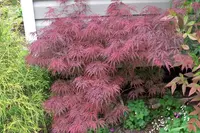
Acer palmatum 'Garnet' is a deciduous, finely dissected Japanese maple valued for its lacy foliage and compact, mounded growth habit. It is typically grown as a small tree or large shrub in gardens and containers.

This cultivar shows rich garnet-red leaves through much of the growing season, offering strong color contrast against green plantings. Foliage turns brighter in cool autumn weather before dropping for winter.

Japanese maples originate from Japan, Korea, and parts of China, and 'Garnet' has been selected for ornamental use in temperate climates. It prefers dappled light, evenly moist but well-drained soil, and some shelter from strong wind, which makes how to care for Cutleaf Japanese Maple relatively straightforward in suitable conditions.

Main Plant Requirements

Care Difficulty

Moderate Care

Light Preference

Partial Shade

Water Requirements

Moderate Water

Temperature Preference

Cold Hardy

Hardiness Zone

5–8

Soil Texture

Loamy, Sandy, Organic-rich

Soil pH

Acidic (5.5–6.5), Slightly acidic (6.5–7.0)

Soil Drainage

Moist but well-drained

Fertilization

Minimal (feed rarely)

Get Personalized Care Plan

Scan your plant to receive care tips personalized for your specific plant

Available on iOS and Android

How to Care for the Cutleaf Japanese Maple

Acer palmatum 'Garnet' prefers bright, gentle light that protects its finely cut foliage from scorch.

  • Provide 3–5 hours of morning sun with light afternoon shade; dappled light under taller trees suits Cutleaf Japanese Maple well.
  • In hot summers, shield from strong sun after 1–2 pm to prevent leaf scorch, especially in zones with intense UV and dry wind.
  • In cooler or northern climates, allow more direct sun (up to 6 hours) to maintain rich foliage color, while monitoring for leaf browning.

Acer palmatum 'Garnet' needs steadily moist but not saturated soil, especially during its first few growing seasons.

  • Water when the top 3–5 cm of soil feels dry, applying a slow, deep soak so moisture reaches the root zone without pooling.
  • Reduce frequency in cool, wet seasons and increase during hot, windy periods, always using soil feel rather than a fixed calendar schedule.
  • Watch for drooping, crisp leaf edges as a sign of underwatering, and yellowing leaves or persistent soggy soil as indicators of overwatering or poor drainage.

This maple prefers cool to mild conditions and tolerates winter cold once established.

  • Optimal growing temperatures are around 60–75°F (16–24°C) during the growing season, with cool nights helping maintain good leaf color.
  • Mature trees tolerate winter lows near 0°F (−18°C) in suitable USDA zones, but young plants benefit from mulch over roots in freezing periods.
  • In hot climates, prolonged heat above 90°F (32°C) can stress foliage, so combine partial shade with consistent soil moisture to limit leaf scorch.

This maple prefers moderate humidity but usually adapts to typical outdoor conditions.

  • Aim for 40–60% humidity, which is common in most temperate outdoor gardens.
  • Tolerates short dry spells, but extended very dry air combined with heat can crisp leaf edges and tips.
  • If grown in a sheltered patio or balcony, group plants and use mulch over the root zone to buffer low humidity stress for Cutleaf Japanese Maple.

Acer palmatum 'Garnet' needs evenly moist, well-drained, structured soil to support fine feeder roots.

  • Use a loamy, organic-rich soil that feels crumbly in the hand, not sticky or powdery.
  • Ensure sharp drainage; incorporate pine bark fines and coarse sand or perlite to prevent waterlogging around the root zone.
  • Target a slightly acidic to neutral pH of about 5.5–7.0, avoiding strongly alkaline conditions that can cause chlorosis.
  • Improve aeration by mixing in 20–40% coarse mineral material and avoid compacted clay sites or spots where water stands after rain.

This maple is well suited to container growing when the pot is chosen to manage root space and moisture balance.

  • Select a wide, relatively shallow container to match its fibrous, surface-leaning root system and reduce tipping in wind.
  • Choose a heavy, frost-resistant pot material like ceramic or concrete to stabilize the canopy and limit rapid moisture swings.
  • Raise the container on feet or pot risers so drainage holes stay clear and excess water escapes quickly after rain or irrigation.

Acer palmatum 'Garnet' benefits from light, balanced nutrition but does not need heavy feeding.

  • Use a balanced slow-release fertilizer (for example 10-10-10) or a thin layer of compost in early spring as new growth begins.
  • Apply once in spring and, if growth is weak, a second light dose in early summer for Cutleaf Japanese Maple.
  • Use fertilizers at half the label strength to avoid salt buildup and root burn in this shallow-rooted tree.
  • Stop feeding in late summer so new growth can harden before winter, and do not fertilize during dormancy.

Pruning Acer palmatum 'Garnet' is mainly for removing problem wood and refining its natural cascading shape.

  • Prune in mid to late winter or very early spring before buds swell, avoiding heavy cuts in late summer.
  • Remove dead, damaged, crossing, or inward-growing branches to improve structure and air flow.
  • Thin congested interior twigs with sharp, clean bypass pruners, making small cuts just above a bud or branch junction.
  • Limit pruning to minor shaping so the tree keeps its natural, layered form and does not respond with coarse, vigorous shoots.

This maple is usually grown in the ground, so focus on careful transplanting rather than frequent repotting.

  • Transplant in early spring or fall when the tree is dormant or nearly dormant to reduce stress.
  • Look for signs like slow growth, roots circling a container, or becoming pot-bound before moving a container-grown plant.
  • Shift to a slightly larger container or new ground site with well-drained, slightly acidic soil, keeping the root flare at soil level.
  • Water thoroughly after transplanting, then keep soil evenly moist and shaded from intense sun for several weeks to help roots re-establish.

Propagation of Acer palmatum 'Garnet' is usually done by specialists, so home propagation is limited and can be challenging.

  • Grafting onto vigorous green Acer palmatum rootstocks is the standard method to maintain the cultivar traits.
  • Semi-hardwood cuttings taken in midsummer under high humidity and bottom heat sometimes root but often fail.
  • Seeds produce variable seedlings, not true-to-type, so they are mainly useful for rootstocks or experimentation.

Acer palmatum 'Garnet' is moderately cold hardy but benefits from some winter root-zone protection, especially in colder regions.

  • Apply a 5–8 cm layer of mulch over the root zone in late fall, keeping it slightly away from the trunk.
  • Shelter young trees from drying winter winds with windbreaks or nearby structures to reduce desiccation.
  • For container plants, move pots into an unheated garage or sheltered area where temperatures stay above about 20°F.

Care Tips

Create Shaded Root Zone

Mulch the root area with 5–8 cm of shredded bark, keeping it 5 cm away from the trunk, to keep roots cool, reduce moisture swings, and protect delicate feeder roots from heat stress.

Protect From Spring Frost

During late frosts after leaf-out, drape a breathable frost cloth or old sheet over the canopy in the evening and remove it in the morning to prevent new foliage from scorching and deforming.

Use Wind Buffer Planting

Plant this tree near a fence, hedge, or larger shrub that blocks prevailing winds to reduce leaf tatter and drying of the finely cut foliage.

Train Branch Structure

In the first 3–5 years, selectively remove congested or crossing interior shoots during late winter to build a layered, open framework that resists snow and ice damage.

Monitor Graft Union

Check the graft union yearly and promptly cut off any vigorous shoots emerging from below the graft to maintain the desired dwarf, cascading form when growing Cutleaf Japanese Maple.

Common Pests and Diseases

Verticillium wilt

This disease is caused by soil-borne fungi that invade the water-conducting tissue, leading to branch dieback and uneven leaf wilt, often on one side of the tree first.

Solution

Prune out affected branches well below discolored wood, disinfect tools between cuts, and avoid replanting Japanese maples in known infested soil; keep the tree well watered in dry periods and mulched to reduce stress, as there is no reliable chemical cure for home use.

Leaf scorch

Symptoms include browning and crisping of leaf edges, often following hot, dry, or windy weather, especially when roots are stressed or the tree is in too much sun.

Solution

Provide consistent soil moisture with deep but infrequent watering, apply a 5–8 cm mulch layer away from the trunk, and give afternoon shade or wind protection; avoid high-salt fertilizers and do not let the soil dry out completely in summer.

Powdery mildew

This disease produces white, powdery patches on the upper leaf surface, causing distortion and premature leaf drop in humid, shaded conditions.

Solution

Improve air circulation by thinning crowded branches, avoid overhead watering, remove and dispose of heavily infected leaves, and if needed apply a labeled fungicide such as a horticultural oil or sulfur according to Cutleaf Japanese Maple care instructions.

Aphids

These insects cluster on young shoots and leaf undersides, sucking sap and causing distorted growth, sticky honeydew, and sometimes sooty mold on leaves or nearby surfaces.

Solution

Spray colonies off with a firm stream of water, encourage natural predators such as lady beetles, and if populations remain high use insecticidal soap or a light horticultural oil, ensuring thorough coverage of shoot tips and leaf undersides.

Japanese maple scale

This pest appears as tiny, white, oyster-shell-like bumps on twigs and branches, causing gradual thinning of the canopy and branch dieback as it removes sap.

Solution

Prune out heavily infested twigs, gently scrub accessible branches with a soft brush to remove scale, and target the crawler stage with horticultural oil or insecticidal soap at the recommended timing; keep the tree healthy with proper watering to improve tolerance and recovery.

Interesting Facts

Stable red foliage

This cultivar maintains a consistent red to garnet leaf color through much of the growing season, instead of turning green in summer as many Japanese maples do, due to strong red pigment (anthocyanin) expression in its leaves.

Finely dissected leaves

Its leaves are deeply divided into many thin lobes, creating a lace-like texture that classifies it as a dissectum-type Japanese maple, distinct from the broader, less divided leaves of standard Acer palmatum forms.

Naturally mounding habit

The tree develops a broad, cascading dome rather than an upright shape, with branches that arch and layer, giving a weeping, tiered structure even without heavy pruning.

Botan icon

Did you know?

In garden design, this cultivar is often used to highlight water features and rock gardens because its stable, garnet-red foliage and low, cascading form provide a strong, season-long focal point that contrasts sharply with green conifers and stones, making it a frequent choice in carefully composed Japanese-style landscapes when growing Cutleaf Japanese Maple.

FAQs about Cutleaf Japanese Maple

Growth is moderate, usually about 15–30 cm per year in suitable conditions. Expect a small but shapely tree in 5–7 years, with near-mature height and spread typically reached after 10–15 years of steady development.

Grow Healthy Plants with Botan Care

Keep your plants happy and healthy with plant identification, disease detection, and easy care guidance.

Botan plant care app — identify plants on mobile

Explore More Plants