

Establish deep roots
During the first 1–2 growing seasons, use a slow, infrequent soak from a soaker hose placed at the dripline to encourage a deep root system that improves long-term drought tolerance and wind stability.

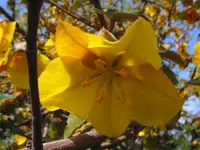
California flannelbush (Fremontodendron californicum) is an evergreen shrub or small tree known for its bright yellow, saucer-shaped flowers and fuzzy, felted leaves. It often has a loose, open form and can become quite large in suitable conditions.
This species is native to dry, rocky slopes and canyons in California and parts of the southwestern United States. It is adapted to hot, dry summers and mild, wet winters.
The plant is generally drought tolerant but sensitive to excess water and rich soils, which can make it challenging for beginners. Those who learn how to care for California flannelbush usually find it thrives in full sun, fast-draining soil, and minimal summer irrigation.

Care Difficulty
Hard Care

Light Preference
Full Sun

Water Requirements
Low Water

Temperature Preference
Warm Climate

Hardiness Zone
7–10

Soil Texture
Sandy, Loamy, Rocky

Soil pH
Slightly acidic (6.5–7.0), Neutral (7.0)

Soil Drainage
Well-drained

Fertilization
Minimal (feed rarely)
Scan your plant to receive care tips personalized for your specific plant
Available on iOS and Android
This sun-loving shrub thrives in open, bright conditions that mimic its native dry slopes.
This plant is highly drought-adapted and prefers infrequent, deep watering in sharply drained soil.
This shrub favors warm, dry conditions and tolerates a fairly wide outdoor temperature range once established.
This drought-adapted shrub prefers dry air and does not have special humidity requirements.
Fremontodendron californicum needs sharply drained, lean soil that dries quickly after rain or watering.
This species is generally unsuitable for long-term container growing except in very large, well-drained outdoor tubs.
This drought-adapted shrub, including California flannelbush, generally needs minimal fertilization in average garden soil.
Pruning Fremontodendron californicum should be light and deliberate to maintain structure without stressing the plant.
This shrub is usually grown in the ground, so focus on careful transplanting rather than frequent repotting.
Propagation of Fremontodendron californicum is moderately challenging and usually done by semi-hardwood cuttings or seeds.
Mature Fremontodendron californicum is cold tolerant in many mild, dry-winter regions but needs help in colder or wetter areas.

Plant Health Check
Not sure what's wrong with your plant? Check your plant's health inside the app.
This shrub is naturally adapted to hot, dry California foothills and thrives on rocky slopes where many other woody plants cannot survive, relying on deep roots and leaves with dense hairs that reduce water loss.
Its large, golden, bowl-shaped flowers provide an early to mid-season nectar source for native bees and other insects in chaparral and foothill woodland habitats.
In parts of its range, this species occurs in fire-prone chaparral communities where periodic fires open space and light, helping seedlings establish in the disturbed, nutrient-released soil.

Some populations naturally hybridize with related Fremontodendron species, and these wild hybrids helped inspire horticultural selections that combine showy flowers with improved garden performance, an important reference point for Fremontodendron californicum plant care.
Poor flowering usually comes from pruning at the wrong time, excess water, or rich fertilizer encouraging foliage instead of buds. Avoid heavy summer irrigation, do not use high-nitrogen fertilizer, and prune only lightly after flowering to protect next year’s buds.
Keep your plants happy and healthy with plant identification, disease detection, and easy care guidance.

Codiaeum peltatum
Codiaeum peltatum
Transvaal sesame-bush
Sesamothamnus lugardii
Guadeloupe marlberry
Ardisia obovata
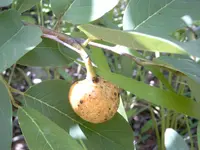
wild custard-apple
Annona senegalensis
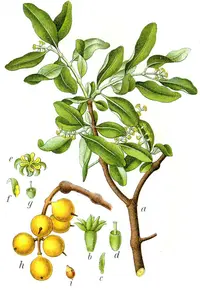
Yellow-berried Mistletoe
Loranthus europaeus
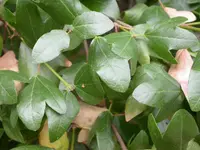
Cretan maple
Acer sempervirens
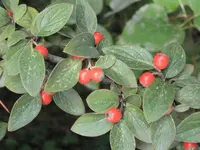
orange cotoneaster
Cotoneaster franchetii
rayless goldenhead
Acamptopappus sphaerocephalus