rayless goldenhead Care (Acamptopappus sphaerocephalus)

rayless goldenhead

About rayless goldenhead

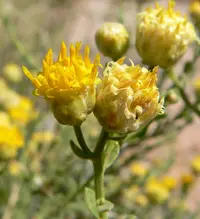
Rayless goldenhead, Acamptopappus sphaerocephalus, is a compact, woody perennial shrub in the daisy family, native to arid regions of the southwestern United States. It typically forms low, rounded mounds with slender, gray-green stems and small leaves, topped by yellow, button-like flower heads that lack showy petals.

This species is adapted to rocky, well-drained desert soils and intense sun, making it naturally drought tolerant and low maintenance once established. Its slow, compact growth habit and toughness make it suitable for dry gardens where water is limited.

Those learning how to care for rayless goldenhead should understand that it prefers strong light, minimal watering, and soils that never stay waterlogged.

Main Plant Requirements

Care Difficulty

Easy Care

Light Preference

Full Sun

Water Requirements

Low Water

Temperature Preference

Warm Climate

Hardiness Zone

7–9

Soil Texture

Sandy, Loamy, Rocky

Soil pH

Slightly acidic (6.5–7.0), Slightly alkaline (7.0–7.5)

Soil Drainage

Well-drained

Fertilization

Minimal (feed rarely)

Get Personalized Care Plan

Scan your plant to receive care tips personalized for your specific plant

Available on iOS and Android

How to Care for the rayless goldenhead

This desert shrub thrives in strong sun but benefits from some seasonal adjustment to prevent stress.

  • Provide 6–10 hours of direct sun daily; full sun exposure suits rayless goldenhead in most arid and semi-arid climates.
  • In very hot regions, give full morning sun with light afternoon shade to reduce leaf scorch and moisture loss.
  • Plants in partial shade (3–4 hours of sun) grow thinner and flower less, so shift or prune nearby shade sources if stems become elongated.

This species is highly drought-tolerant and prefers infrequent, deep watering over light, frequent moisture.

  • Allow soil to dry completely between waterings outdoors; in sandy or rocky soil, this may mean several weeks with no water once established.
  • During the first growing season, water only when the top 5–8 cm of soil are dry and stems begin to lose some firmness.
  • Stop supplemental watering in winter unless prolonged drought causes severe wilting, and always use sharply drained, gravelly soil to prevent root rot.

This desert-adapted shrub tolerates a wide temperature range but grows best under warm, dry conditions.

  • Active growth occurs around 70–90°F (21–32°C); flowering and overall vigor decline if conditions stay cooler than 60°F (16°C).
  • Mature plants handle brief drops to about 15–20°F (-9 to -6°C), but hard freezes below this can damage stems and kill young plants.
  • In extreme heat above 100°F (38°C), the plant usually survives if soil is dry and air is moving; avoid watering during heat spikes to reduce stress.

This desert shrub is adapted to very dry air and does not need added humidity.

  • Target 20–40% humidity, which matches its native arid habitat and supports compact, sturdy growth.
  • Plant near sunny, well-ventilated spots; stale, humid air increases fungal risk more than low humidity stress.
  • If grown in unusually humid regions, increase air movement and avoid crowding plants to prevent leaf spots and stem rot.

Provide fast-draining, mineral-rich soil to match this species’ desert origin.

  • Use a sandy or gravelly mix, such as 50–60% coarse sand or grit with the rest a lean potting mix, to prevent water retention around roots.
  • Maintain slightly alkaline to neutral pH around 7.0–8.0, avoiding strongly acidic mixes that can limit nutrient availability.
  • Increase aeration with pumice or perlite rather than peat-heavy products, which hold too much moisture for Acamptopappus sphaerocephalus.
  • Avoid compacted, clay-heavy, or organic-rich soils that stay wet for more than 1 day after irrigation, since this greatly increases root rot risk.

This species can grow in containers if the setup closely mimics hot, very free-draining desert conditions.

  • Choose a wide, relatively shallow pot to accommodate its fibrous root system and prevent soggy lower layers.
  • Select unglazed clay to allow faster evaporation and keep the root zone closer to its naturally dry conditions.
  • Top-dress with a 1–2 cm layer of gravel to stabilize the plant and reduce splash-back that can encourage stem rot.

This desert native rayless goldenhead generally needs minimal fertilization, especially in poor, rocky soils.

  • For container or garden plants in lean soil, use a low-dose, balanced NPK fertilizer (such as 5-5-5) once in mid-spring.
  • Dilute liquid fertilizer to 25–50% strength to avoid forcing soft, weak growth.
  • Alternatively, work a thin layer of well-aged compost into the surrounding soil in spring.
  • Do not feed in late fall or winter, when growth is largely dormant.

Pruning Acamptopappus sphaerocephalus is light and mainly sanitary, aimed at maintaining a compact, natural shape.

  • Best time for pruning is late winter to very early spring, before strong new growth begins.
  • Remove dead, diseased, or storm-damaged stems using clean, sharp hand pruners.
  • Thin out a few crowded or crossing branches at the base to improve airflow and reduce fungal risk.
  • Avoid cutting into very old woody stems; tip-prune young shoots instead if slight shaping is needed.

This shrub is usually grown in the ground, with transplanting done sparingly to avoid root disturbance.

  • Plan transplanting for late fall or very early spring, when air is cool and growth is slow.
  • Move only if growth declines, plants are shaded out, or roots circle a nursery container and emerge from drainage holes.
  • Prepare a new site with sharply draining, sandy or gravelly soil and a hole just large enough for the root ball.
  • Slide the plant out gently, keep soil around roots intact, water deeply once, then allow the soil to dry between light follow-up waterings.

Propagation of Acamptopappus sphaerocephalus is possible but most practical through seed under dry, warm conditions.

  • Collect ripe seed heads in late summer, then dry and store them in a cool, dry place until sowing.
  • Sow seeds in late winter or early spring in a very well-drained sandy mix, barely covering them.
  • Maintain warmth around 65–75°F and low to moderate moisture; avoid waterlogging to prevent rot.
  • If using semi-hardwood cuttings, take short, non-flowering shoots in late spring and root them under bright, dryish conditions with minimal mist.

This species is cold hardy in many arid regions and usually needs little special winter care once established.

  • Mature in-ground plants tolerate light to moderate frost if soil drains sharply.
  • In climates with wet, cold winters, ensure raised or sloped planting areas to avoid standing water around roots.
  • For young or container plants in zones colder than their range, move pots to a cold, bright, frost-free spot or against a sheltered wall.

Care Tips

Site selection

Choose an open, wind-exposed spot with full sun and fast drainage, mimicking the rocky desert slopes where this species naturally occurs to improve longevity and flowering consistency.

Mineral mulch use

Top-dress around the crown with a thin layer of coarse gravel or small rocks instead of organic mulch to keep the root zone dry, reduce crown rot risk, and stabilize soil temperatures.

Low-organic soil mix

When planting in the ground or containers, blend in coarse sand or grit and limit compost to a very small fraction of the mix, since excess organic matter shortens lifespan in this desert subshrub.

Summer stress management

In very hot, dry regions, avoid any overhead irrigation during peak afternoon heat, watering only in the early morning if needed so stems do not experience rapid temperature shock.

Seedling hardening

If starting from seed, gradually expose young plants to full sun and skipped-water days over 10–14 days before planting out, which greatly increases survival when growing rayless goldenhead in harsh sites.

Common Pests and Diseases

leafhoppers

These insects feed on young stems and leaf tissue, causing pale speckling, distorted new growth, and occasional leaf drop in stressed plants. This pest is more noticeable on plants growing near disturbed desert edges, roadsides, or rangeland.

Solution

Rinse plants with a firm stream of water to dislodge adults and nymphs, and limit nearby lush weeds that harbor populations. If damage is persistent, use a low-impact insecticidal soap or neem oil in the early morning, taking care to spray only when temperatures are below 85°F to avoid foliar burn on this desert species.

spider mites

These pests thrive on rayless goldenhead in hot, dry, dusty sites, causing fine stippling, dull foliage, and occasional webbing in dense branches. Symptoms include reduced vigor and premature leaf drop when infestations are heavy.

Solution

Spray foliage with water to wash off mites and dust, and repeat every few days during hot dry spells while keeping the root zone dry to respect its desert adaptation. For persistent issues, apply horticultural oil at label rates in the evening, coating the undersides of leaves while avoiding treatment during extreme heat.

powdery mildew

This disease can develop on plants grown in overly dense plantings or irrigated overhead, producing white powdery patches on leaves and stems. Symptoms include yellowing and early leaf drop when infections are severe.

Solution

Improve air circulation by thinning nearby vegetation and watering at the base rather than overhead. Remove and discard heavily infected stems, and if needed, use a sulfur-based fungicide labeled for ornamentals, applying during cooler parts of the day and avoiding use when temperatures exceed 85°F.

stem canker

This disease affects woody stems, causing sunken, discolored lesions that may girdle branches, leading to dieback from the tips inward. Symptoms include brittle stems and sparse foliage above the affected area.

Solution

Prune out cankered stems 10–15 cm below visible damage with disinfected tools, and avoid wounding stems during very wet or very hot periods. Maintain low to moderate irrigation typical for Acamptopappus sphaerocephalus care, since excessive moisture around the crown can increase susceptibility to opportunistic fungi.

Interesting Facts

Disc florets only

This desert shrub produces spherical yellow flower heads made entirely of tubular disc florets and lacks the petal-like ray florets typical of many daisies, which is why it is commonly called rayless goldenhead.

Mojave Desert specialist

It is native to arid regions of the Mojave and adjacent deserts in the southwestern United States, where it grows on dry, rocky, and often calcareous slopes that many other species cannot tolerate.

Drought and heat adapted

Its small, resinous leaves and compact branching form reduce water loss, allowing it to remain evergreen and survive long periods of high heat and low rainfall common in its natural habitat.

FAQs about rayless goldenhead

Yes. This desert shrub produces small, nectar-rich flower heads that attract native bees, small wasps, and some butterflies. In dry, low-water gardens it can be a useful resource plant for local pollinator species.

Grow Healthy Plants with Botan Care

Keep your plants happy and healthy with plant identification, disease detection, and easy care guidance.

Botan plant care app — identify plants on mobile

Explore More Plants