Japanese Maple Care (Acer palmatum 'Sango Kaku')

Also known as: Coral Bark Japanese Maple, Maple
Japanese Maple

About Japanese Maple

Acer palmatum 'Sango Kaku', often called coral bark Japanese maple, is a small deciduous tree valued for its striking year-round interest. It has an upright, layered habit with finely divided leaves that turn warm shades of yellow and orange in autumn.

Its young branches display bright coral-red bark, especially visible in winter, which makes it a strong focal point in small gardens. This cultivar originates from selections of Japanese maple native to Japan and nearby East Asia.

It is considered moderate in difficulty, as it dislikes extreme heat, drying winds, and very wet or compacted soil. Understanding how to care for Japanese Maple focuses mainly on providing dappled light, steady moisture, and well-drained, slightly acidic soil.

Main Plant Requirements

Care Difficulty

Moderate Care

Light Preference

Partial Shade

Water Requirements

Moderate Water

Temperature Preference

Cold Hardy

Hardiness Zone

5–8

Soil Texture

Loamy, Sandy, Organic-rich

Soil pH

Acidic (5.5–6.5), Slightly acidic (6.5–7.0)

Soil Drainage

Moist but well-drained

Fertilization

Minimal (feed rarely)

Get Personalized Care Plan

Scan your plant to receive care tips personalized for your specific plant

Available on iOS and Android

How to Care for the Japanese Maple

This cultivar needs bright, gentle light to color well without scorching its delicate foliage.

  • Provide 4–6 hours of morning sun with afternoon shade; east or northeast exposure suits Japanese Maple in most gardens.
  • In hotter regions, give dappled or filtered light under high-canopy trees to protect leaves from midday and late-afternoon sunburn.
  • In cooler climates it tolerates more direct sun, but watch for leaf scorch on exposed edges and tips, especially in late summer.

This tree prefers consistently moist, cool soil that never stays soggy or bone dry.

  • Water when the top 3–5 cm of soil feels dry, soaking the root zone deeply rather than giving light, frequent sprinkles.
  • Use free-draining, loamy soil; standing water, heavy clay, or poor drainage encourages root rot and blackened, wilting foliage.
  • During hot, windy periods increase watering, but in fall and winter reduce as growth slows and Acer palmatum 'Sango Kaku' goes dormant.

This plant thrives in temperate climates with cool winters and mild to warm summers.

  • Optimal growing temperatures are around 60–80°F (16–27°C), which support steady leaf and shoot development.
  • Mature trees tolerate brief drops near 0°F (-18°C), but young specimens benefit from protection from harsh, drying winter winds.
  • In heat waves above 90°F (32°C), provide shade, mulch the root zone, and avoid heat-reflecting surfaces that can stress foliage.

This maple prefers moderate outdoor humidity but reacts to extended dry air or hot winds.

  • Aim for 40–60% humidity, which is typical in many temperate gardens, avoiding very arid microclimates near walls or pavement.
  • In prolonged dry spells, leaf tips may brown and edges may crisp, especially on exposed Japanese Maple foliage.
  • Increase local humidity by using organic mulch over the root zone and providing light, regular misting during hot, dry periods, avoiding dripping-wet leaves at night.

Acer palmatum 'Sango Kaku' needs evenly moist, well-structured soil that drains freely yet holds some water.

  • Use a loamy, organic-rich soil with a crumbly structure, blending garden loam with compost and fine pine bark for better moisture balance.
  • Ensure fast drainage by avoiding heavy clay pockets and adding coarse sand or small grit where water tends to sit.
  • Target a slightly acidic to neutral pH around 5.5–7.0, avoiding strongly alkaline sites that can cause leaf chlorosis, where foliage turns pale between the veins.
  • Improve aeration by working in 5–10 cm of composted bark or leaf mold through the top layer, and avoid compacting the soil with frequent foot traffic.

This species is well suited to container growing when the pot supports its shallow, spreading roots and top-heavy canopy.

  • Choose a wide, heavy container that resists tipping in wind and gives lateral root space rather than extreme depth.
  • Select a thick-walled ceramic or wood pot in hot climates to moderate root temperature and slow moisture loss.
  • Raise the container slightly on pot feet so drainage holes stay clear and excess water escapes quickly after rain or irrigation.

This cultivar benefits from light, targeted feeding rather than heavy fertilization.

  • Use a balanced slow-release fertilizer (for example 10-10-10) or well-rotted compost applied to the root zone in early spring.
  • Feed once in early spring and, if growth is weak, a second light application in late spring; avoid midsummer and late-season nitrogen boosts.
  • Apply at half the label rate for trees, keeping pellets or compost away from the trunk flare to reduce burn risk.
  • Do not fertilize during winter dormancy; only water as needed and focus on maintaining healthy soil biology when caring for Japanese Maple.

Pruning Acer palmatum 'Sango Kaku' aims to maintain structure and health rather than force rapid growth.

  • Carry out main pruning in late winter or very early spring before bud break, avoiding heavy cuts in late summer or fall.
  • Remove dead, diseased, rubbing, or storm-damaged branches first, cutting back to a branch collar with clean bypass pruners or a sharp saw.
  • Thin congested interior shoots lightly to improve airflow and highlight the natural layered form without creating large empty gaps.
  • Limit cuts to small branches each year; frequent minor adjustments preserve the tree’s silhouette and reduce stress-related dieback.

This maple is usually grown in the ground, so management focuses on careful transplanting rather than frequent repotting.

  • Plan major transplanting for late fall after leaf drop or very early spring before bud break to reduce transplant shock.
  • Look for signs such as roots circling the container, water running off quickly, or stalled growth in a potted specimen as cues to shift up 1 pot size.
  • Dig a wide, shallow planting hole, spread roots gently, and set the root flare at soil level in well-drained, slightly acidic soil.
  • Water deeply after planting, apply 5–8 cm of mulch outside the trunk, and keep soil evenly moist for the first 1–2 growing seasons to aid establishment.

Acer palmatum 'Sango Kaku' is usually propagated by grafting, which is best handled by experienced growers.

  • Seed propagation does not come true to type, so it is mainly used for rootstock rather than identical clones of this cultivar.
  • Grafting onto vigorous Acer palmatum rootstock in late winter under protected conditions yields the most reliable long-term plants.
  • Softwood or semi-hardwood cuttings taken in early summer can root under high humidity and bottom heat, but success rates are often low.
  • Air layering in late spring on pencil-thick shoots, using moist sphagnum and plastic wrap, sometimes produces rooted sections after several months.

This cultivar is reasonably cold hardy in much of its range but benefits from some winter planning, especially when young or container grown.

  • Established in-ground trees tolerate typical winters in USDA zones 5–8, though sudden deep freezes after warm spells may damage young shoots.
  • Apply 5–8 cm of mulch over the root zone in late fall, keeping it a few cm away from the trunk to buffer freeze–thaw cycles.
  • Shelter container plants near a protected wall, heel pots into mulch, or overwinter in an unheated garage to prevent root freezing and cracking.
  • Avoid late-season fertilization or heavy pruning, which can encourage tender growth that is more vulnerable to winter injury.

Care Tips

Protect Coral Bark

Wrap lower trunks with breathable tree wrap or shade cloth during the first 2–3 summers in hot climates to prevent sunscald that can dull or crack the bright coral bark.

Wind-Buffer Planting

Site the tree near a fence, hedge, or taller shrubs to act as windbreaks, which reduces twig dieback and desiccation of young shoots in drying winter or spring winds.

Mulch Collar Management

Maintain a 5–8 cm deep mulch ring that stops 5–8 cm short of the trunk flare to keep roots cool and moist while avoiding bark rot and rodent damage at the base.

Branch Structure Training

In late winter, selectively remove steep, inward-facing, or rubbing branches while the tree is young to build a stable, layered framework that better displays winter bark color and resists storm damage.

Winter Container Care

If grown in a container, move the pot against a north or east wall and insulate it with bubble wrap or straw-filled burlap in winter to protect the fine roots and support long-term success when growing Japanese Maple in colder regions.

Common Pests and Diseases

Verticillium wilt

This disease often begins with sudden wilting and yellowing on one side of a branch or section of the canopy, with leaves scorching and dying back over time. Symptoms include branch dieback that progresses gradually, sometimes with brown discoloration in the sapwood just under the bark.

Solution

Prune out affected branches well below the wilted area, sterilizing pruning tools between cuts, and dispose of all infected material in the trash. Avoid overwatering and mechanical root damage, do not replant maples in the same spot if a tree dies from this disease, and focus on long-term Acer palmatum 'Sango Kaku' care instructions such as maintaining even moisture, mulch, and soil health to support remaining roots.

Pseudomonas leaf spot

This disease causes irregular black to dark brown spots or blotches on young leaves, often with a water-soaked halo, and can lead to tattered foliage after windy or rainy periods. Symptoms include more severe damage on soft spring growth in cool, wet conditions.

Solution

Remove and discard heavily spotted leaves from the plant and ground to reduce bacterial spread, and avoid overhead watering, especially in cool weather. Improve air circulation by thinning crowded branches in late winter, disinfect pruning tools, and in high-pressure cases consider a copper-based spray applied according to label directions during early spring flush.

Phytophthora collar and root canker

This disease affects the base of the trunk and major roots, causing dark, sunken, sometimes oozing lesions at the soil line and gradual canopy thinning. Symptoms include stunted growth, dull foliage color, and branch dieback, especially in poorly drained or frequently saturated soils.

Solution

Expose the crown by gently removing excess soil or mulch around the base, then prune out dead or severely affected branches and improve drainage by redirecting water and avoiding frequent shallow watering. Do not bury the trunk flare, avoid wounding the bark, and in landscapes with known Phytophthora issues, consider raised beds or planting on berms with well-drained soil to grow Acer palmatum 'Sango Kaku' more safely.

Japanese maple scale

This pest appears as tiny white or grayish, oyster-shell-like bumps on branches and sometimes leaves, leading to thinning foliage and reduced vigor. This pest feeds on sap, weakening stems and making them more prone to dieback and secondary diseases.

Solution

Prune out heavily infested twigs and branches and dispose of them, then scrub remaining colonies gently with a soft brush if practical. Support natural predators by avoiding broad-spectrum insecticides, and, when needed, time applications of horticultural oil to crawler stages in late spring or early summer, following label rates and covering twigs thoroughly.

Aphids

These insects cluster on young shoots and the undersides of leaves, sucking sap and causing distorted, curled foliage. This pest also produces sticky honeydew that can lead to sooty mold on leaves and surrounding surfaces.

Solution

Spray infested shoots with a strong stream of water to dislodge aphids, repeating as needed, and prune off heavily curled or crowded tips. If populations remain high, use insecticidal soap or a light horticultural oil, coating leaf undersides and young stems thoroughly while avoiding application during high heat or direct midday sun.

Interesting Facts

Coral-bark winter color

This cultivar is known for its vivid coral-red young stems that become especially bright in cold winter temperatures, creating strong contrast against snow or bare gardens.

Seasonally shifting foliage

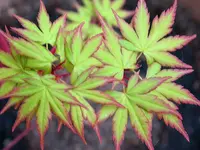
Leaves emerge a soft yellow-green with a pinkish edge in spring, deepen to light green in summer, then turn clear golden-yellow to apricot in autumn before dropping to reveal the colored bark.

Compact upright structure

Compared with many other Japanese maples, this tree develops a relatively narrow, upright vase-shaped crown, which makes it suitable for smaller gardens and urban courtyards.

Botan icon

Did you know?

The name Sango Kaku comes from Japanese and is commonly translated as coral tower, referring to the tree’s vertical habit and distinctive coral-colored bark that stands out in traditional winter garden designs in Japan.

FAQs about Japanese Maple

Brown, crispy leaf edges usually result from leaf scorch, caused by wind exposure, low humidity, or inconsistent moisture. Shallow roots are sensitive. Improve mulching, maintain even soil moisture, and provide shelter from hot, drying winds.

Grow Healthy Plants with Botan Care

Keep your plants happy and healthy with plant identification, disease detection, and easy care guidance.

Botan plant care app — identify plants on mobile

Explore More Plants