boojum tree Care (Fouquieria columnaris)

Also known as: Mexican Tree Ocotillo
boojum tree

About boojum tree

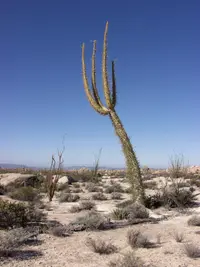
The boojum tree, Fouquieria columnaris, is a slow-growing succulent tree native to the Baja California peninsula and parts of Sonora in Mexico. It belongs to the same family as ocotillo. This species forms a tall, tapering trunk with sparse, short side branches, giving it a candle- or bottle-like silhouette. Small leaves and seasonal clusters of cream to yellowish flowers appear along the stems. In cultivation, it is valued as an architectural desert specimen but can be challenging, especially in humid or cold climates. It requires excellent drainage, strong light, and very careful watering, so understanding how to care for boojum tree is important before planting.

Main Plant Requirements

Care Difficulty

Hard Care

Light Preference

Full Sun

Water Requirements

Low Water

Temperature Preference

Warm Climate

Hardiness Zone

9–11

Soil Texture

Sandy, Rocky, Loamy

Soil pH

Slightly acidic (6.5–7.0), Slightly alkaline (7.0–7.5)

Soil Drainage

Well-drained

Fertilization

Minimal (feed rarely)

Get Personalized Care Plan

Scan your plant to receive care tips personalized for your specific plant

Available on iOS and Android

How to Care for the boojum tree

This desert species needs strong sun to form a sturdy trunk and dense branching.

  • Provide 8–12 hours of direct sun daily; full, unshaded exposure suits mature boojum tree in arid or semi-arid climates.
  • Young or newly planted specimens benefit from 2–4 hours of gentle morning sun plus bright, filtered light at midday to limit scorch.
  • In cooler seasons, maximize light by avoiding shade from buildings or trees; chronic low light causes weak, stretched growth and sparse leaves.

This species is highly drought adapted and must dry well between waterings to prevent root damage.

  • In fast-draining, sandy soil, water only when the top 5–10 cm are completely dry, using deep, infrequent soakings rather than light splashes.
  • During active growth in warm months, increase frequency slightly, but stop watering if leaves yellow, stems soften, or soil stays wet longer than 2–3 days.
  • In cool or dormant periods, reduce watering sharply; shriveling stems signal underwatering, while blackened roots or a sour smell indicate overwatering in Fouquieria columnaris.

This Baja California desert shrub prefers hot, dry conditions with mild winters for stable growth.

  • Optimal growth occurs around 75–95°F (24–35°C); it handles very low humidity and strong sun when soil drains quickly.
  • The plant tolerates brief dips to about 28–30°F (-2 to -1°C), but repeated hard frost below 25°F (-4°C) can scar or kill young stems.
  • In summer heat above 105°F (41°C), ensure extra airflow and sharply reduced watering; avoid cold, wet conditions, especially in winter, to limit rot risk.

Humidity is rarely limiting, as this desert species thrives in very dry air.

  • Aim for 20–40% humidity, similar to typical indoor heated air in arid regions.
  • The boojum tree tolerates prolonged low humidity without issue, but combined with cold can increase risk of stem shriveling.
  • If air is extremely dry and hot, reduce stress by shading during peak sun and avoiding strong, hot drafts.

Soil must be extremely fast-draining to protect the shallow, succulent roots from rot.

  • Use a very gritty, sandy mix such as 60–70% mineral components (pumice, coarse sand, small gravel) with 30–40% cactus potting mix.
  • Ensure the mix is loose and airy so water passes through in seconds and the root zone dries quickly between irrigations.
  • Slightly alkaline to neutral pH around 7.0–7.8 suits Fouquieria columnaris, avoiding peat-heavy, strongly acidic blends.
  • Do not use dense loam, clay, or peat-based soil that stays wet or compacts, as this sharply increases the risk of root and caudex rot.

This species can be grown in containers, especially in cooler or wetter climates where in-ground cultivation is risky.

  • Choose a broad, heavy container to counterbalance the tall, top-heavy trunk and prevent tipping in wind or on balconies.
  • Select a pot material with faster moisture loss, such as unglazed terracotta, to keep the root zone drier between infrequent waterings.
  • Use a pot that is wider than it is deep to accommodate the shallow root system while limiting excess wet substrate volume.

This desert species needs only light feeding, and many established plants grow acceptably without fertilizer.

  • For container-grown boojum tree, use a low-dose, balanced NPK cactus or succulent fertilizer at 1/4–1/2 strength.
  • Feed sparingly during active warmth-driven growth, about every 6–8 weeks in late spring and summer only.
  • Avoid compost-rich mixes or frequent feeding, which encourage weak, fast growth and potential rot.
  • Stop fertilizing in fall and winter when growth slows or the plant is dormant.

Pruning Fouquieria columnaris is minimal and mainly corrective, aimed at maintaining health rather than reshaping the plant.

  • Carry out any pruning in late winter to early spring, just before active growth.
  • Remove only dead, diseased, or storm-damaged branches with clean, sharp bypass pruners or a fine saw.
  • Avoid cutting healthy main stems; heavy pruning can distort the natural columnar form and reduce flowering.
  • Disinfect tools between cuts on suspect tissue to limit disease spread.

This species dislikes root disturbance, so repotting or transplanting should be rare and carefully planned.

  • Consider moving the plant only when roots circle the pot, drainage declines, or growth remains stunted despite proper care.
  • Aim to transplant or step up containers in late spring, when warm conditions aid recovery.
  • Repot mature plants only every 5–7 years, shifting to a slightly larger, deep container with a very fast-draining cactus mix.
  • Handle the brittle roots gently, keep the root ball as intact as possible, and withhold water for several days afterward to reduce stress and rot risk.

Starting new plants is possible but slow, and propagation of Fouquieria columnaris is most reliable from seed rather than cuttings.

  • Sow fresh seeds in late spring to early summer in a sterile, gritty cactus mix.
  • Maintain warm temperatures around 75–85°F, bright light, and slight, even moisture until germination.
  • Provide strong air circulation and avoid overwatering to limit damping-off, a common seedling fungal problem.
  • Grow seedlings on in individual cells or small pots, potting up only once roots fill the container.

Cold conditions pose a significant risk, so winter care focuses on keeping the plant dry and above its frost limit.

  • Treat it as frost-sensitive; aim to keep temperatures above 35–40°F, especially for young or potted plants.
  • Move container specimens indoors or into an unheated but frost-free greenhouse for winter.
  • Keep soil almost completely dry in winter dormancy to reduce root and stem rot.
  • In marginal climates outdoors, use very fast-draining mounds and a deep, dry gravel mulch to insulate the root zone.

Care Tips

Deep pot selection

Use a tall, heavy clay pot to accommodate the deep taproot and keep the plant from toppling as the trunk elongates and becomes top‑heavy over time.

Root disturbance control

Repot only when the taproot clearly reaches the bottom drainage holes, and slide the root ball out with minimal loosening to avoid transplant shock in this slow‑recovering species.

Winter dryness management

In winter rest, keep the plant in a cold, very dry location and use a soil moisture probe or dry bamboo skewer to confirm the root zone is fully dry before giving any small maintenance sip.

Salt and mineral monitoring

Irrigate with low‑mineral or filtered water where tap water is hard, and flush the pot thoroughly once or twice a year to prevent salt buildup that can burn fine roots.

Sun acclimation phases

When moving a plant from indoor light or shade to stronger sun, increase exposure over 2–3 weeks in small daily increments to prevent bark and stem scorch, which is critical for long‑term success when growing boojum tree in containers.

Common Pests and Diseases

Scale insects

This pest feeds on succulent stems, especially near the base and along younger branches, sucking sap and weakening growth. Symptoms include small dome-shaped bumps, sticky honeydew, and sooty mold on the bark surface.

Solution

Remove heavily infested sections with sterile pruners and gently scrape or wipe remaining scale with a cotton pad dipped in 70% isopropyl alcohol. For larger outdoor plants, use a strong water spray to dislodge crawlers and, if needed, apply a light horticultural oil during warm, dry weather, ensuring the plant is kept in its typical high-light, low-humidity conditions.

Mealybugs

These insects hide in crevices and at branch joints, forming white cottony clusters that suck sap and can deform new growth. Symptoms include stunted tips, sticky residue, and fine sooty mold.

Solution

Inspect branch forks and spine bases regularly and remove colonies manually with a cotton swab dipped in 70% isopropyl alcohol. For more widespread infestations, combine physical removal with a targeted application of insecticidal soap or low-rate horticultural oil, ensuring good coverage of hidden areas while keeping the soil dry and well-drained.

Spider mites

These insects thrive in hot, very dry conditions, feeding on the plant’s epidermis and causing fine stippling or a dull, dusty look to stems. Symptoms include tiny webbing in branch crotches and overall loss of vigor.

Solution

Increase local humidity briefly around the plant during treatment by misting the air (not soaking the soil) and rinse stems with a firm but controlled stream of water to remove mites and webbing. Follow with a labeled miticidal soap or horticultural oil sprayed in the cooler part of the day, repeating as needed while maintaining strong light and excellent airflow.

Corky stem canker

This disease affects stressed plants, causing sunken, corky, or cracked patches on stems, sometimes accompanied by localized dieback. Symptoms include rough, discolored lesions that do not match normal aging bark.

Solution

Prune out affected stem sections back to healthy tissue with sterile, sharp tools and dispose of the material. Reduce stress by avoiding overwatering, improving drainage, and maintaining full sun exposure, and if grown in a container, ensure the mix is very gritty so healing tissue stays dry.

Bacterial soft rot

This disease develops mainly in overwatered or physically damaged plants, causing localized soft, foul-smelling, water-soaked areas on the lower stem or caudex. Symptoms include rapid tissue collapse and dark, mushy patches that spread from wounds or saturated areas.

Solution

At the first sign of soft tissue, cut back to firm, healthy tissue with sterile tools and allow wounds to dry and callus in warm, moving air. Strictly limit watering, use a very fast-draining mineral-rich substrate, keep the base of the plant dry, and discard severely affected specimens to avoid spreading bacteria when growing boojum tree in collections.

Interesting Facts

Upside-down growth form

The boojum tree has most of its biomass in a tall, tapered trunk with only small lateral branches, giving it an upside-down carrot or bottle shape that is unusual among woody plants. This architecture helps reduce surface area exposed to intense desert sun while storing water in the main stem.

Fog and dew specialist

In its native Baja California desert, this species can capture moisture from coastal fog and dew on its small leaves and bark surface. This ability allows it to survive in areas where actual rainfall is extremely low and unpredictable.

Slow, long-lived desert woody

The boojum tree grows very slowly and can live for many decades, with some individuals believed to be well over a century old. Its dense wood and reduced canopy contribute to this slow, conservative growth strategy in harsh desert conditions.

Botan icon

Did you know?

The boojum tree is native to a very limited range on the Baja California peninsula and a small area of Sonora in Mexico, making its natural distribution among the most geographically restricted of all arborescent desert plants in North America.

FAQs about boojum tree

Growth is very slow. In cultivation it may add only a few cm in height per year, especially when young. Patience is essential when growing boojum tree, as rapid trunk thickening and branching develop over many years.

Grow Healthy Plants with Botan Care

Keep your plants happy and healthy with plant identification, disease detection, and easy care guidance.

Botan plant care app — identify plants on mobile

Explore More Plants