Protect White Bark
Install a low, open fence or mulch ring around young trunks to prevent mower and string trimmer damage, which quickly scars the white bark and creates entry points for disease.

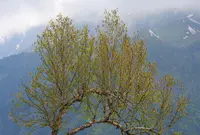
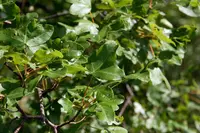
Himalayan birch, Betula utilis, is a medium to large deciduous tree valued for its striking white, peeling bark and fine-textured foliage. It forms a graceful, upright crown with light, fluttering leaves that move easily in the wind.
This species is native to the Himalayan region, where it grows in cool, mountainous forests and open slopes. It is generally considered moderately easy to grow if given cool roots, consistent moisture, and well-drained soil.
Gardeners who want to know how to care for Himalayan Birch should note its preference for full sun in cooler climates and protection from hot, drying winds in warmer areas.

Care Difficulty
Moderate Care

Light Preference
Full Sun

Water Requirements
Regular Water

Temperature Preference
Cold Hardy

Hardiness Zone
4–7

Soil Texture
Loamy, Silty, Organic-rich

Soil pH
Strongly acidic (4.5–5.5), Acidic (5.5–6.5)

Soil Drainage
Moist but well-drained

Fertilization
Minimal (feed rarely)
Scan your plant to receive care tips personalized for your specific plant
Available on iOS and Android
Betula utilis thrives in bright outdoor sites with cool roots and good air movement.
This species prefers consistently moist, cool soil but is sensitive to both drought and waterlogging.
This tree is cold-hardy but grows best in cool to mild climates with moderate summers.
This species prefers moderate atmospheric moisture but usually tolerates typical outdoor humidity ranges.
This species grows best in consistently moist, well-aerated mineral soil with ample organic matter.
This species can be grown in large containers for a limited number of years, mainly when young or dwarf forms are used.
This birch grows well in reasonably fertile soil, so fertilizing Betula utilis is modest and mainly supports young or stressed trees.
Pruning Betula utilis is mainly corrective, aimed at maintaining structure and safety rather than tight shaping.
This species is rarely kept long term in containers, so care focuses on transplanting young Betula utilis into permanent ground positions.
Raising Betula utilis is usually done from seed in professional settings, and home propagation tends to be slow and uncertain.
Mature Betula utilis trees are cold hardy in much of the US and usually need minimal winter care once established.

Plant Health Check
Not sure what's wrong with your plant? Check your plant's health inside the app.
This species is known for its distinctive white to pinkish bark that peels in thin papery sheets, an adaptation that may help reflect intense mountain sunlight and reduce damage from cold and UV exposure at high altitudes.
Betula utilis naturally grows along the Himalayas, often above 3,000 m, where it forms upper tree line forests and shrub-like stands that stabilize steep slopes and help prevent soil erosion.
For centuries, the thin, durable bark of this tree was used in parts of the Indian Himalayas as a writing surface for manuscripts and religious texts, valued for its resistance to decay when kept dry.

Some populations of Betula utilis form natural hybrids with closely related birch species in the Himalayas, which contributes to genetic diversity and complicates precise identification in the wild.
This species grows moderately, usually 30–60 cm per year once settled. Expect a young tree to look established in 4–6 years, with a noticeable white trunk developing as the outer bark begins peeling.
Keep your plants happy and healthy with plant identification, disease detection, and easy care guidance.