Structural crown training
In the first 3–5 years, select 3–5 well-spaced main scaffold branches and remove steep, crossing, or rubbing shoots annually to build a stable, open crown that resists storm damage in maturity.

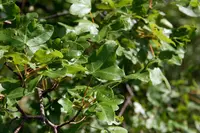
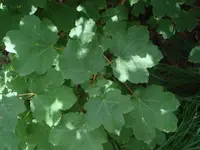
The Montpellier maple, Acer monspessulanum, is a small to medium deciduous tree or large shrub valued for its compact form and dense, rounded crown. It typically has small, tri-lobed leaves that are dark green and leathery, turning yellow to orange in autumn.
This species is native to the Mediterranean region, where it grows on rocky slopes and dry woodland edges. Its natural adaptation to heat, sun, and relatively poor, well-drained soils makes it a resilient landscape choice.
Growth is generally slow to moderate, and the tree responds well to pruning, which suits smaller gardens. These traits make it easier to care for Montpellier Maple in a range of temperate climates, provided it has good light and does not sit in waterlogged soil.

Care Difficulty
Easy Care

Light Preference
Full Sun

Water Requirements
Low Water

Temperature Preference
Cold Hardy

Hardiness Zone
5–9

Soil Texture
Sandy, Loamy, Rocky

Soil pH
Slightly acidic (6.5–7.0), Slightly alkaline (7.0–7.5)

Soil Drainage
Well-drained

Fertilization
Minimal (feed rarely)
Scan your plant to receive care tips personalized for your specific plant
Available on iOS and Android
This drought-tolerant Mediterranean maple thrives in full sun but accepts some light shade, especially in hotter climates.
This species prefers deep, infrequent watering once established, with soil allowed to dry between soakings.
This Mediterranean maple handles a wide temperature range but performs best in moderate, not extreme, conditions.
This species handles a wide humidity range and rarely needs special humidity management outdoors.
This maple prefers well-structured mineral soils that drain freely yet hold moderate moisture.
This species can be grown in containers when given stable, well-drained conditions and adequate root volume.
Acer monspessulanum grows well in modest soils and benefits from light, thoughtful fertilization in containers or poor ground.
Pruning for Acer monspessulanum is mainly structural and corrective rather than heavy shaping.
Transplanting this long-lived tree focuses on minimizing root disturbance and choosing the right time.
Propagation of Acer monspessulanum is typically done from seed and requires patience and specific conditions.
This species is generally cold hardy in much of the US and usually needs minimal winter intervention.

Plant Health Check
Not sure what's wrong with your plant? Check your plant's health inside the app.
This species has very small, thick, three-lobed leaves with a waxy surface that reduce water loss, allowing it to thrive on hot, dry limestone hillsides where many other maples cannot survive.
The wood is very dense, fine-grained, and noticeably harder than that of many other European maples, so it has been used locally for small turned objects, tool handles, and items that need to resist wear.
Unlike many maples that struggle on alkaline ground, this tree naturally favors calcareous, rocky substrates, so it often dominates scrub and open woodland on limestone in the western and central Mediterranean.

In parts of its native range, this long-lived tree can form ancient, low, gnarled specimens in grazed woodlands, where repeated browsing and cutting shape it into multi-stemmed, bonsai-like forms that can be several centuries old, even though they rarely reach large tree size.
This is generally a slow to medium grower, adding about 15–30 cm of height per year under good conditions. Growth is slower in poor, dry soils and in exposed, windy sites.
Keep your plants happy and healthy with plant identification, disease detection, and easy care guidance.