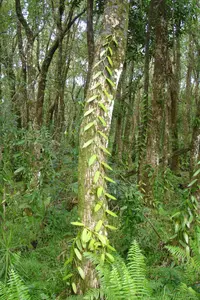
icecreambean Care (Inga edulis)

Also known as: Ice cream bean
icecreambean

About icecreambean

Icecreambean, Inga edulis, is a fast-growing tropical tree from the legume family, valued for its long pods filled with sweet, cottony pulp. It typically develops a broad, spreading crown with soft, pinnate leaves that cast light, filtered shade.

In the wild it grows along rivers and in humid lowland forests of Central and South America, where it also improves soil by fixing nitrogen in its roots. It is generally considered easy to grow in warm, frost-free climates, provided it has sun, moisture, and well-drained soil. For anyone learning how to care for icecreambean, its fast growth and resilience are usually more limiting in size than in sensitivity.

Main Plant Requirements

Care Difficulty

Moderate Care

Light Preference

Full Sun

Water Requirements

Regular Water

Temperature Preference

Tropical / Frost Sensitive

Hardiness Zone

10–12

Soil Texture

Sandy, Loamy, Organic-rich

Soil pH

Acidic (5.5–6.5), Slightly acidic (6.5–7.0)

Soil Drainage

Moist but well-drained

Fertilization

Minimal (feed rarely)

Get Personalized Care Plan

Scan your plant to receive care tips personalized for your specific plant

Available on iOS and Android

How to Care for the icecreambean

Inga edulis grows best in bright, warm conditions with protection from extreme afternoon sun.

  • Provide 6–8 hours of light daily, ideally full sun in the morning and light shade or filtered sun after midday.
  • Young trees benefit from 30–50% shade cloth in very hot regions to prevent leaf scorch on hot, dry afternoons.
  • In dense shade growth becomes sparse and leggy; in cooler seasons or cloudier climates, choose the sunniest available spot for icecreambean.

Inga edulis prefers consistently moist but not waterlogged soil once established outdoors.

  • Irrigate when the top 3–5 cm of soil feel slightly dry, applying a deep soak rather than light, frequent splashes.
  • Use well-drained soil; pale, yellowing soft leaves or standing water around roots suggest overwatering and poor drainage.
  • In hot, dry periods increase frequency and mulch the root zone, while in cool or rainy seasons reduce watering to avoid root rot.

This tropical species thrives in warm, frost-free climates with stable temperatures.

  • Optimal growth occurs around 70–86°F (21–30°C), with young trees responding best to consistently warm conditions.
  • Short exposures down to about 40°F (4°C) can be survived, but tissue damage and leaf drop become likely below this level.
  • Avoid frost and cold wind; during heat waves above 95°F (35°C), provide extra water and light shade to limit stress and leaf scorch.

This species prefers moderately humid air but adapts to a range of outdoor conditions.

  • Aim for 50–70% humidity, which most warm outdoor climates naturally provide.
  • Tolerates brief drops to 30–40%, but prolonged very dry air can crisp leaf edges and tips.
  • In dry regions, group plants near other vegetation, use organic mulch, or install micro-sprayers to slightly raise local humidity around icecreambean.

Inga edulis grows best in deep, loose, moisture-retentive yet well-drained soil.

  • Use a loamy mix with high organic matter, such as native soil blended with compost and coarse sand or fine bark.
  • Ensure drainage is free by avoiding heavy, compacted clay; add coarse sand or small bark chips to improve pore space and aeration.
  • Target a slightly acidic to neutral pH around 6.0–7.0, avoiding strongly alkaline soils that can limit nutrient uptake.
  • Avoid waterlogged sites or hardpans; raised beds or mounded rows help keep the root zone aerated while still holding moisture.

This species can be grown in large containers when space or climate limits in-ground planting.

  • Choose a very large, deep pot to accommodate its extensive root system and reduce tipping risk as the canopy enlarges.
  • Select a heavy material such as thick plastic or ceramic to stabilize the tall, leafy top growth in wind.
  • Elevate the container on sturdy pot feet so drainage holes stay clear and water leaves quickly after heavy rain or deep watering.

This fast-growing nitrogen-fixing tree usually needs only light feeding in average to rich soil.

  • For container icecreambean or very poor soils, use a balanced slow-release fertilizer (around 10-10-10) at the start of the warm growing season.
  • Supplement once more mid-season if growth pales or leaves yellow, using half-strength balanced liquid feed.
  • On established trees in the ground, apply a thin layer of compost over the root zone once a year.
  • Avoid feeding in late fall or winter to prevent soft, frost-sensitive growth and nutrient waste.

Pruning Inga edulis helps manage size, improve structure, and maintain safe, strong branches.

  • Carry out main pruning at the end of winter or early spring before vigorous new growth begins.
  • Remove dead, damaged, crossing, and inward-growing branches to open the canopy and improve air flow.
  • Shorten overly long shoots to shape the crown and keep the tree at a convenient picking height.
  • Use clean, sharp bypass pruners or a pruning saw, making smooth cuts just outside the branch collar.

This species is usually grown as a landscape tree, so transplanting young plants correctly is more important than frequent repotting.

  • Shift container seedlings or saplings when roots circle the pot, drainage slows, or growth becomes stunted.
  • Transplant outdoors in late spring or early summer once soil is warm and frost risk has passed.
  • Move up only 1–2 pot sizes or plant into a well-prepared, deep site with good drainage.
  • Water thoroughly before and after transplanting, keep the root ball intact, and shade the canopy for 1–2 weeks to reduce stress.

New Inga edulis plants are most often raised from fresh seed, with cuttings used less commonly.

  • Collect fully ripe pods and sow seeds immediately in warm, moist, well-drained medium; viability drops quickly when dry.
  • Aim for temperatures around 75–85°F for consistent germination and avoid letting the medium dry out.
  • In late spring or early summer, try semi-hardwood cuttings with 2–3 nodes, using rooting hormone to improve success.
  • Provide bright, indirect light, high humidity, and gentle bottom heat until roots form, then harden plants off gradually.

This tropical tree is frost-sensitive and needs protection in regions with cool or freezing winters.

  • Outdoors, it is only suitable year-round in frost-free climates where temperatures stay above about 32°F.
  • In marginal areas, mulch 5–10 cm over the root zone and around young trunks to insulate soil.
  • Move container plants indoors or into a heated greenhouse before the first frost, providing bright light.
  • Reduce watering in winter, keeping soil barely moist to prevent root rot in cool conditions.

Care Tips

Windfirm training

In the first 2–3 years, pinch back overly long, whippy shoots and favor 3–4 strong scaffold branches so the young tree develops a low, wind‑resistant framework that is less likely to snap under heavy pods or storms.


Root zone mulching

Maintain a 5–8 cm thick organic mulch ring extending at least 60–90 cm from the trunk, keeping it 5–8 cm away from the bark, to moderate soil temperature, reduce evaporation, and protect the shallow feeder roots that support rapid growth.

Pod load management

On young trees, selectively thin clusters of developing pods so that no single branch carries excessive weight, which reduces breakage and helps direct energy into structural growth during the early years of growing icecreambean.

Rhizobia support

After planting, avoid disturbing the root zone and do not repeatedly replace all surrounding soil so that the nitrogen‑fixing root nodules and their rhizobia bacteria can establish and improve soil fertility over time.

Cold event protection

In marginal climates, install temporary windbreak fabric and wrap the lower trunk with breathable burlap before forecast cold snaps to reduce bark damage and dieback, especially in the first 3–5 winters of caring for icecreambean.

Common Pests and Diseases

Pod-boring moths

This pest targets developing pods, where larvae feed inside the seeds and pulp, reducing yield and market quality. Symptoms include small entry holes, frass, and premature pod yellowing or drop.

Solution

Collect and destroy infested pods, prune and remove pod mummies from the tree and ground, and harvest promptly to reduce breeding sites. Where pressure is high, use light traps or pheromone traps for monitoring and, if needed, apply a targeted biological product containing Bacillus thuringiensis (Bt) to young pods, following label directions carefully.

Mirid bugs

These insects pierce young shoots, flowers, and small pods, causing distortion, black lesions, and early fruit drop. Damage is often greatest on tender flushes and during flowering and pod set.

Solution

Regularly inspect young shoots and pods, and prune out and destroy heavily damaged tips to reduce local populations. Encourage natural enemies by maintaining plant diversity nearby, and if needed use a low-impact contact insecticide such as insecticidal soap or neem oil directed at affected flushes in the early morning or late afternoon.

Anthracnose

This disease causes dark, sunken lesions on young leaves, twigs, flowers, and pods, sometimes leading to dieback and reduced pod set. Symptoms include irregular brown spots with darker margins that may merge under humid conditions.

Solution

Prune to open the canopy and improve airflow, remove and destroy infected leaves and twigs, and avoid overhead irrigation that keeps foliage wet. In very humid regions, apply a copper-based fungicide preventively at the start of new flushes or flowering, following label rates and timing closely as part of broader Inga edulis plant care.

Pink disease

This disease affects branches and stems, producing pink to whitish fungal crusts on the bark that can girdle and kill affected limbs. Symptoms include dieback of twigs, sparse foliage beyond infected areas, and brittle dead branches.

Solution

Inspect branches regularly and prune out affected limbs at least 20–30 cm below visible symptoms, disinfecting tools between cuts. Improve light penetration and airflow through the canopy to lower humidity, and avoid wounding the bark; in high-pressure areas, copper-based protective sprays on pruning wounds and main scaffolds during wet seasons can reduce new infections.

Scale insects

These insects attach to stems, twigs, and sometimes leaves, sucking sap and weakening the tree, often accompanied by sticky honeydew and sooty mold. Symptoms include yellowing foliage, reduced vigor, and small dome-shaped or flattened bumps on plant surfaces.

Solution

Wipe or gently scrub accessible branches with a soft cloth or brush dipped in water with a small amount of mild soap, and prune heavily infested twigs. Encourage lady beetles and other predators, and for persistent outbreaks apply horticultural oil thoroughly to smother scales, repeating as needed according to label directions while avoiding spraying during high heat.

Interesting Facts

Pulp that tastes sweet

The white pulp around the seeds is edible, mildly sweet, and has a soft, cottony texture that many people compare to vanilla ice cream, which is why the tree is commonly called ice cream bean.

Nitrogen-fixing canopy tree

This species forms symbioses with rhizobium bacteria in its root nodules, allowing it to convert atmospheric nitrogen into forms usable by plants and improve soil fertility around it.

Living shade for crops

In tropical agroforestry it is widely used as a fast-growing shade and windbreak tree for cacao and coffee plantations, providing both canopy cover and organic matter through its leaf litter.

Botan icon

Did you know?

In parts of the Amazon and western South America, large individuals of this species are important in traditional riverine agriculture, where their long pods are traded fresh in local markets and the trees also help stabilize floodplain riverbanks with their extensive root systems.

FAQs about icecreambean

This species grows very quickly in warm, frost‑free climates, often adding 1–3 ft per year once established. Growth slows in cooler areas, poor soil, or containers. Regular moisture, warmth, and adequate space support its naturally rapid development.

Grow Healthy Plants with Botan Care

Keep your plants happy and healthy with plant identification, disease detection, and easy care guidance.


Botan plant care app — identify plants on mobile

Explore More Plants