Moore's zamia palm Care (Macrozamia moorei)

Moore's zamia palm

About Moore's zamia palm

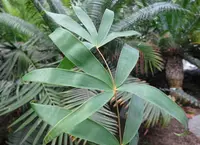
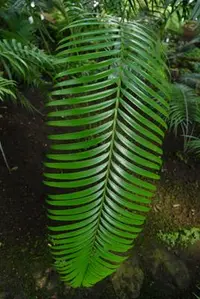
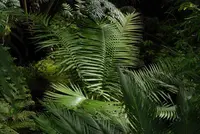
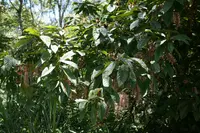
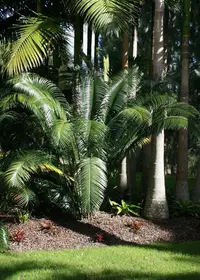
Moore's zamia palm (Macrozamia moorei) is a slow-growing cycad, not a true palm, valued for its strong architectural form and longevity. It forms a stout trunk topped with a crown of stiff, arching, blue-green fronds. Mature plants can become quite large over many years, so they suit spacious areas or long-term landscape planning. In nature, it occurs in Queensland, Australia, often on well-drained, rocky or sandy soils. This species is drought-tolerant once established and generally tough, but slow growth means damage takes time to repair. It prefers bright light, good drainage, and moderate watering, which shapes how to care for Moore's zamia palm in gardens or large containers.

Main Plant Requirements

Care Difficulty

Moderate Care

Light Preference

Full Sun

Water Requirements

Low Water

Temperature Preference

Warm Climate

Hardiness Zone

9–11

Soil Texture

Sandy, Loamy, Rocky

Soil pH

Slightly acidic (6.5–7.0), Neutral (7.0)

Soil Drainage

Well-drained

Fertilization

Minimal (feed rarely)

Get Personalized Care Plan

Scan your plant to receive care tips personalized for your specific plant

Available on iOS and Android

How to Care for the Moore's zamia palm

This cycad prefers bright, open conditions that mimic dry, sunny woodlands.

  • Provide 6–8 hours of direct sun daily, ideally with morning sun and light afternoon shade in very hot climates to reduce leaf scorch.
  • Young plants and newly transplanted Moore's zamia palm benefit from filtered light or 3–5 hours of gentle morning sun until established.
  • In areas with intense summer sun, use dappled shade at midday; in low-light sites, fronds become sparse and elongated, indicating insufficient light.

This species prefers infrequent, deep watering and dry intervals between soakings.

  • Outdoors in well-drained soil, water only when the top 5–8 cm is completely dry; in hot, dry weather this may be every 7–14 days, less often in cool seasons.
  • Use gritty, fast-draining soil to protect Macrozamia moorei from root rot; water should drain away within a few minutes without pooling around the base.
  • Signs of overwatering include yellowing, soft leaf bases, or a sour smell at the soil; crisp, browning leaflet tips and shrinking older fronds usually indicate underwatering.

This hardy cycad tolerates a wide temperature range but grows best in mild, warm conditions.

  • Optimal growth occurs around 65–85°F (18–29°C), with steady warmth promoting stronger flushes of new fronds in spring and summer.
  • Mature plants can tolerate brief drops to about 20–25°F (-6 to -4°C), but young plants are more sensitive and benefit from protection during cold snaps.
  • In hot regions with summer highs over 100°F (38°C), provide some afternoon shade and avoid reflected heat from walls or paving to prevent stress.

This species handles a wide humidity range and usually does not need special moisture in the air.

  • Aim for 30–50% humidity, which suits most heated or air-conditioned homes.
  • It tolerates dry air well; leaf tips browning or fronds crisping indicate humidity is extremely low or soil is repeatedly overdried.
  • If air is very dry, group plants together or place a wide water tray nearby to slightly raise local humidity around Moore's zamia palm.

Macrozamia moorei prefers sharply drained, mineral-rich substrates that mimic dry, open habitats.

  • Use a sandy, gritty mix such as 50% cactus mix with 30% coarse sand and 20% fine bark or pumice to keep the root zone airy.
  • Ensure very fast drainage; water should run through the pot in seconds without pooling on the surface.
  • Keep pH slightly acidic to neutral (pH 6.0–7.0); avoid strongly alkaline mixes that can lock up nutrients.
  • Avoid heavy, peat-dominant or clay-based soils that hold water around the crown, which encourages root and trunk rot.

This cycad adapts reasonably well to container growing when given a deep, very stable setup.

  • Choose a tall, heavy pot that resists tipping as the stiff, long fronds create a top-heavy crown over time.
  • Select thick-walled terracotta or concrete to add weight and allow gradual moisture loss from the root zone.
  • Raise the pot on feet or spacers so drainage holes stay clear and water can exit quickly after each watering.

This slow-growing cycad benefits from modest, carefully timed feeding during the warm season.

  • Apply a balanced slow-release fertilizer (around 10-10-10 or similar NPK) once in spring and again mid-summer for Moore's zamia palm.
  • Use granular or coated slow-release products, kept off the trunk, and watered in thoroughly after application.
  • Halve the label-recommended rate for container plants to reduce salt buildup and root burn risk.
  • Avoid feeding in fall and winter when growth slows, to prevent soft, cold-sensitive tissue.

Macrozamia moorei needs minimal pruning focused on health and safety rather than shaping.

  • Perform any pruning in late winter or early spring, before strong new growth begins.
  • Remove only dead, yellowing, or severely damaged fronds at the base using clean, sharp loppers or a pruning saw.
  • Retain healthy fronds to sustain photosynthesis, as heavy removal weakens the plant and slows growth.
  • Cut away old cone remains or debris around the crown to improve airflow and reduce pest harborage.

This cycad dislikes frequent disturbance, so transplanting or repotting should be infrequent and carefully planned.

  • Look for roots circling the pot, pushing through drainage holes, or noticeably slowed growth as signals to move up 1 pot size.
  • Carry out repotting or landscape transplanting in late spring to early summer, when soil is warm and recovery is fastest.
  • Plan on repotting container plants only every 4–6 years, using a deep pot with very free-draining, gritty mix.
  • Handle the root ball gently, keep existing soil intact, water thoroughly afterward, and shade the plant for 1–2 weeks to limit stress.

Macrozamia moorei is propagated almost exclusively from seeds, and the process is slow and technically demanding.

  • Collect ripe seeds from mature female cones, then clean and soak them to remove fleshy coatings that inhibit germination.
  • Sow in late spring to early summer in a deep tray with sterile, very free-draining medium such as sand and perlite.
  • Maintain warmth at 75–85°F and consistent, light moisture; germination may take many months.
  • Provide bright, indirect light and avoid disturbing seedlings, potting them on only once roots and first true leaves are well developed.

This species is relatively cold tolerant but benefits from some protection in colder regions.

  • Mature plants usually tolerate brief drops to around 20–25°F, but prolonged hard freezes can damage fronds.
  • Apply 5–8 cm of dry mulch around the root zone in late fall, keeping it away from the trunk to avoid rot.
  • In areas with severe frost, wrap the crown loosely with breathable frost cloth during cold snaps.
  • Move container-grown plants indoors or into an unheated but frost-free space when temperatures approach the mid 20s°F.

Care Tips

Stabilize Heavy Caudex

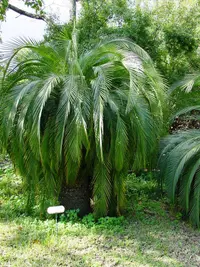
As the plant enlarges, mound a low ring of coarse gravel or small rocks around the base to stabilize the caudex and prevent wind rock that can damage new roots.

Protect New Flush

When a fresh flush of fronds is emerging, avoid rotating, relocating, or brushing against the plant so the soft fronds harden evenly without twisting or mechanical damage.

Root Zone Mulching

Apply a 3–5 cm layer of coarse, well-drained mulch (pine bark, wood chips, or gravel) over the root zone, keeping it a few cm away from the caudex to moderate soil temperature and reduce surface compaction.

Winter Drainage Check

Before cool, wet seasons, verify that water runs off quickly from the planting site and, if needed, raise the plant slightly on a low mound to prevent chronic root soak and crown rot.

Container Weight Management

For large potted specimens, use a wide, heavy container and optionally add a paving stone at the bottom to prevent tipping, which is especially important when growing Moore's zamia palm on exposed patios or balconies.

Common Pests and Diseases

Cycad scale

This pest feeds on the leaflets and rachis, forming dense white or brown crust-like patches that can cause yellowing and leaflet dieback. Heavy infestations can seriously weaken the plant over time.

Solution

Prune and discard heavily infested fronds, then hose remaining foliage with a strong stream of water to dislodge scales. Follow with repeated applications of a horticultural oil or insecticidal soap labeled for scale, ensuring thorough coverage of both leaflet surfaces and the rachis every 7–14 days until new growth appears clean.

Mealybugs

These insects hide in leaflet bases and crown crevices, producing white cottony clusters and sticky honeydew that can attract sooty mold. Symptoms include stunted growth and general decline if populations build up.

Solution

Inspect the crown and leaflet bases closely and dab visible mealybugs with cotton swabs dipped in isopropyl alcohol. For larger populations, wash the plant with a firm water spray, then apply an insecticidal soap or horticultural oil, repeating at 7–10 day intervals and improving air movement around the plant to slow reinfestation.

Crown and collar rot

This disease affects the tissue at or just below the soil line, leading to a softened, discolored crown and collapse of central fronds. Symptoms include sudden wilt of the central flush and a foul smell from the crown area in advanced cases.

Solution

Remove and discard all soft, rotted tissue from the crown and surrounding area, allowing it to dry and callus in a well-ventilated, shaded spot. Replant in freely draining soil or a gritty mix, keep the crown slightly elevated above soil level, reduce watering to allow near-complete drying between irrigations, and avoid overhead watering into the crown to prevent recurrence when growing Moore's zamia palm outdoors or in containers.

Leaf spot

This disease causes discrete brown, tan, or gray spots on the pinnae, sometimes with dark margins and a yellow halo. Severe cases can lead to premature leaflet drop and reduced vigor.

Solution

Remove and discard affected fronds or sections to reduce inoculum, and avoid wetting the foliage when irrigating. Improve spacing and airflow around the plant; in persistent or severe cases, apply a labeled copper or broad-spectrum fungicide to new and lightly affected fronds, following the product directions and timing treatments to periods of warm, humid weather when infections are most likely.

Interesting Facts

Ancient cycad lineage

This species is a true cycad, part of a plant group that predates flowering plants by many millions of years, and its overall form has changed very little compared to cycad fossils from the Mesozoic era.

Tallest Australian cycad

In its native Queensland habitat, it can form a single, columnar trunk that may exceed 7 m in height, making it one of the tallest known cycad species in Australia.

Specialized cone production

Mature plants produce separate male and female cones on different individuals, and these cones appear only sporadically, often after many years of vegetative growth, reflecting the slow and conservative reproductive strategy typical of cycads.

Botan icon

Did you know?

The seeds of this species contain natural toxins that must be carefully leached or processed to avoid poisoning, and Indigenous Australian knowledge systems include detailed methods for rendering similar cycad seeds safe to eat, highlighting a long coevolution of human use and plant defense.

FAQs about Moore's zamia palm

This species grows very slowly, often adding only 2–5 cm of trunk height per year once established. Expect many years before a noticeable trunk forms, which is normal for long-lived cycads.

Grow Healthy Plants with Botan Care

Keep your plants happy and healthy with plant identification, disease detection, and easy care guidance.

Botan plant care app — identify plants on mobile

Explore More Plants