burrawang palm Care (Lepidozamia peroffskyana)

burrawang palm

About burrawang palm

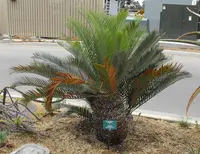
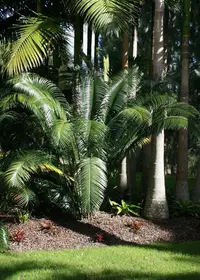
Lepidozamia peroffskyana, often called burrawang palm, is actually a cycad, an ancient group of cone-bearing plants, not a true palm. It forms a thick trunk topped with a symmetrical crown of long, glossy, arching fronds that give a tropical look.

This species is native to the coastal rainforests and sheltered slopes of eastern Australia, where it grows slowly under bright but filtered light. Its slow growth and tolerance of brief neglect make it suitable for patient growers, though it needs protection from frost and harsh sun. Rich, free-draining soil and steady moisture support healthy growth, and understanding how to care for burrawang palm starts with mimicking its sheltered forest habitat.

Main Plant Requirements

Care Difficulty

Moderate Care

Light Preference

Partial Shade

Water Requirements

Moderate Water

Temperature Preference

Warm Climate

Hardiness Zone

9–11

Soil Texture

Sandy, Loamy, Organic-rich

Soil pH

Acidic (5.5–6.5), Slightly acidic (6.5–7.0)

Soil Drainage

Moist but well-drained

Fertilization

Minimal (feed rarely)

Get Personalized Care Plan

Scan your plant to receive care tips personalized for your specific plant

Available on iOS and Android

How to Care for the burrawang palm

This cycad prefers bright, indirect light similar to dappled forest shade.

  • Provide 4–6 hours of filtered light or light shade daily, such as under high trees or on the east side of a building, to mimic its natural habitat.
  • Tolerates partial shade, but very deep shade leads to sparse, stretched fronds; give a bit more morning sun if growth slows or fronds elongate.
  • Protect burrawang palm from harsh midday and afternoon sun, which can scorch leaflets, especially in summer or during heatwaves.

This species prefers evenly moist but not waterlogged soil.

  • Allow the top 3–5 cm of soil to dry before watering again; check by pushing a finger or probe into the soil near the root zone.
  • Increase watering frequency in warm, active growth periods and reduce in cooler months, avoiding complete soil dryness for more than a few days.
  • Ensure deep, free-draining soil so excess water runs off; yellowing, limp fronds suggest overwatering, while crisp tips and drooping leaflets indicate underwatering.

This plant thrives in mild, frost-free climates with stable temperatures.

  • Aim for 65–80°F (18–27°C) for active growth, which supports steady frond development without stress.
  • It tolerates brief dips to about 28–30°F (-2 to -1°C), but foliage can be damaged; protect the crown if frost is forecast.
  • In hot areas, it copes with 90–100°F (32–38°C) if soil moisture is consistent and roots are mulched to keep them cool and shaded.

This cycad prefers moderate humidity but adapts well to typical indoor and outdoor air levels.

  • Aim for 40–60% humidity; it tolerates brief dips lower without serious stress.
  • In very dry air, leaf tips may brown and fronds can look dull or slightly curled.
  • For caring for burrawang palm in drier homes, use a pebble tray or group plants to slightly raise local humidity.

Soil should be free-draining, slightly acidic to neutral, and structurally stable over many years.

  • Use a mix of roughly 50% loam-based potting mix, 25% coarse sand, and 25% fine bark or perlite for aeration.
  • Ensure water drains through quickly so the root zone never stays waterlogged, which encourages root and caudex rot.
  • Target a pH around 6.0–7.0, avoiding very alkaline mixes that can reduce nutrient availability for Lepidozamia peroffskyana.
  • Avoid heavy clay, peat-dominant, or compacted substrates; amend them with grit and bark to loosen texture and increase pore space.

This species can grow well in large containers if given stable, well-drained conditions.

  • Choose a deep, heavy pot that resists tipping as the crown becomes tall and top-heavy over time.
  • Select thick-walled terracotta or similar materials that moderate moisture swings in hot climates.
  • Position the container where strong winds are buffered, since a tall frond crown in a narrow pot can lever the whole plant.

This cycad grows slowly and needs only light, controlled feeding to stay healthy.

  • Use a balanced slow-release fertilizer (around 10-10-10 or similar) or a palm/cycad-formula applied at the soil surface.
  • Feed burrawang palm once in spring and again in midsummer during active growth, avoiding late-season applications.
  • Apply at 1/2–3/4 the label rate for container plants to limit salt buildup and root burn.
  • Skip feeding in winter or any cool dormant period, aside from a thin annual layer of compost outdoors.

Lepidozamia peroffskyana requires minimal pruning, focused on sanitation rather than shaping.

  • Best time for any work is late winter to early spring, before new flushes of fronds expand.
  • Remove only dead, yellowed, or damaged fronds at the base to improve appearance and airflow.
  • Use clean, sharp bypass pruners or a pruning saw, cutting close to the trunk without gouging tissue.
  • Avoid removing healthy green fronds, as this reduces photosynthesis and can slow overall growth.

This slow-growing cycad dislikes disturbance, so repotting or transplanting should be infrequent and deliberate.

  • Look for roots circling the pot, pushing out of drainage holes, or noticeably slowed growth as cues to move up 1 pot size.
  • Plan repotting or transplanting for late spring to early summer, when soils are warm and recovery is faster.
  • Expect container plants to need repotting only every 4–6 years; garden specimens are usually transplanted just once to a permanent site.
  • Lift with the full root ball, keep roots shaded and moist, set at the same depth, then water deeply and maintain even moisture until re-established.

Propagation of this cycad is slow and specialized, so it is rarely attempted by home growers.

  • Seed propagation is the main method; seeds require ripeness and, in some cases, careful cleaning of the fleshy coat.
  • Sow in late spring in a very well-drained, sandy mix kept at 75–85°F with consistently light moisture, never waterlogged.
  • Germination can take many months; maintain warmth, gentle airflow, and stable moisture throughout.
  • Division of offsets is uncommon and should only be attempted on mature plants using sterile tools and fast-draining media.

This species is moderately cold tolerant but benefits from some winter protection in climates with hard frost.

  • Mature plants handle brief dips to around 25°F, but young plants are more frost sensitive.
  • Apply a 5–8 cm layer of mulch around the root zone in late fall, keeping it back from the trunk.
  • In containers, shift plants indoors or to a sheltered, bright, frost-free spot before sustained freezes.
  • For short cold snaps, cover the crown and fronds with frost cloth, ensuring ventilation on warmer days.

Care Tips

Stabilize Heavy Crown

As the plant matures and the crown gains weight, use low, discreet staking or a supportive rock ring around the base to keep the trunk stable and prevent wind rock, which can damage new root growth.

Protect Emerging Flush

When a new flush of fronds is expanding, avoid handling or brushing against them and shield the plant from strong wind with temporary windbreak fabric or shade cloth so the fronds harden without kinks or breakage.

Mulch For Root Comfort

Maintain a 5–8 cm ring of coarse organic mulch around, but not touching, the trunk to buffer root temperature, preserve soil moisture, and reduce weed competition without inviting rot at the crown.

Safe Transplant Technique

If transplanting, keep as much of the original rootball intact as possible, move the plant during mild weather, and set it at the same depth as before to avoid burying the crown and stressing the slow-recovering roots.

Plan Long-Term Space

When growing burrawang palm in the landscape, position it where the mature frond spread will not obstruct paths or doors, since pruning healthy fronds to create space weakens the plant over time.

Common Pests and Diseases

Scale insects

This pest attaches firmly to fronds and leaf bases, sucking sap and causing yellowing, sticky honeydew, and sooty mold growth. Heavy infestations can weaken plants and slow new flush development.

Solution

Wipe or gently scrub affected areas with a soft cloth or brush dipped in lukewarm soapy water, then rinse thoroughly, and prune heavily infested fronds. For persistent scale, use a horticultural oil or insecticidal soap labeled for cycads, applied to all leaf surfaces and around the crown according to label directions.

Cycad blue butterfly

This pest lays eggs on new fronds, and the emerging caterpillars chew through leaflet tissue, leaving ragged holes and sometimes skeletonized leaves. Damage is usually concentrated on soft, newly expanding growth.

Solution

Inspect new fronds regularly and handpick or squash caterpillars at an early stage, or prune and discard heavily infested young fronds. In outdoor plantings, selective biological products containing Bacillus thuringiensis (Bt) can be applied to new flushes, following label directions and avoiding spray drift onto beneficial insects.

Mealybugs

These insects hide in leaf bases and around the crown, appearing as white, cottony clusters that suck sap and cause leaf yellowing and stunted growth. Honeydew and sooty mold may develop on lower fronds and surrounding surfaces.

Solution

Dislodge visible colonies with a strong but controlled stream of water, then treat concealed areas around leaflet bases with cotton swabs dipped in isopropyl alcohol. For ongoing problems, use repeated applications of insecticidal soap or horticultural oil, ensuring good coverage into crevices while avoiding runoff into the central crown.

Crown rot

This disease usually develops when water and organic debris collect in the central crown, leading to soft, brown, foul-smelling tissue and collapse of new growth. Symptoms include wilting or failure of new fronds to emerge properly.

Solution

Remove and discard all soft, discolored crown tissue with sterilized tools, keeping as much firm tissue as possible, and improve drainage and watering practices so the crown dries between waterings. Allow the area to dry, apply a fungicide labeled for crown or stem rot on woody ornamentals if available, and avoid overhead watering that leaves water sitting in the crown.

Interesting Facts

Ancient cycad lineage

This species is a true cycad, part of a lineage that arose long before flowering plants and coexisted with dinosaurs, yet it still relies on slow growth and long-lived leaves to survive in modern forests.

Specialized cone structure

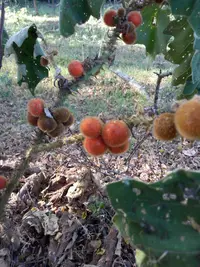
It produces separate male and female plants, each forming large, heavy cones; the female cones bear bright red seeds that are encased in a fleshy outer layer attractive to wildlife dispersers.

Shade-tolerant forest native

In the wild it grows in the understory of moist coastal and near-coastal forests of eastern Australia, adapted to filtered light and stable, mild temperatures rather than exposed, open habitats.

Botan icon

Did you know?

The seeds and other tissues of this species contain natural toxins typical of many cycads, and Indigenous Australian communities developed careful processing methods to leach and neutralize these compounds before any traditional use, highlighting detailed ecological knowledge built over long periods.

FAQs about burrawang palm

This cycad rarely cones when young. It needs many years of steady growth, a stable outdoor position, and seasonal temperature changes. Stress, frequent repotting, or poor nutrition can delay cone production for decades.

Grow Healthy Plants with Botan Care

Keep your plants happy and healthy with plant identification, disease detection, and easy care guidance.


Botan plant care app — identify plants on mobile

Explore More Plants