Branch tier training
In the first 5–7 years, lightly stake and loosely tie young lateral branches that want to grow upright so they set into wide, horizontal tiers that create the characteristic layered giant dogwood form.

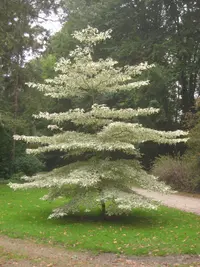
Giant dogwood, Cornus controversa, is a deciduous tree valued for its strong tiered branching and elegant, horizontal layers of foliage. It develops a broad, architectural crown that makes it a striking focal point in medium to large gardens.
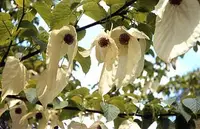
In the wild, it occurs in woodland and forest edges across East Asia, including China, Korea, and Japan. The tree produces clusters of small creamy flowers, followed by dark berries that attract birds.
This species is generally moderate in growth rate and not difficult to manage when planted in suitable conditions. It prefers moist, well-drained soil and light shade to sun, and understanding how to care for giant dogwood starts with choosing an appropriate, spacious site.

Care Difficulty
Moderate Care

Light Preference
Partial Shade

Water Requirements
Regular Water

Temperature Preference
Cold Hardy

Hardiness Zone
5–8

Soil Texture
Loamy, Clay, Organic-rich

Soil pH
Acidic (5.5–6.5), Slightly acidic (6.5–7.0)

Soil Drainage
Moist but well-drained

Fertilization
Minimal (feed rarely)
Scan your plant to receive care tips personalized for your specific plant
Available on iOS and Android
Cornus controversa grows best with bright but not harsh exposure that mimics a light woodland edge.
Cornus controversa prefers evenly moist, cool soil that never stays saturated or bone-dry for long periods.
This species is a cool- to mild-temperate tree that handles winter cold but dislikes extreme, prolonged heat.
Cornus controversa tolerates a wide humidity range and usually does not need special humidity management outdoors.
Cornus controversa prefers moist, deep, well-structured soil that retains water yet drains freely.
This species can be grown in large containers for some years but is not ideal as a long-term pot specimen due to its eventual size.
Cornus controversa benefits from light, targeted feeding rather than heavy fertilization.
Pruning Cornus controversa is mainly done to maintain structure and remove problem wood.
Transplanting is more relevant than repotting, since this species is typically grown as a landscape tree.
Cornus controversa is usually propagated by cuttings or layering, with seeds used mainly by nurseries.
This dogwood is generally cold hardy in much of the US and needs limited winter care once established.

Plant Health Check
Not sure what's wrong with your plant? Check your plant's health inside the app.
This species naturally forms wide, horizontal branches arranged in layered tiers, creating a distinctive pagoda-like silhouette that is much more pronounced than in most other dogwoods.
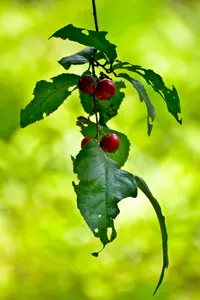
Its small blue-black drupes are produced in large clusters and are highly attractive to birds, which play a major role in dispersing its seeds across woodland edges and open forests.
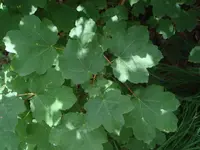
The foliage emerges fresh green in spring, often develops rich red to purple tones in autumn, and is displayed against smooth, gray-brown stems that emphasize the layered structure even in winter.

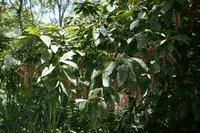
In its native East Asian range, this tree can exceed 15–20 m in height with a broad, layered crown, making it one of the largest and most architecturally striking dogwood species in mature woodland canopies.
Growth is moderate. Under good conditions, it typically adds 30–60 cm of height per year once established. Young specimens may be slower in the first 2–3 years while roots develop, then growth becomes more noticeable.
Keep your plants happy and healthy with plant identification, disease detection, and easy care guidance.