Pacific Yew Care (Taxus brevifolia)

Also known as: western yew, Canadian Yew
Pacific Yew

About Pacific Yew

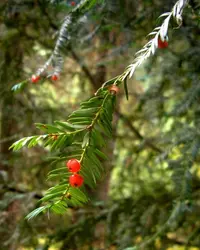
Pacific yew, Taxus brevifolia, is a slow-growing evergreen conifer native to moist forests of the Pacific Northwest in North America. It often grows as an understory tree beneath larger conifers. The plant has dense, flat, dark green needles and reddish-brown bark, forming a narrow, irregular crown rather than a neat, formal shape. It produces small red fleshy structures called arils that partially surround the seed. This species is long-lived and resilient but grows slowly, so changes in size are gradual. It prefers cool, humid conditions, partial shade, and well-drained soil, which influences how to care for Pacific Yew in gardens or larger landscapes.

Main Plant Requirements

Care Difficulty

Moderate Care

Light Preference

Partial Shade

Water Requirements

Moderate Water

Temperature Preference

Cold Hardy

Hardiness Zone

5–7

Soil Texture

Loamy, Sandy, Rocky

Soil pH

Strongly acidic (4.5–5.5), Acidic (5.5–6.5)

Soil Drainage

Moist but well-drained

Fertilization

Minimal (feed rarely)

Get Personalized Care Plan

Scan your plant to receive care tips personalized for your specific plant

Available on iOS and Android

How to Care for the Pacific Yew

This shade-tolerant conifer prefers cool, filtered light similar to its native forest habitat.

  • Provide dappled or bright shade with 2–4 hours of gentle morning sun and protection from intense midday and afternoon sun.
  • It tolerates deep shade but grows densest in partial shade; sparse, elongated shoots indicate too little light, especially on lower branches.
  • In hot summers, shield Pacific Yew from reflected heat and strong sun to prevent needle scorch, especially on newly planted or south-facing specimens.

This species prefers consistently moist but not saturated soil once established in the landscape.

  • Allow the top 3–5 cm of soil to dry slightly between waterings, then soak the root zone deeply rather than applying frequent light sprinklings.
  • During the first 1–2 growing seasons, monitor after dry, warm spells; drooping or dull needles suggest thirst, while yellowing on inner branches can indicate chronic excess moisture.
  • Ensure sharply draining, organic-rich soil; pooling water, sour smell, or blackened roots signal overwatering stress for Taxus brevifolia.

This conifer is naturally adapted to cool, temperate climates with pronounced seasonal variation.

  • Active growth occurs best around 50–70°F (10–21°C), with cool summers supporting denser foliage and slower, steady extension of shoots.
  • Mature plants tolerate cold down to about -20°F (-29°C), but young specimens benefit from wind protection and mulch during severe freezes.
  • Heat above 85°F (29°C), especially with dry winds, can stress foliage; provide shade, mulch, and consistent soil moisture during hot spells.

Humidity is not a critical factor for Taxus brevifolia, which adapts well to typical outdoor levels in temperate climates.

Taxus brevifolia prefers cool, moist, well-drained soil with stable structure and consistent aeration.

  • Use a loamy soil with moderate organic matter, such as a mix of garden loam, compost, and pine bark fines.
  • Aim for slightly acidic to neutral pH around 6.0–7.0 to support nutrient availability and healthy root function.
  • Ensure strong drainage by avoiding compacted or heavy clay; incorporate coarse sand or fine gravel if water lingers.
  • Avoid waterlogged or constantly saturated sites, which quickly lead to root rot and reduced vigor.

This species can be grown in containers, but it performs best when the container setup closely mimics cool, stable root conditions.

  • Choose a deep, heavy pot to stabilize the slow, woody growth and reduce the risk of tipping in wind.
  • Use a mineral-rich, sharply draining mix, such as 50% loam with bark and grit, to prevent chronic root wetness.
  • Position the container where sides are shaded or insulated so the root zone does not overheat or dry out rapidly.

Taxus brevifolia grows slowly and usually needs modest feeding in cultivated landscapes.

  • Use a balanced, slow-release NPK fertilizer or well-rotted compost in early spring to support new growth.
  • Apply a light dose once per year during the main growing season, avoiding heavy applications that can cause weak, lush growth.
  • Dilute liquid products to 1/2 strength for container plants and water beforehand to prevent root burn.
  • Skip or greatly reduce feeding in late fall and winter, when the plant is semi-dormant.

Taxus brevifolia responds well to thoughtful pruning that maintains its natural form.

  • Carry out main pruning in late winter or very early spring before new growth starts.
  • Remove dead, diseased, crossing, or storm-damaged branches first, cutting back to healthy wood with clean bypass pruners or a sharp saw.
  • Thin crowded interior shoots to improve light and airflow, which helps reduce fungal problems.
  • Shorten overly long shoots lightly to refine shape, avoiding shearing into old bare wood that may not reshoot.

This species is usually grown in the ground, so focus on careful transplanting rather than frequent repotting.

  • Plan transplanting for early spring or early fall, when temperatures are mild and soil moisture is reliable.
  • Move when growth is slow, or when roots circle the pot, water drains poorly, or top growth stalls in containers.
  • Dig a wide root ball, keep soil intact around the roots, and replant at the same depth in well-drained soil.
  • Water deeply after planting, mulch 5–8 cm around the root zone, and keep soil evenly moist while the plant re-establishes.

Taxus brevifolia is usually propagated from semi-hardwood cuttings or seeds, both of which require patience and stable conditions.

  • Take semi-hardwood cuttings in late summer, 7–10 cm long, with a heel of older wood if possible.
  • Dip cut ends in rooting hormone and place in a sharply drained, moist medium under high humidity and bright, indirect light.
  • Maintain temperatures around 60–70°F and avoid waterlogging; rooting can take several months.
  • Sow cleaned seeds outdoors in pots or seedbeds and allow 1–2 natural cold seasons, since dormancy is strong.

This yew is quite cold hardy in much of its native range and usually needs only modest winter care.

  • Taxus brevifolia tolerates freezing conditions but benefits from a 5–8 cm mulch layer to moderate soil temperature.
  • Keep mulch a few cm away from the trunk to prevent rot and rodent damage.
  • For container plants, move pots into a sheltered, unheated area where roots stay cold but not deeply frozen.

Care Tips

Windbreak placement

Site young plants near a fence, hedge, or temporary windbreak on exposed properties to reduce desiccating winter winds that can brown needles and stunt growth.

Snow load management

In regions with heavy, wet snow, gently brush accumulated snow off branches with a broom to prevent limb breakage, but avoid knocking or shaking frozen branches which can snap.

Mulch ring strategy

Maintain a 5–10 cm deep mulch ring out to the drip line, keeping it 5–8 cm away from the trunk, to buffer soil moisture and temperature while preventing lawn equipment damage to the bark.

Gradual light transition

When moving nursery plants from shade-house or container conditions into brighter garden sites, increase light exposure gradually over 2–3 weeks to avoid needle scorch and transplant stress while growing Pacific Yew.

Wildlife browsing protection

Use sturdy wire cages or temporary fencing around young plants in areas with deer or rabbits, since repeated browsing of new growth can severely slow establishment even though the foliage is toxic if ingested.

Common Pests and Diseases

Taxus mealybug

This pest feeds on yew needles and twigs, causing yellowing foliage, sparse growth, and sticky honeydew that can lead to sooty mold on stems and needles. Symptoms include white, cottony clusters hidden in branch crotches and along interior stems.

Solution

Prune out and discard heavily infested twigs, then hose down inner branches to physically remove insects. For ongoing Taxus brevifolia care, apply a horticultural oil or insecticidal soap thoroughly into the shrub’s interior on a cool, dry day, repeating as needed according to label directions.

Taxus scale

These insects attach tightly to needles and stems, sucking sap and causing dull, yellowed foliage and thinning growth. This pest often appears as small, tan to brown, crusty bumps on older wood and along shaded interior branches.

Solution

Cut out badly affected branches to reduce the population, and gently scrub heavily encrusted stems with a soft brush to loosen scales before treatment. Follow with a well-timed application of horticultural oil during crawler (young scale) activity, ensuring thorough coverage of stems and needles.

Phytophthora crown blight

This disease attacks the lower stem and crown area, leading to wilting, dieback of branches, and a gradual decline of the whole plant, even when soil looks only moderately moist. Symptoms include discolored, water-soaked tissue at the base of stems and failure to produce healthy new growth.

Solution

Remove and destroy affected plants or severely blighted stems, and avoid replanting yews in the same spot if the soil remains poorly drained. Improve drainage with raised beds or soil amendments, keep mulch pulled back from the trunk flare, and irrigate deeply but infrequently so the soil dries slightly between waterings.

Botryosphaeria canker

This disease causes scattered branch dieback, often starting on stressed plants, with sunken, discolored cankers on stems and a sharp transition between living green tissue and brown, dead wood. Symptoms include browning and death of entire shoots, especially on the inner or shaded portions of the shrub.

Solution

Prune affected branches well back into healthy wood, sterilizing pruning tools between cuts, and discard all infected material. Reduce stress by avoiding mechanical damage, preventing drought or waterlogging, and maintaining a light, open structure to improve airflow and light penetration into the canopy.

Yew needle blight

This disease leads to browning and dropping of older needles, often starting on lower interior branches where humidity is high and airflow is poor. Symptoms include dark bands or spots on needles and a thin, bare look along shaded stems while outer tips may remain green at first.

Solution

Rake up and discard fallen needles, and thin dense growth slightly to improve air circulation through the shrub. In persistent, wet conditions, apply a labeled fungicide for conifer needle blights in early spring and repeat as directed, focusing on interior branches where humidity stays highest.

Interesting Facts

Source of paclitaxel

This species was the original natural source of the anti-cancer compound paclitaxel, first isolated from its bark in the 1960s and later produced semi-synthetically to avoid overharvesting wild trees.

Very slow-growing conifer

Pacific yew grows slowly and can take many decades to reach even moderate height, which contributes to its dense wood and also makes wild populations vulnerable to disturbance.

Shade-tolerant understory tree

In its native Pacific Northwest range, this tree often lives in deep shade beneath taller conifers such as Douglas-fir and western hemlock, forming a long-lived understory component of old-growth forests.

Botan icon

Did you know?

Individual Pacific yew trees can live for several hundred years, and some old-growth specimens show strongly twisted, contorted trunks that reflect centuries of slow growth in low-light forest conditions.

FAQs about Pacific Yew

This species grows slowly, typically adding around 10–30 cm per year under good conditions. Growth is faster in cool, moist, well-drained sites and slower in compacted, dry, or very hot locations.

Grow Healthy Plants with Botan Care

Keep your plants happy and healthy with plant identification, disease detection, and easy care guidance.

Botan plant care app — identify plants on mobile

Explore More Plants