angel's-trumpet Care (Brugmansia × candida)

Also known as: garden angel's trumpet, Maanblom Bos, Moonflower Bush
angel's-trumpet

About angel's-trumpet

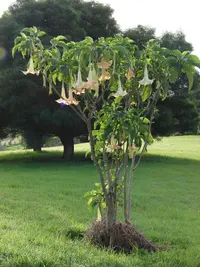
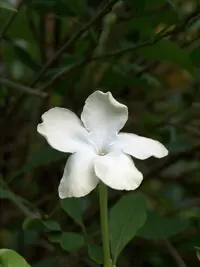
Angel's-trumpet (Brugmansia × candida) is a woody, fast-growing ornamental shrub or small tree known for its large, hanging, trumpet-shaped flowers. It is typically grown outdoors in mild climates, often in containers that can be moved under shelter in colder regions.

This hybrid species likely originated in cultivation in South America and is now widely used in gardens for its dramatic evening fragrance. It grows quickly but needs regular moisture, fertile well-drained soil, and protection from frost, so it suits attentive gardeners. Understanding how to care for angel's-trumpet is important because it has high water and nutrient demands and all parts of the plant are poisonous if eaten.

Main Plant Requirements

Care Difficulty

Moderate Care

Light Preference

Full Sun

Water Requirements

Regular Water

Temperature Preference

Tropical / Frost Sensitive

Hardiness Zone

9–11

Soil Texture

Loamy, Sandy, Organic-rich

Soil pH

Acidic (5.5–6.5), Slightly acidic (6.5–7.0)

Soil Drainage

Moist but well-drained

Fertilization

Heavy (weekly, diluted)

Get Personalized Care Plan

Scan your plant to receive care tips personalized for your specific plant

Available on iOS and Android

How to Care for the angel's-trumpet

Brugmansia × candida grows best in bright, direct light with some protection from intense midday sun.

  • Provide 4–6 hours of direct morning sun plus bright, filtered light in early afternoon for strong flowering and compact growth.
  • Tolerates light afternoon shade, especially in hot climates; deep shade leads to weak, leggy stems and few blooms on angel's-trumpet.
  • In summer, protect from harsh sun between 1–4 p.m. to reduce leaf scorch; in cooler months, choose the sunniest possible position to maintain flowering.

Brugmansia × candida needs consistently moist but not waterlogged soil to support its large leaves and heavy flowering.

  • Water when the top 3–5 cm of soil feels dry, soaking the root zone thoroughly so moisture reaches deeper layers.
  • Use deep, well-drained soil; yellowing, soft leaves and a sour smell suggest overwatering, while drooping, dry leaves and brittle stems indicate underwatering.
  • Increase watering frequency during hot, windy periods and peak flowering, then reduce gradually in cooler seasons while still preventing the root ball from fully drying out.

This species prefers mild, frost-free conditions with warm days and cooler nights.

  • Aim for daytime temperatures of 65–80°F (18–27°C) for vigorous growth and flowering, with slightly cooler nights around 55–65°F (13–18°C).
  • Brugmansia × candida is very frost-sensitive; sustained drops below 32°F (0°C) can kill top growth, and roots may die if soil freezes solid.
  • Tolerates short heat spikes to about 90°F (32°C) if soil moisture is maintained, but prolonged extreme heat can reduce flowering and cause leaf scorch.

This species prefers moderately humid air but tolerates typical home conditions if soil moisture is kept steady.

  • Aim for 40–60% humidity, which suits both outdoor and indoor placements in most regions.
  • Dry air can cause curled, browning leaf edges and flower bud drop on angel's-trumpet.
  • Increase humidity locally with grouped plants, a nearby water tray, or by positioning above but not inside a pebble tray with water.

Brugmansia × candida performs best in deep, moisture-retentive yet free-draining soil that supports fast seasonal growth.

  • Use a loamy, organic-rich mix, for example 50% peat or coco coir, 30% compost, and 20% perlite or coarse sand.
  • Ensure fast drainage so water runs through within seconds while the mix still feels slightly spongy, not compacted.
  • Keep pH slightly acidic to neutral, around 6.0–7.0, avoiding strongly alkaline or salty soils that reduce nutrient uptake.
  • Improve aeration by incorporating chunky bark or perlite and avoid heavy, unamended clay or dense garden soil in containers.

This species adapts well to container growing when the pot supports its vigorous, top-heavy growth.

  • Select a large, deep container to allow substantial root volume, which helps sustain dense foliage and repeated flowering.
  • Choose a wide, heavy pot or add weight at the base to prevent tipping in wind as the canopy becomes top-heavy.
  • Use a container material that matches climate, such as thicker, less porous pots in hot areas to reduce rapid moisture loss.

Brugmansia × candida is a heavy feeder and benefits from consistent nutrition during warm, active growth.

  • Use a balanced liquid fertilizer (e.g., 10-10-10 or 20-20-20) at 1/2 strength every 7–14 days in spring and summer for lush growth and blooms.
  • Supplement container plants with slow-release granules or a thin layer of well-rotted compost at the soil surface at the start of the season.
  • Water before applying soluble feeds to prevent root burn and ensure even nutrient uptake in angel's-trumpet.
  • From late fall through winter dormancy, stop or reduce feeding to once every 4–6 weeks at 1/4 strength, if the plant retains foliage.

Pruning Brugmansia × candida supports strong branching, manageable size, and better flowering.

  • Carry out main structural pruning in late winter or very early spring before vigorous new growth begins.
  • Remove dead, damaged, crossing, or inward-growing branches first, then thin crowded stems to open the canopy.
  • Use sharp, clean bypass pruners or loppers, cutting just above outward-facing buds or branch junctions.
  • Avoid cutting off all Y-shaped branches, since flower buds form on the horizontal growth that develops above these forks.

This fast-growing shrub often outgrows containers and benefits from timely repotting or transplanting.

  • Check for roots circling the pot, emerging from drainage holes, or for slowed growth and quick drying soil as cues to move up.
  • Plan repotting or transplanting for spring, just as consistent warm weather returns and new growth starts.
  • Shift to a container 5–8 cm wider, using a rich, free-draining mix; set garden plants at the same soil depth as before.
  • Water thoroughly after moving, provide shade and shelter from strong wind for 5–7 days, and keep soil evenly moist to limit transplant shock.

Brugmansia × candida is commonly propagated from cuttings to maintain desired flower traits.

  • Take 10–20 cm softwood or semi-ripe stem cuttings in late spring to summer, choosing non-flowering shoots with several nodes.
  • Remove lower leaves, optionally dip the base in rooting hormone, and place cuttings in a sterile, free-draining mix such as perlite and peat or coco coir.
  • Maintain bright, indirect light, high humidity, and soil temperatures around 70–75°F to encourage rooting.
  • Seeds can be sown in warm conditions but often produce variable offspring, so are mainly used for breeding rather than exact clones.

This plant is frost tender and needs specific winter care in most temperate climates.

  • In regions below USDA zone 9, grow Brugmansia × candida in containers or treat as a plant that must be lifted or heavily protected.
  • Before first frost, move potted plants indoors to a bright, cool room or an unheated but frost-free garage or basement.
  • Outdoors in mild climates, apply a 5–10 cm mulch layer over the root zone and shelter stems from freezing winds.

Care Tips

Stake Early

Install a sturdy stake or small trellis when the plant is still young so the trunk develops straight and strong and heavy flower-laden branches are less likely to snap in wind or storms.

Wind-Smart Placement

Site the plant where it receives good light but is shielded from prevailing strong winds, or use a windbreak such as a fence or hedge to reduce branch damage and flower drop.

Night Scent Enjoyment

Position containers or in-ground plants near patios or open windows where evening airflow can carry the strong night fragrance without directing it into enclosed sleeping areas.

Protect From Cold Snaps

In regions with occasional frosts, keep large containers on rolling plant caddies so you can move them quickly into a garage or porch when temperatures suddenly drop below safe levels.

Safe Handling Routine

Wear gloves and wash hands after pruning, deadheading, or handling sap, and keep all cuttings and fallen flowers out of reach of children and pets as part of responsible caring for angel's-trumpet.

Common Pests and Diseases

Spider mites

This pest often builds fine webbing on new growth, causing stippled, pale leaves and overall decline, especially in hot, dry weather.

Solution

Spray foliage thoroughly with a strong stream of water, including leaf undersides, then treat with insecticidal soap or a horticultural oil labeled for mites; repeat every 5–7 days until no new damage appears and increase humidity and regular monitoring as part of ongoing Brugmansia × candida care.

Whiteflies

These insects cluster on leaf undersides, flying up in a small cloud when disturbed and causing yellowing, sticky leaves due to honeydew deposits.

Solution

Use yellow sticky traps to monitor and reduce adult numbers, regularly hose down the plant, and apply insecticidal soap or neem oil to the undersides of leaves every 5–7 days, focusing on young foliage where populations build fastest.

Caterpillars

This pest chews irregular holes in leaves and may defoliate shoots quickly, especially during warm seasons.

Solution

Inspect plants frequently and handpick caterpillars in the early morning or evening, then use Bacillus thuringiensis (Bt), a biological insecticide specific to caterpillars, on foliage according to label directions if damage continues.

Aphids

These insects cluster on tender shoot tips and flower buds, sucking sap and causing curling, distorted new growth and sticky honeydew that can attract sooty mold.

Solution

Prune and discard heavily infested shoot tips, hose off remaining colonies with water, then follow up with insecticidal soap or a light horticultural oil spray, ensuring good coverage of young stems and the undersides of leaves.

Botrytis blight

This disease produces soft, water-soaked spots on flowers and leaves that develop gray, fuzzy mold, especially in cool, damp conditions or on crowded plants.

Solution

Remove and discard all affected flowers and foliage, improve airflow around the plant, avoid wetting the blooms when watering, and, if needed, apply a fungicide labeled for Botrytis on ornamentals, following label intervals during prolonged wet or humid periods.

Interesting Facts

Hybrid Andean origin

This species is a long-established hybrid between highland South American species, likely involving Brugmansia aurea and Brugmansia versicolor, and it retains a strong preference for mild, frost-free climates similar to its Andean ancestry.

Night-scented pollination

Its large white or cream trumpet-shaped flowers release the strongest fragrance at night, a trait linked to moth pollination in its original range, where scent guides nocturnal insects to the deep floral tube.

Extreme tropane toxicity

All parts of this plant contain high levels of tropane alkaloids such as scopolamine and atropine, making it dangerously toxic if ingested and requiring careful handling, especially around children and pets.

Botan icon

Did you know?

In some regions outside its native Andean range, this hybrid has become naturalized and locally invasive, with seedling and root-suckering growth forming thickets that displace native vegetation along watercourses and disturbed sites.

FAQs about angel's-trumpet

Lack of blooms usually comes from insufficient light, low nutrients, or heavy pruning of flowering wood. Use a balanced fertilizer, avoid cutting young flowering shoots, and provide warm conditions to support growing angel's-trumpet successfully.

Grow Healthy Plants with Botan Care

Keep your plants happy and healthy with plant identification, disease detection, and easy care guidance.

Botan plant care app — identify plants on mobile

Explore More Plants