Cool root zone
Mulch lightly around the plants with fine shredded bark or leaf mold to keep the shallow roots cool and evenly moist without burying the crowns.

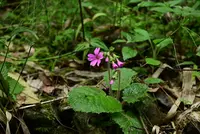
Primula rotundifolia, often called round-leaved primrose, is a compact perennial from cool, moist mountain and subarctic regions of Europe and parts of northern Asia. It forms low rosettes of rounded leaves and sends up slender stems topped with loose clusters of soft purple to pink flowers. The plant naturally grows in damp meadows, open woodland edges, and rocky slopes with good drainage. It prefers cool conditions, consistent moisture, and humus-rich soil, which can make it slightly challenging in hot or very dry gardens. Understanding how to care for Primula rotundifolia helps match its cool, moist habitat needs in cultivation.

Care Difficulty
Moderate Care

Light Preference
Partial Shade

Water Requirements
Keep Soil Moist

Temperature Preference
Cold Hardy

Hardiness Zone
4–7

Soil Texture
Loamy, Peaty, Organic-rich

Soil pH
Strongly acidic (4.5–5.5), Acidic (5.5–6.5)

Soil Drainage
Moist but well-drained

Fertilization
Minimal (feed rarely)
Scan your plant to receive care tips personalized for your specific plant
Available on iOS and Android
This alpine primrose prefers cool, bright conditions with protection from harsh midday sun.
This species needs consistently moist, cool soil without becoming waterlogged.
This hardy primrose prefers cool summers and tolerates substantial winter cold when well established.
This species benefits from moderately moist air and reacts quickly to dry indoor conditions.
This primrose prefers cool, moist, yet sharply drained soil that stays airy around the roots.
This species can be grown in containers if moisture and drainage are controlled carefully.
This alpine primrose is adapted to low-nutrient soils, so Primula rotundifolia needs only modest feeding in cultivation.
Primula rotundifolia benefits from light pruning focused on cleanliness and flower performance rather than shaping.
This species is more often transplanted in garden beds than grown as a long-term container plant.
This primrose is commonly propagated by division or seed, allowing gradual expansion of a healthy colony.
Primula rotundifolia is cold hardy in many temperate climates and usually needs only modest winter attention in the ground.

Plant Health Check
Not sure what's wrong with your plant? Check your plant's health inside the app.
This species is naturally restricted to high mountain and arctic-alpine habitats in northern Europe, where it grows in cool, moist, often north-facing slopes and snowbed margins.
It typically occurs on acidic, lime-free substrates such as siliceous rocks and peaty soils, and is largely absent from calcareous, lime-rich ground.
The species name rotundifolia refers to its characteristic round to broadly oval basal leaves, which form a low rosette that contrasts with the taller flowering stalks.
This species normally flowers in late spring to early summer, depending on climate and snowmelt. Individual blooms often last 1–2 weeks, while the overall flowering period for a clump can extend to around 3–5 weeks.
Keep your plants happy and healthy with plant identification, disease detection, and easy care guidance.